

A defined, sculpted jawline is one of the most sought-after features in modern aesthetic medicine. It frames the lower face, establishes visual symmetry, and creates a clear delineation between the jaw and the neck. However, as bone density decreases, submental fat shifts, and skin elasticity wanes over time, the sharp angle of the lower mandibular border can lose its definition.
When evaluating how to restore or enhance lower facial structure, patients often face a critical decision: surgical intervention versus non-invasive sculpting. Both pathways offer distinct advantages, but determining which works depends entirely on individual anatomical needs, structural laxity, and desired longevity. At Rania Aesthetic Studio - Advanced Laser Treatment, we approach lower facial sculpting through a clinical lens, prioritizing structural harmony and long-term tissue health.
The Anatomy of Jawline Definition
Understanding which treatment modality will deliver effective results requires looking closely at the three primary anatomical layers of the lower face:
- Bony Architecture: The structural foundation provided by the mandible. Genioplankton projection and mandibular angle sharpness dictate structural support.
- Soft Tissue and Fat Pad Dynamics: Submental fat pockets, superficial fat accumulation, and platysmal muscle band separation can obscure the jawline.
- Dermal Elasticity: The skin's overlying tension and elasticity. High collagen density keeps skin taut along the bone, whereas elastosis causes sagging along the jawline, creating jowls.
Surgical and nonsurgical treatments target these layers differently. Selecting the right option requires matching the intervention to the specific layer driving the loss of definition.
Surgical Jawline Contouring: Scope and Indications
Surgical jawline enhancement is designed for structural repositioning, significant tissue excision, and permanent anatomical alteration.
Submental Liposuction and Neck Lifts
Submental liposuction physically removes localized adipose tissue beneath the chin to reveal the underlying mandibular line. For patients with moderate to severe skin laxity or platysmal muscle banding, a lower rhytidectomy (facelift) or neck lift redrapes muscle structures and trims excess skin.
Mandibular Implants and Osseous Reshaping
When the jawline lacks definition due to a weak skeletal base, surgical implants placed directly over the mandibular bone create permanent angular projection.
Ideal Candidates for Surgery
Surgery is generally indicated for individuals with severe skin sag, heavy submental fat distribution, or significant skeletal recession. While surgical solutions offer long-lasting changes, they involve systemic anesthesia, surgical incisions, downtime, and permanent structural modifications.
Nonsurgical Jawline Contouring: Precision and Preservation
Nonsurgical jawline contouring focuses on restoring volume, relaxing overactive musculature, and stimulating endogenous collagen production without invasive cuts or prolonged recovery periods.
Dermal Fillers and Neuromodulators
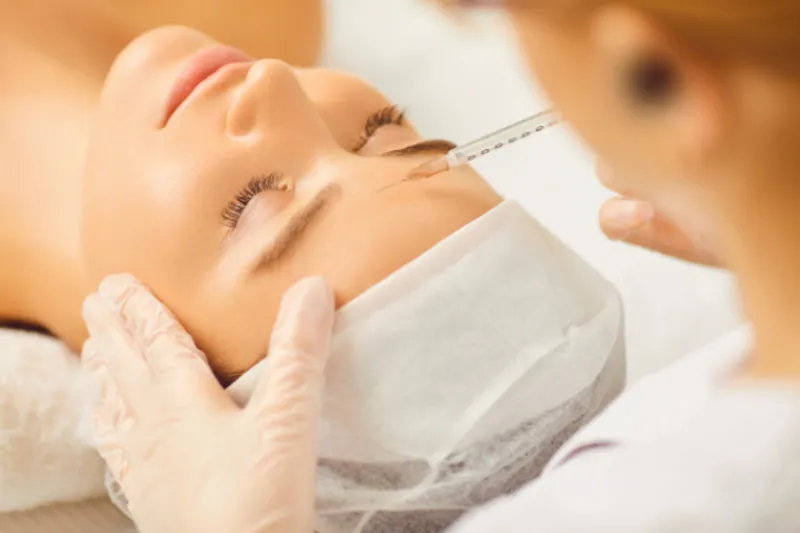
Hyaluronic acid and calcium hydroxylapatite fillers can be strategically injected along the periosteum (the bone surface) to simulate structural support, define the mandibular angle, and disguise mild jowling. Concurrently, neuromodulators injected into the masseter muscles slim an overly square jawline caused by muscle hypertrophy, while injections along the platysmal bands pull the lower face upward for a subtle lifting effect.
Energy-Based Tightening and Laser Resurfacing
Skin laxity along the lower face often compromises jawline sharpness. Targeted energy therapies stimulate deep dermal collagen remodeling to firm loose skin along the jaw and submental area.
When superficial laxity, fine lines, or textural roughness along the lower face need refinement, incorporating MOXI Gentle Laser Resurfacing in Sugar Land helps stimulate micro-coagulation zones that encourage rapid cellular turnover and long-term collagen production.
For patients looking for complete skin rejuvenation alongside contouring, combining injectables with advanced Laser Treatment in Sugar Land addresses both structural volume and epidermal quality, leading to smoother, tighter contouring along the lower jaw.
Comparing Surgical vs. Nonsurgical Jawline Contouring
| Parameter | Surgical Contouring | Nonsurgical Contouring |
|---|---|---|
| Primary Mechanism | Tissue excision, muscle tightening, implants | Volumetric filling, muscle relaxation, collagen induction |
| Invasiveness | High (incisions, anesthesia) | Minimal (targeted micro-injections, laser energy) |
| Downtime | 2 to 4 weeks | Minimal to none |
| Onset of Results | 1 to 3 months (post-swelling) | Immediate for fillers; progressive for laser/collagen therapies |
| Reversibility | Requires revision surgery | Highly adjustable and adaptable over time |
Which Option Truly Works?
Both surgical and nonsurgical jawline contouring are highly effective when matched to the correct clinical presentation:
- Surgical contouring works best when there is significant structural sagging, heavy skin excess, or a desire for a permanent architectural shift that cannot be achieved through soft-tissue enhancement alone.
- Nonsurgical contouring works best for mild to moderate volume loss, early jawline blurring, muscle-related widening, or skin laxity. It provides natural, subtle refinements that enhance individual features without altering basic facial identity.
A comprehensive consultation evaluating skin elasticity, bone structure, and submental tissue health is the necessary first step to choosing a treatment plan that delivers safe, predictable, and elegant results.























Sign in to leave a comment.