Why LMS Hosting Is More Than a Technical Choice
Learning Management System (LMS) conversations often begin with features, course authoring, reporting, and integrations, but stall when hosting enters the picture. eLearning strategies today rely heavily on how the system is hosted, not just what it does. LMS hosting is frequently treated as a backend decision, yet it shapes how the platform behaves over years, not weeks.
Hosting influences cost structure, security accountability, scalability, and the internal effort required to keep Corporate Training and learning operations running smoothly.
Why LMS Hosting Choice Impacts Learning, IT, and Compliance
LMS hosting decisions rarely affect a single team. They influence learning accessibility, system reliability, and governance across the enterprise. For L&D teams, hosting affects rollout speed, learner access across regions, and the ease of launching Blended Learning programs.
For compliance teams, hosting defines data residency, audit readiness, and accountability, especially critical when using an LMS for compliance training across industries like healthcare or finance.
What Do Cloud, On-Premises, and Hybrid LMS Hosting Actually Mean?
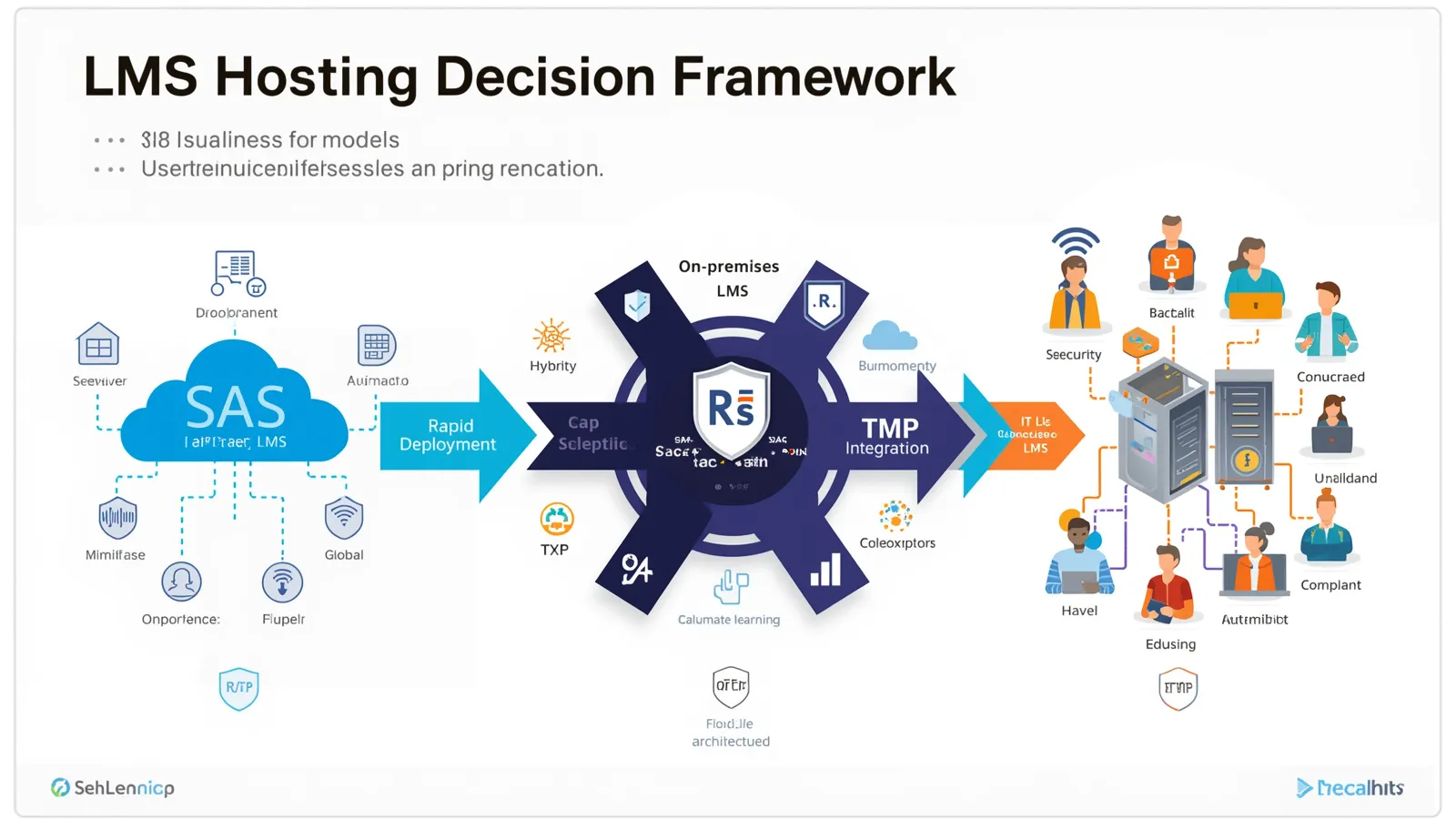
A Cloud-Based LMS Platform (SaaS) is hosted by the vendor in their cloud environment. Organizations access it via the internet under a subscription model.
Many modern platforms now integrate AI-powered LMS software capabilities to automate learning paths, recommendations, and reporting.
An On-Premises LMS runs in the organization’s own data centre or private infrastructure. Internal teams manage everything, making it suitable for highly controlled Corporate Training environments.
A Hybrid LMS combines both models, often integrating external platforms like LXP (Learning Experience Platforms) or TMS (Training Management Systems) to create a more flexible ecosystem.
Cloud LMS vs On-Premise LMS – Where the Differences Really Show
Cloud LMS platforms emphasize speed and operational simplicity, making them ideal for scalable eLearning delivery.
On-premises LMS environments prioritize control and ownership and are often preferred when managing sensitive LMS data for compliance training.
Over time, these differences shape agility, cost predictability, and risk exposure. Many organizations also integrate TMS tools alongside LMS to manage scheduling, instructor-led training, and logistics.
Hybrid LMS Hosting - Why Organizations Choose the Middle Ground
Hybrid LMS hosting often emerges when organizations want both flexibility and control. For example:
Using cloud delivery for eLearning scalability
Keeping sensitive compliance data for LMS for compliance training on premises
Integrating with systems like LXP for personalized learning experiences
This approach supports advanced Corporate Training ecosystems while balancing regulatory requirements.
Pros and Cons of LMS Hosting Models
Cloud LMS
Pros: Rapid deployment, scalability, reduced IT burden, ideal for Cloud-Based LMS Platform adoption.
Cons: Limited customization and dependency on vendor infrastructure.
On-Premises LMS
Pros: Full control, strong data sovereignty, useful for compliance-heavy Corporate Training.
Cons: High IT overhead and slower scalability.
Hybrid LMS
Pros: Flexibility supports integration with LXP, TMS, and other tools.
Cons: Increased complexity and shared accountability.
SaaS LMS Security vs Self-Hosted Control
In SaaS environments, vendors manage infrastructure while organizations handle access and governance. This is especially relevant for AI-powered LMS software, where data handling and automation must align with compliance needs.
On-premises setups provide full control but require strong internal expertise, particularly for LMS for compliance training scenarios.
How to Think About Choosing an LMS Hosting Model
Choosing the right model depends on your organization’s needs:
If you prioritize scalability → go for a Cloud-Based LMS Platform
If you need strict control, → on-premises works better
If you want flexibility → hybrid with LXP and TMS integration
Ultimately, the decision should align with long-term Corporate Training goals and evolving eLearning strategies.
How does AI impact LMS hosting decisions ?
With the rise of AI-powered LMS software, hosting plays a critical role in data processing, automation, and personalization. Cloud environments make it easier to scale AI capabilities, while hybrid setups enable integration with tools such as LXP and TMS to deliver more advanced and adaptive Blended Learning experiences.






























Sign in to leave a comment.