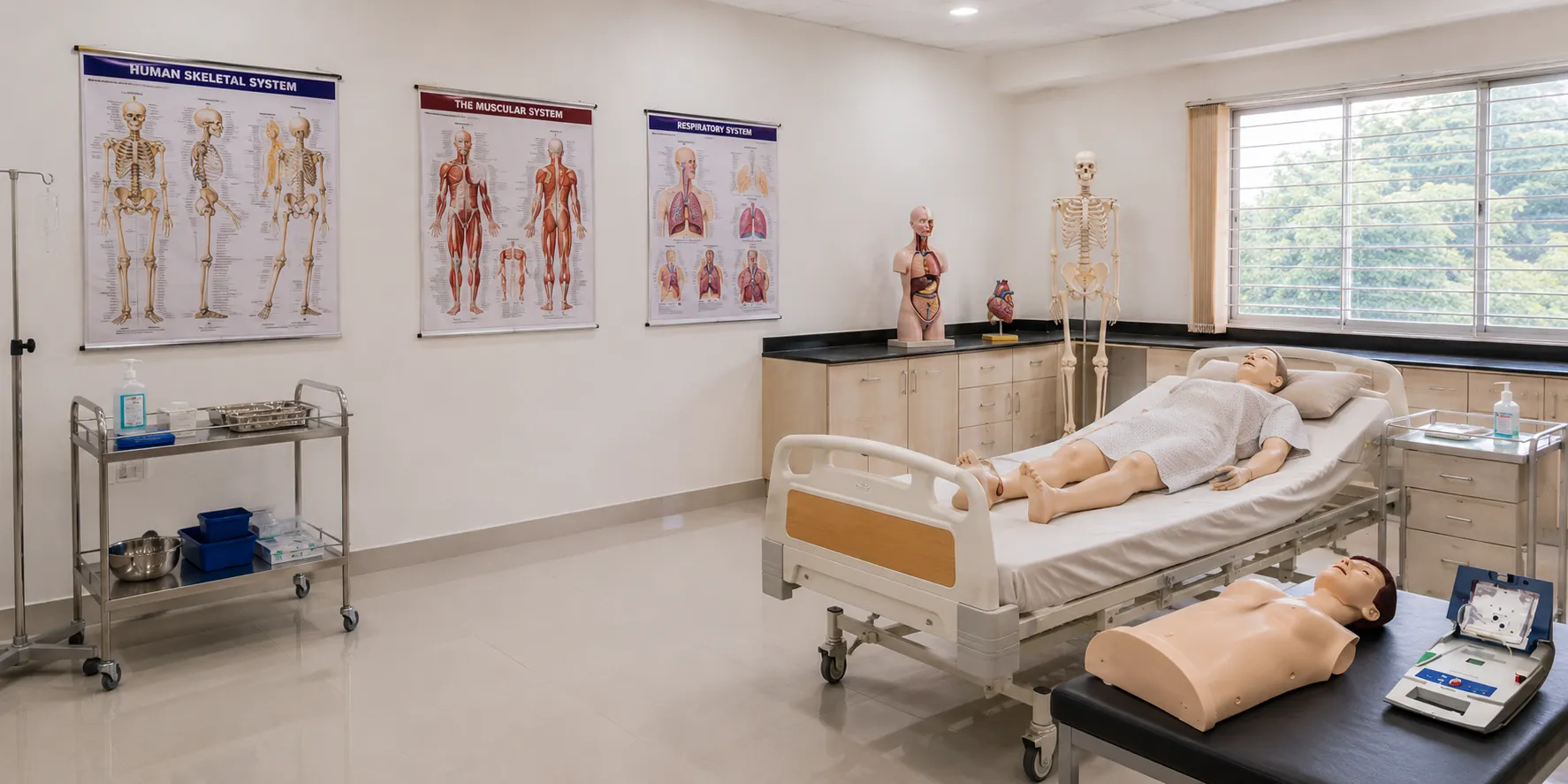

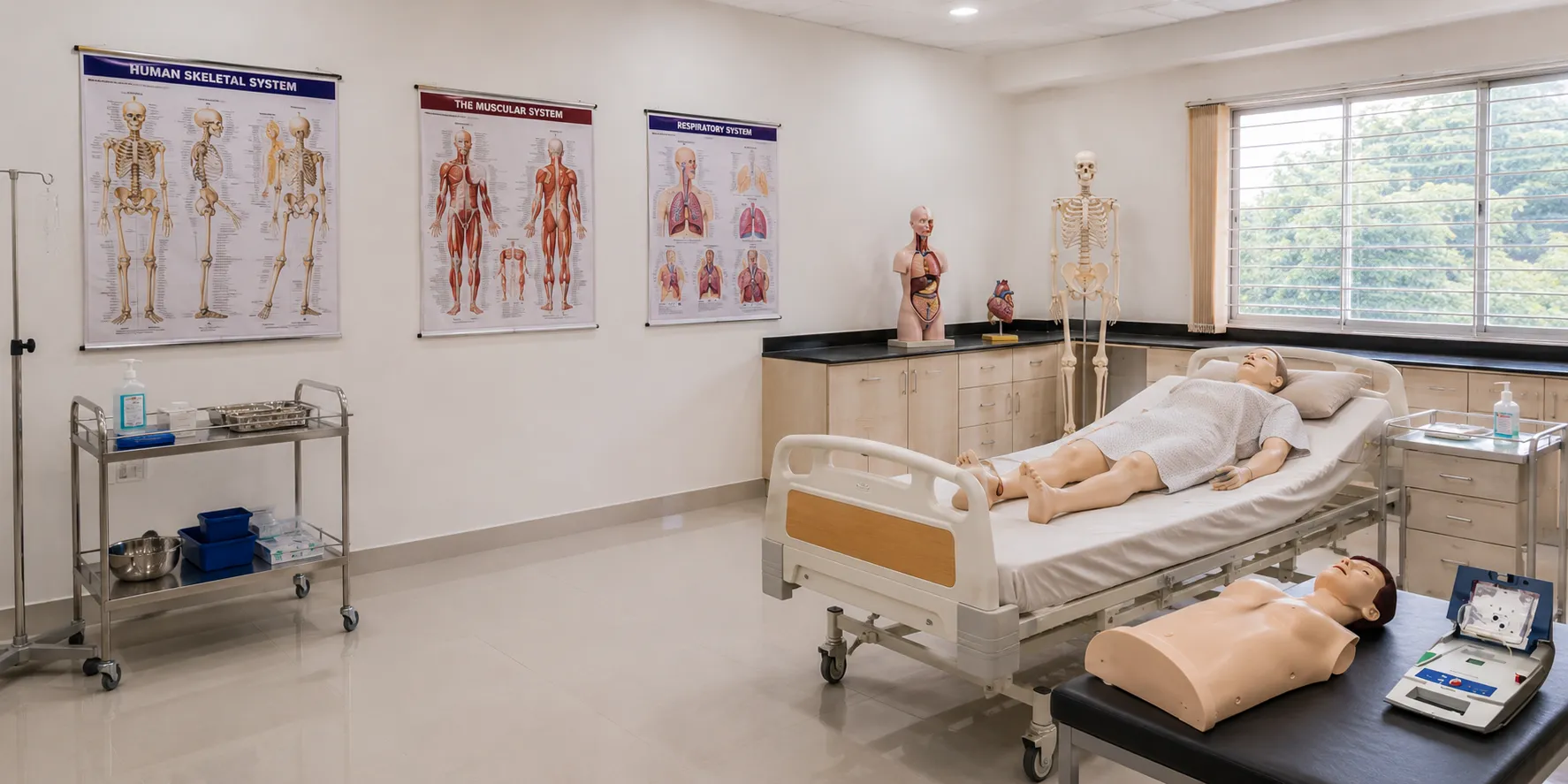
What makes a nursing skills lab truly useful for students? Is it simply a room filled with nursing equipment, or does it need a carefully planned combination of simulation, practice stations, furniture, and teaching resources? A modern Nursing Skills Lab Setup in Karnataka should be designed around how students actually learn and practice nursing procedures. From basic patient care to emergency response, every section should allow students to develop practical skills under faculty supervision.
Start With the Right Lab Plan
Before purchasing equipment, nursing colleges should first decide what the laboratory needs to accomplish. The number of students, available floor space, nursing programs offered, teaching requirements, and practical procedures should all influence the setup.
Instead of filling the room with equipment, colleges should create dedicated practice areas where students can move easily between different activities. A well-planned layout also allows faculty members to demonstrate procedures and monitor students during practice sessions.
1. Patient Care Practice Area
Patient care is at the heart of nursing education. Therefore, a modern skills lab should have a properly arranged patient-care area with suitable nursing beds and essential bedside accessories.
This section can include:
- Adjustable nursing beds
- Bedside lockers
- Overbed tables
- Bedside screens
- IV stands
- Patient examination stools
- Nursing trolleys
- Bedside storage facilities
Students can use these stations to practice positioning, bed making, personal hygiene, mobility assistance, and other routine nursing procedures.
2. Realistic Simulation Manikins
Can students learn clinical procedures effectively without practicing them? Simulation equipment makes repeated hands-on learning possible.
Quality Medical Training Manikins in Karnataka can be an important part of a modern skills laboratory. Different manikins can be selected according to the procedures taught by the institution.
For example, a college may include:
- Adult nursing manikins
- CPR manikins
- Pediatric manikins
- Neonatal manikins
- Obstetric manikins
- Airway management models
- Injection training models
- IV training arms
- Catheterization models
Rather than choosing every available model, colleges should select simulation equipment that matches their teaching objectives and student requirements.
3. Vital Signs and Assessment Station
A nursing student must become comfortable with basic patient assessment. A dedicated assessment station can provide space for practicing vital-sign measurement and routine physical assessment.
The station may include blood pressure apparatus, stethoscopes, thermometers, pulse oximeters, weighing scales, measuring equipment, and other essential diagnostic tools.
Having these resources organized in one area makes demonstrations easier and allows students to repeat procedures until they develop proper technique.
4. Injection and IV Practice Area
Injection and intravenous procedures require accuracy and confidence. A modern laboratory should therefore have a dedicated area for injection and IV practice.
IV training arms, injection pads, syringes, IV sets, tourniquets, and related training accessories can be arranged at individual practice stations.
This arrangement allows faculty members to demonstrate procedures first and then supervise students as they perform them independently.
5. Emergency Care and CPR Section
A nursing skills lab should not focus only on routine care. Students also need opportunities to practice responding to emergencies.
A dedicated emergency-care section can include CPR manikins, airway-management models, bag-valve-mask training equipment, emergency trolleys, and other relevant simulation resources.
This area can be arranged to support realistic emergency scenarios. Students can practice responding to a situation while learning communication, teamwork, and appropriate clinical responses.
6. Maternal and Newborn Care Section
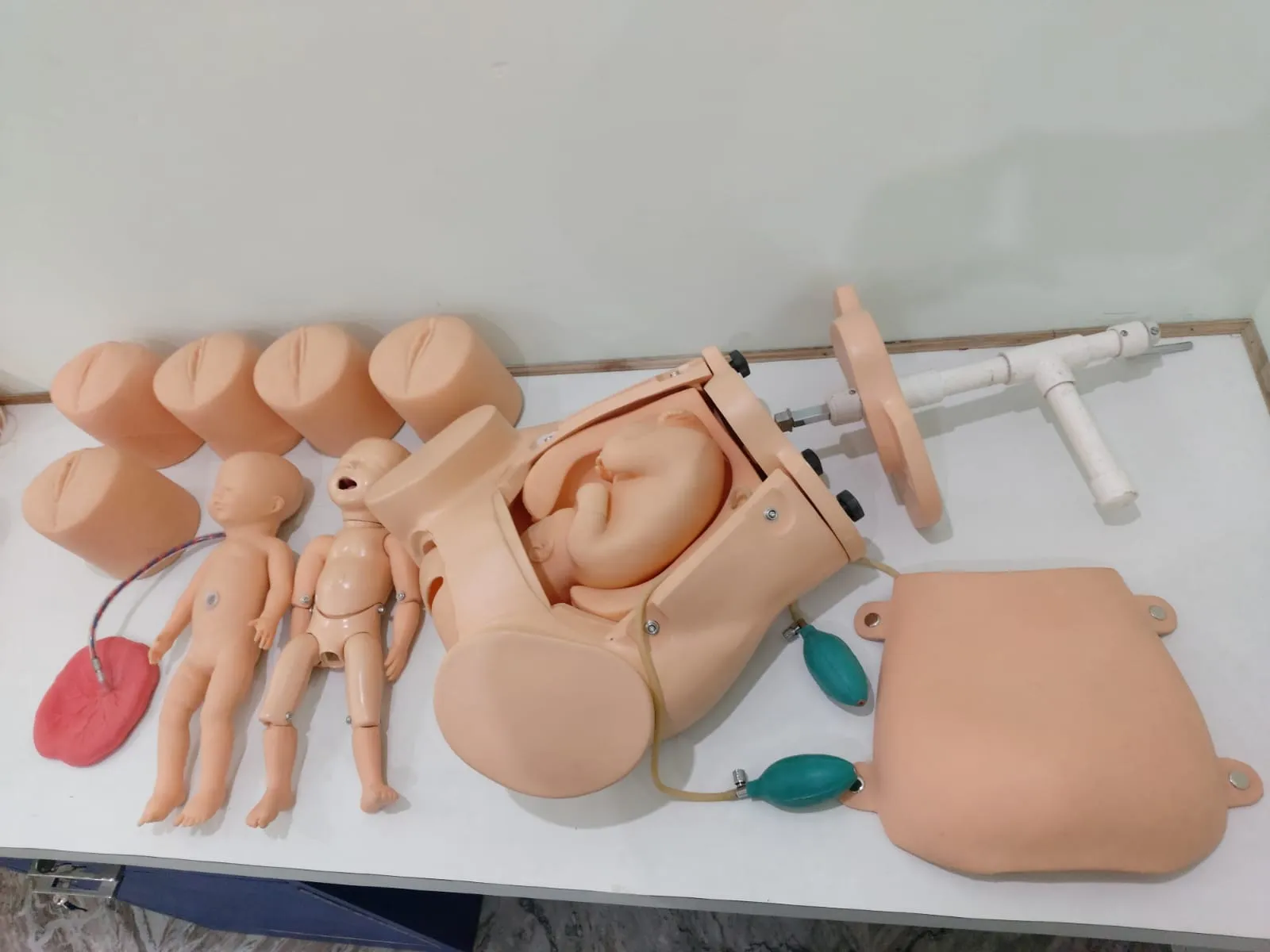
Maternal and child health is another important part of nursing education. A modern lab should include suitable models for demonstrating and practicing relevant procedures.
Obstetric manikins can support training related to labour and delivery, while newborn models can help students practice newborn assessment and essential care procedures.
Creating a separate maternal and newborn section can make demonstrations more focused and provide students with a realistic learning environment.
7. Pediatric Nursing Practice Area
Children require specialized approaches to nursing care. Pediatric simulation models allow students to understand how procedures and patient interactions differ from adult nursing.
A pediatric practice area can include child-care manikins, infant models, feeding-training equipment, pediatric assessment tools, and other resources relevant to the nursing curriculum.
This gives students a controlled environment in which they can develop their skills before working with actual pediatric patients.
8. Infection Control and Safety Facilities
A modern nursing lab should demonstrate the same safety principles expected in clinical environments.
Handwashing facilities, PPE, waste-disposal bins, cleaning arrangements, and appropriate storage should be incorporated into the laboratory design.
Equipment should also be stored systematically so that students can easily identify what they need without creating unnecessary clutter. Clear walkways and appropriate spacing between practice stations are equally important.
9. Demonstration and Teaching Technology
Modern nursing education can also benefit from audiovisual teaching tools. A projector, display screen, computer, or suitable recording system can help faculty demonstrate procedures to larger groups.
For example, an instructor can demonstrate a procedure while students observe from different positions before moving to individual practice stations.
Technology should support practical learning rather than replace hands-on training.
10. Proper Storage and Equipment Management
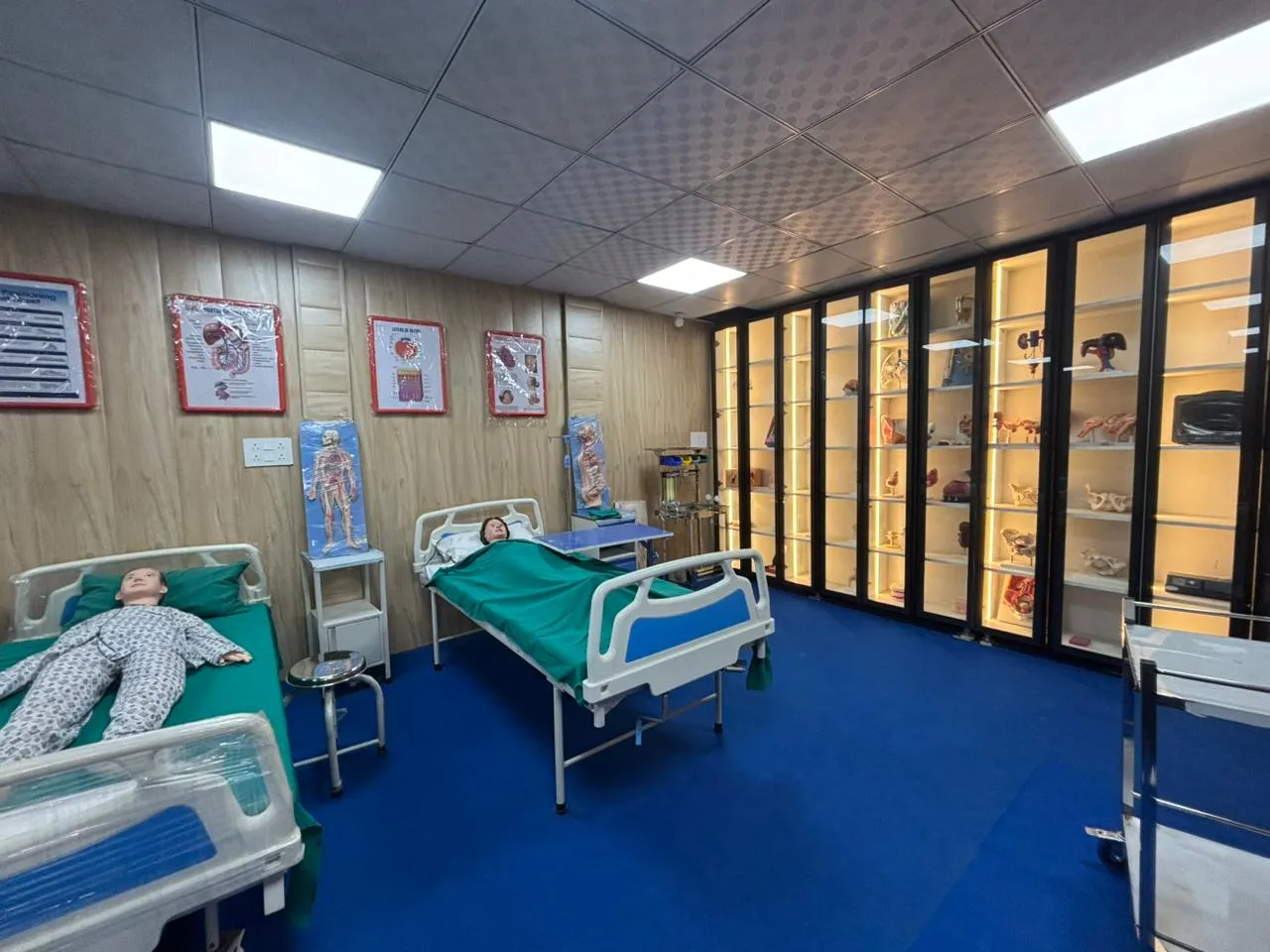
One commonly overlooked part of laboratory planning is storage. Even excellent equipment can become difficult to use when everything is placed randomly.
A modern setup should include suitable cabinets, shelves, drawers, and designated storage areas. Frequently used items should remain easily accessible, while specialized equipment can be stored safely when not required.
Proper labeling can also help students and faculty return equipment to the correct location after each practical session.
What Makes a Nursing Skills Lab Truly Modern?
A modern lab is not necessarily the one with the largest number of products. Its real value comes from how effectively the available resources support practical education.
A well-designed laboratory should provide:
- Clearly defined practice stations
- Realistic simulation opportunities
- Adequate space for student movement
- Easy faculty supervision
- Organized equipment storage
- Appropriate infection-control facilities
- Equipment suited to the curriculum
- Areas for basic and advanced nursing procedures
The objective should be to create an environment where students can learn, practice, make mistakes, receive feedback, and improve before entering real clinical situations.
Final Thoughts
So, what should a modern Nursing Skills Lab Setup in Karnataka include? It should go beyond basic beds and nursing instruments. A complete setup should bring together patient-care stations, assessment equipment, emergency and CPR resources, maternal and child health models, injection and IV training facilities, infection-control resources, organized storage, and appropriate teaching technology.
The right medical training manikins in Karnataka can add another important dimension by giving students realistic opportunities to practice procedures repeatedly. When every component is selected according to the curriculum, student requirements, available space, and practical learning goals, the nursing skills lab becomes a purposeful training environment—not simply a room filled with equipment.





























Sign in to leave a comment.