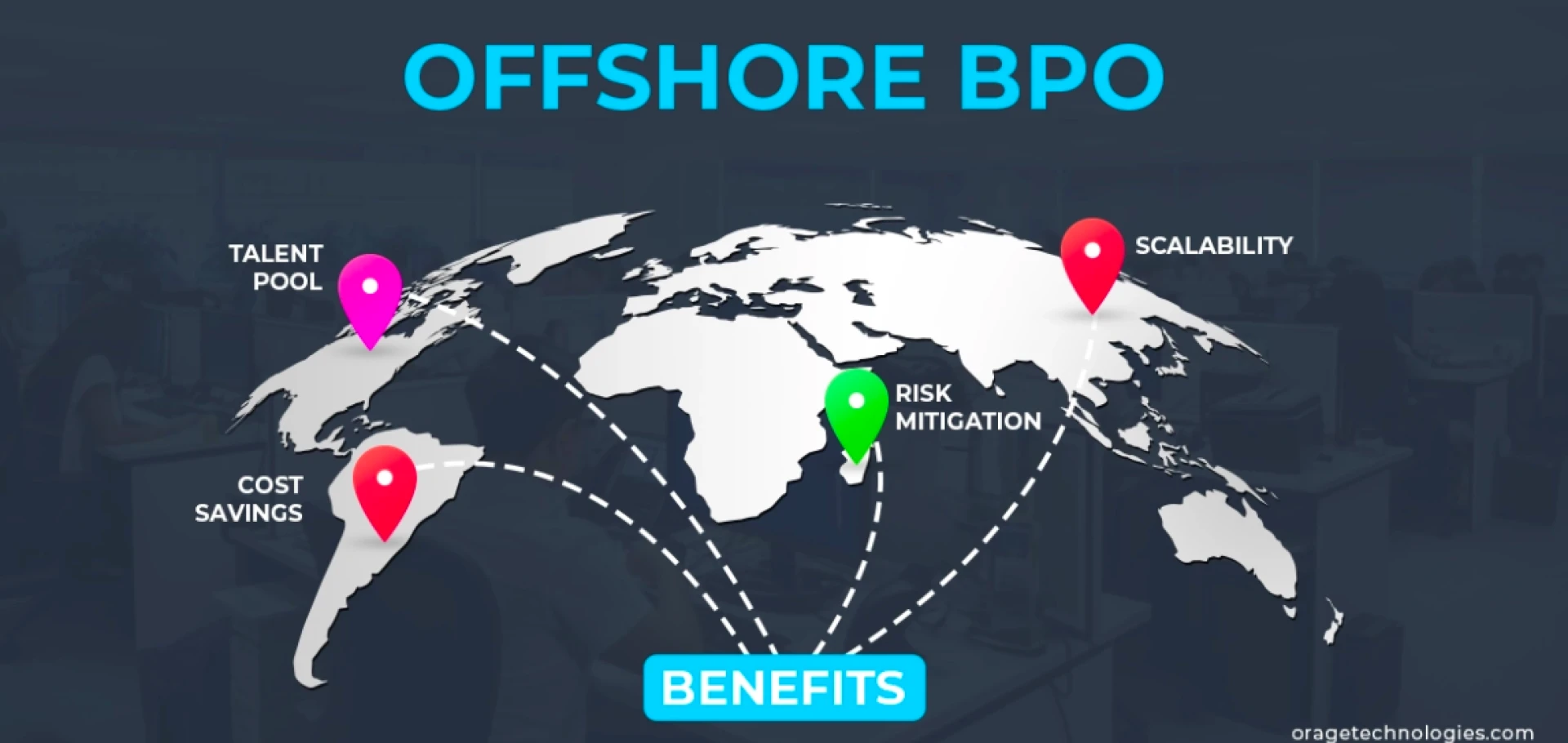

Offshore Business Process Outsourcing (Offshore BPO) has transformed the way companies run their business using resource possibilities available in a global economy where companies can re-assign jobs or functions to the service sites of service suppliers in the most economical countries. Companies create efficiency and economies of scale by outsourcing functions to suppliers in country with lesser costs; companies are also able to take advantage of expertise (specialized skills) and focus on their core mission strategic goals. Offshore BPO can also have some challenges which will require a great deal of planning. This blog post will cover some things associated with Offshore BPO and answer several questions regarding their associated benefits and challenges of Offshore BPO. So let's chat about Offshore BPO, and really examine how it impacts on current day businesses and their business strategies.
What is Offshore BPO and How Does it Work?
Offshore BPO is when a business in one country outsources business processes like customer support, IT services, or accounting to offshore third-party providers in a foreign country, often with a lower labor cost. For example, a US based company may use the Philippines for their call center, or India for software development. Unlike onshore outsourcing (keeping the business process within the same country, even if it is not the same physical location), or nearshore outsourcing (same region, such as Mexico for Americans), offshore BPO uses overseas service providers to maximize savings.
The offshore BPO is based on salary advantages, and time zones advantages for 24-7 operations for a next-day turnaround. Offshore BPO allows the company to focus on the main business processes while leaving the everyday business processes to another company.
Why Companies Use Offshore BPO?
Companies choose Offshore BPO to gain competitive advantage. The main driver for most companies is and will always be cost. There are countries such as India, Mexico, or Vietnam where labor and overhead can be 40-60% less than Western countries. In the example of a Customer Service Representative, the person in the US might be at $18 per hour, while a CSR in the Philippines is $3-$5. Companies are not just saving $15 per hour, they are prioritizing reinvesting those savings toward innovation or entry to new markets..
In addition, Offshore BPO allows access to global talent. Time zone advantages can also help a country with a good education system buy global skills in every sector (e.g., IT, finance, Data Analytical). Time zone differences usually mean that your customer service department could operate 24 hours a day with your customers operating in different time zones buying around the clock.
In addition to cost, service levels, or improvements--Offshore BPO also means alignment and agility/ flexibility and scalability as a business. Some they will act as very quickly as their business grows.
What Are the Primary Benefits of Offshore BPO?
There are many compelling advantages for organizations considering offshore BPO that have led to its consistently increasing popularity. First, cost savings is attractive to many an organization. Businesses can save up to 50% in operational costs by outsourcing to a region with a lower wage climate, depending on the task and location. These savings either increase the bottom line for the company or contribute to new growth opportunities.
Second, specialized skills offer companies the opportunity to access talent that might otherwise be in short supply domestically. For example, India’s IT sector provides world-class developers at competitive rates.
Third, scalability allows businesses to adjust operations very quickly. For instance, an e-commerce company who needs to grow its support team seasonally can do so without having to take on long-term costs for idle employees.
Finally, 24/7 operations increases customer satisfaction. Any time zone advantage means customers can interact with them whenever they want. This is especially critical for government organizations, technology companies and e-commerce businesses.
What Challenges Exist with Offshore BPO?
Offshore BPO certainly does present challenges. The first is the issue of language and communication. Many BPO contacts are aligned in customer-facing roles, and small language differences or cultural subtleties impact the quality of service delivery. For example, it is easy to imagine that accent differences in call centers may create a service quality gap if this isn't addressed through training.
Next, is security. When we outsource sensitive processes, such as data about customers and project data, we create risks, ranging from breach to non-compliance with regulations like GDPR or the CCPA. Some companies have simply declined to use a provider because they could not ascertain whether they met security standards.
Moreover, different time zones are usually an advantage, but they also create barriers to real-time work. With a 12-hour difference between the UK and India, project updates delay, and if unexpected, this can result in a painstaking rework of several days' work.
Finally, without strong oversight, you may lose control of quality as a stakeholder.
How can organizations ensure offshore business process outsourcing success?
Organizations must take proactive approaches to ensuring success. First, ensure you choose a good offshore BPO provider. The assessment of prospective vendors should be based on their experience, relevant industry certifications (ISO 27001), and previous client testimonials. Engaging with a vendor with proven BPO experience can help minimize any risk they pose.
Secondly, ensure there are the right communications in place. Invest in initial and ongoing training for your offshore team, to help align them with your branding's standards. Take advantage of communication tools like Zoom or Slack to make the time zone transition easier.
Thirdly, regularly evaluate performance. Use KPIs to assess the quality of calling standards you set, regarding wait times and error rates. Think about makeup auditing calls to maximize your point of reference.
Finally, promote cultural focus. Understand the work culture of your offshore provider, including things like local holidays and respectful work engagement. These proactive steps can really help organizations meet onshore capacity demands, by maximizing the potential of offshore BPO.
Which Business Processes Best Align with Offshore BPO?
Offshoring BPO works well for repeatable standardized work or work that doesn’t need a physical presence. Repetitive jobs that suit offshoring include:
Customer Support: Call centers, live chat, and email support functions have proven effective in the Philippines where participants already speak English and the costs are a fraction of other options.
IT Services: IT Services such as software development, testing, and tech support are widely offshored with technology hubs such as India or Ukraine.
Finance and Accounting: Work like bookkeeping, payroll, and invoicing can lead to significant savings in countries like Malaysia.
Data Processing: Data processing (e.g., data entry, data transcription, data analytics) is made easier since they’re structured.
Conversely, jobs where an individual would need a rich understanding of the local community, such as offering legal advice would not be well served under Offshore BPO. A jobs where individuals would also need a physical presence, such as manufacturing would not be well suited under the Offshore BPO concept.
How is offshore BPO impacting employees and stakeholders?
Offshore BPO has a considerable influence on employees and stakeholders. Domestic employees may worry about losing jobs due to outsourcing work, particularly low-cost positions like customer service or data entry, and companies must appropriately mitigate these issues by providing retraining, or concentrating on high-value work requiring local employees.
For stakeholders, Offshore BPO increases profitability through reduced costs, and will potentially increase shareholder value. However, negative perceptions of quality, and issues relating to ethical labor practices can lead to reputational risk to a brand. Eliminating this risk is not simple, but ensuring that providers strictly adhere to fair labor standards can significantly help.
By creating jobs in provider countries, offshore BPO has had a positive effect. As an example, the BPO industry in India employs more than 1.5 million people and is creating economic growth.
What Trends are Influencing the Future of Offshore BPO?
Offshore BPO is in transition due to technological and global changes. Automation and AI are transforming repetitive activities, while basic questions are addressed by chatbots, for instance. Nonetheless, human expertise is still very much needed, especially with respect to technical support.
Geopolitical changes affect Offshore BPO. Outsourcing decisions, for instance, can be based on numerous factors, such as trade policies, data protection policies, or the digitization of services as seen with the passing of data privacy laws like the EU's GDPR. Geopolitical change has also led to the emergence of new outsourcing markets, such as Africa or South Asia/Lao.
Sustainability is also gaining traction. Companies are seeking providers that not only have eco-effective practices but also comply with ethical labor policies. As these trends continue to evolve, Offshore BPO will learn to manage synergistic relationships with technology and human work for its sustainability and relevance moving forward.
Frequently Asked Questions About Offshore BPO
Can small businesses leverage Offshore BPO?
Yes, small businesses benefit from cost savings and access to expertise without large investments. Choosing flexible providers aligns with limited budgets.
How do I select a reliable Offshore BPO provider?
Research providers’ reputations, certifications, and client feedback. Request case studies and verify compliance with data security standards.
What are the main risks of Offshore BPO?
Risks include communication challenges, data security concerns, and quality inconsistencies. Mitigate these with thorough vetting, clear contracts, and ongoing oversight.
Does Offshore BPO enhance customer experience?
When executed well, Offshore BPO improves customer experience through 24/7 support and faster response times, provided quality standards are upheld.
In summary, Offshore BPO offers a powerful way to reduce costs, access talent, and scale operations. However, challenges like communication barriers and data security require careful management. By selecting reputable providers and maintaining strong oversight, businesses can unlock Offshore BPO’s full potential. As technology and global markets evolve, staying adaptable ensures long-term success.


























Sign in to leave a comment.