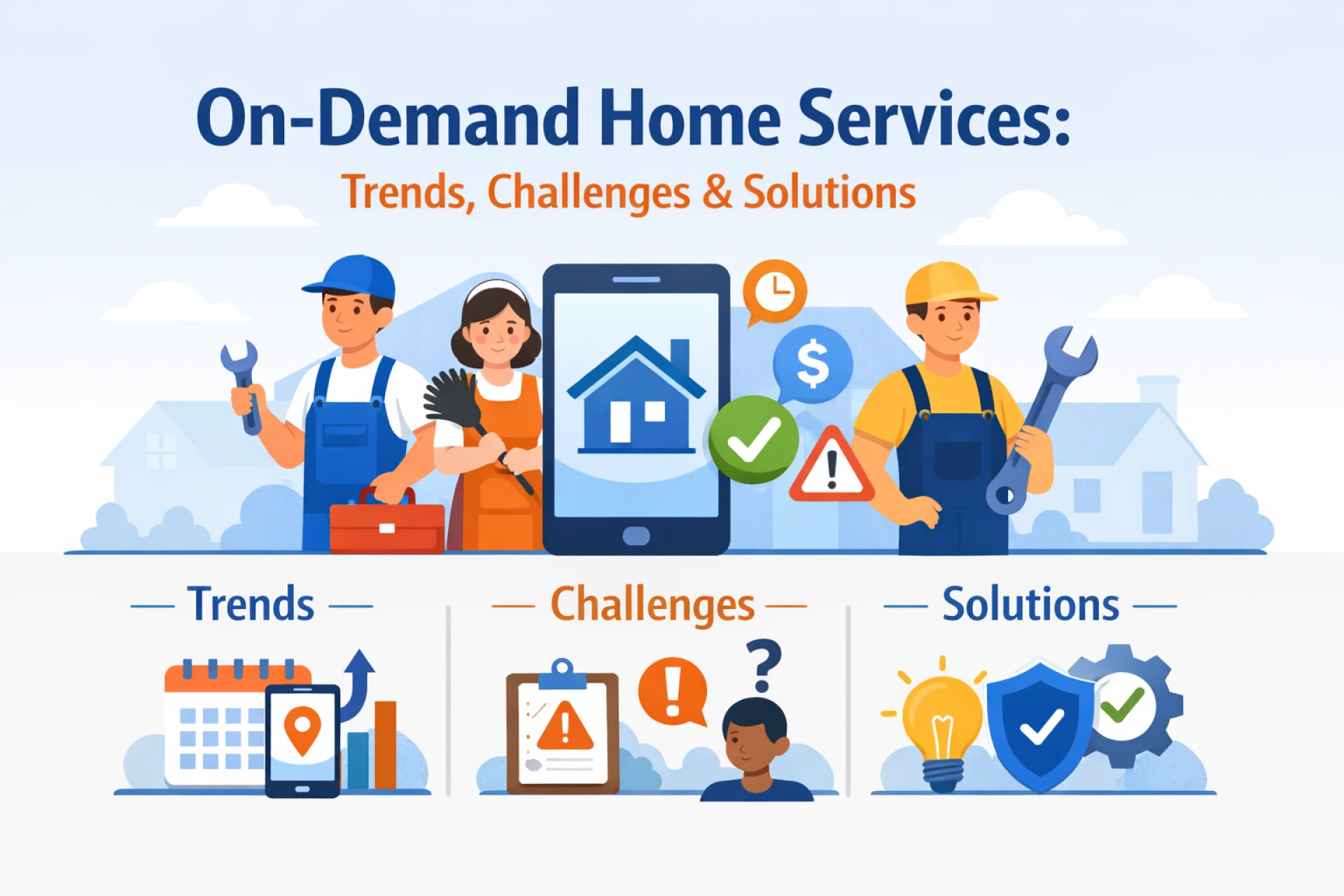

The on-demand economy has completely transformed the way consumers access everyday services. From booking a plumber to scheduling a home cleaning session, everything is now just a few taps away. Inspired by the success of platforms like Urban Company and TaskRabbit, on-demand home service apps have reshaped customer expectations around speed, convenience, and reliability.
As digital adoption increases and smartphone usage continues to grow, businesses are investing heavily in on demand app development services to enter this thriving market. In this article, we will explore the latest trends, common challenges, and practical solutions shaping the on-demand home services industry.
Understanding On-Demand Home Services
On-demand home services refer to digital platforms that connect customers with verified service professionals for tasks such as plumbing, electrical repairs, beauty services, cleaning, pest control, appliance repair, and more. These apps allow users to:
- Book services instantly
- Track service providers in real-time
- Make secure online payments
- Rate and review professionals
With the support of robust mobile app development services, businesses can create scalable and user-friendly platforms that deliver seamless customer experiences.
Latest Trends in On-Demand Home Services
1. AI-Powered Personalization
Artificial Intelligence is improving service recommendations and customer engagement. Apps analyze user behavior, preferences, and past bookings to offer personalized suggestions. For example, if a customer frequently books cleaning services, the app may offer discounted packages or subscription plans.
AI also enhances pricing models by dynamically adjusting service costs based on demand, location, and provider availability.
2. Subscription-Based Service Models
Instead of one-time bookings, many platforms now offer subscription plans. Customers can subscribe to monthly cleaning, annual maintenance packages, or recurring beauty services. This ensures steady revenue for businesses while providing convenience to users.
Subscription models also improve customer retention and long-term engagement.
3. Real-Time Tracking & Smart Scheduling
Real-time tracking has become a standard feature. Customers want transparency about service arrival times. GPS integration allows users to monitor service professionals, reducing uncertainty and improving trust.
Smart scheduling systems also optimize provider assignments based on proximity, availability, and skill set.
4. Contactless Payments & Digital Wallet Integration
Secure digital payments are essential. Integration with payment gateways, UPI, credit/debit cards, and wallets ensures smooth transactions. Post-pandemic consumer behavior has accelerated the adoption of contactless payments in home service apps.
5. Multi-Service Super Apps
Many businesses are moving toward the “super app” model, offering multiple services within one platform. Instead of separate apps for plumbing, cleaning, and beauty services, companies combine everything into one ecosystem.
This approach increases cross-selling opportunities and enhances user convenience.
6. Rating & Trust Systems
Customer trust is crucial in home services. Verified reviews, ratings, background checks, and professional certifications are now standard features. Strong trust systems build credibility and long-term loyalty.
Key Challenges in On-Demand Home Services
While the industry is growing rapidly, businesses face several operational and technical challenges.
1. Managing Service Provider Quality
Ensuring consistent service quality across multiple professionals is difficult. Poor service can damage brand reputation and reduce user retention.
Solution:
Implement strict onboarding procedures, conduct background checks, provide training, and monitor performance through ratings and feedback systems.
2. Real-Time Availability & Scheduling Conflicts
Handling peak demand periods can lead to delays and scheduling issues. If customers cannot book instantly, they may switch to competitors.
Solution:
Use advanced algorithms and automation to allocate providers efficiently. Investing in high-quality mobile app development services ensures better backend architecture and load management.
3. Customer Trust & Safety Concerns
Allowing service professionals into homes raises safety concerns. Customers demand transparency and security.
Solution:
Include features like verified IDs, in-app SOS buttons, live tracking, and customer support. Clear cancellation and refund policies also improve confidence.
4. High Customer Acquisition Costs
Marketing and promotions can be expensive in competitive markets.
Solution:
Focus on referral programs, loyalty rewards, and subscription models to improve retention and reduce dependency on paid advertising.
5. Technical Scalability Issues
As user numbers grow, apps must handle increased traffic without performance drops.
Solution:
Invest in scalable infrastructure, cloud hosting, and experienced on demand app development services providers to build reliable, future-ready systems.
Technology Stack Behind On-Demand Home Services
Modern on-demand home service apps rely on advanced technologies to ensure performance and scalability.
- Cloud Computing: Ensures high availability and scalability.
- Artificial Intelligence: For smart recommendations and dynamic pricing.
- IoT Integration: For smart home device services and diagnostics.
- Data Analytics: For customer behavior analysis and service optimization.
- Secure APIs: For seamless payment and third-party integrations.
A well-structured development approach ensures smooth frontend and backend communication, real-time updates, and secure data handling.
Business Models in On-Demand Home Services
There are multiple monetization strategies available:
1. Commission-Based Model
The platform earns a percentage from each completed service.
2. Subscription Model
Customers or service providers pay a recurring fee.
3. Lead Generation Model
Service professionals pay for leads generated through the platform.
4. Featured Listings & Advertisements
Professionals can pay for premium visibility within the app.
Choosing the right business model depends on target market, competition, and operational capacity.
Solutions for Long-Term Success
To thrive in the competitive on-demand home services industry, businesses must focus on:
1. User Experience (UX) Optimization
A simple and intuitive interface improves booking rates and customer satisfaction.
2. Robust Backend Infrastructure
Strong backend systems prevent downtime and ensure smooth operations.
3. Data-Driven Decision Making
Analyze customer preferences, service demand trends, and feedback to improve offerings.
4. Continuous Innovation
Stay updated with industry trends and emerging technologies.
5. Reliable Customer Support
24/7 customer support enhances trust and ensures quick issue resolution.
The Future of On-Demand Home Services
The future of on-demand home services looks promising. With growing urbanization, busy lifestyles, and increasing digital literacy, more consumers prefer convenient home solutions.
Emerging technologies like AI-driven automation, predictive maintenance, voice assistant integration, and hyperlocal targeting will further transform the industry. Companies that prioritize innovation, customer trust, and technological advancement will lead the market.
Businesses investing in professional on demand app development services and advanced mobile app development services can create scalable, secure, and feature-rich platforms that meet evolving customer expectations.
Conclusion
On-demand home services are no longer a luxury—they are a necessity in modern urban life. While the industry offers immense growth opportunities, it also presents operational, technical, and competitive challenges.
By leveraging advanced technologies, implementing smart business strategies, and focusing on customer experience, businesses can overcome these challenges effectively. With the right development partner and scalable infrastructure, on-demand home service platforms can achieve sustainable growth and long-term success.
The key lies in combining innovation, trust, and performance to deliver exceptional value to customers—anytime, anywhere.


Sign in to leave a comment.