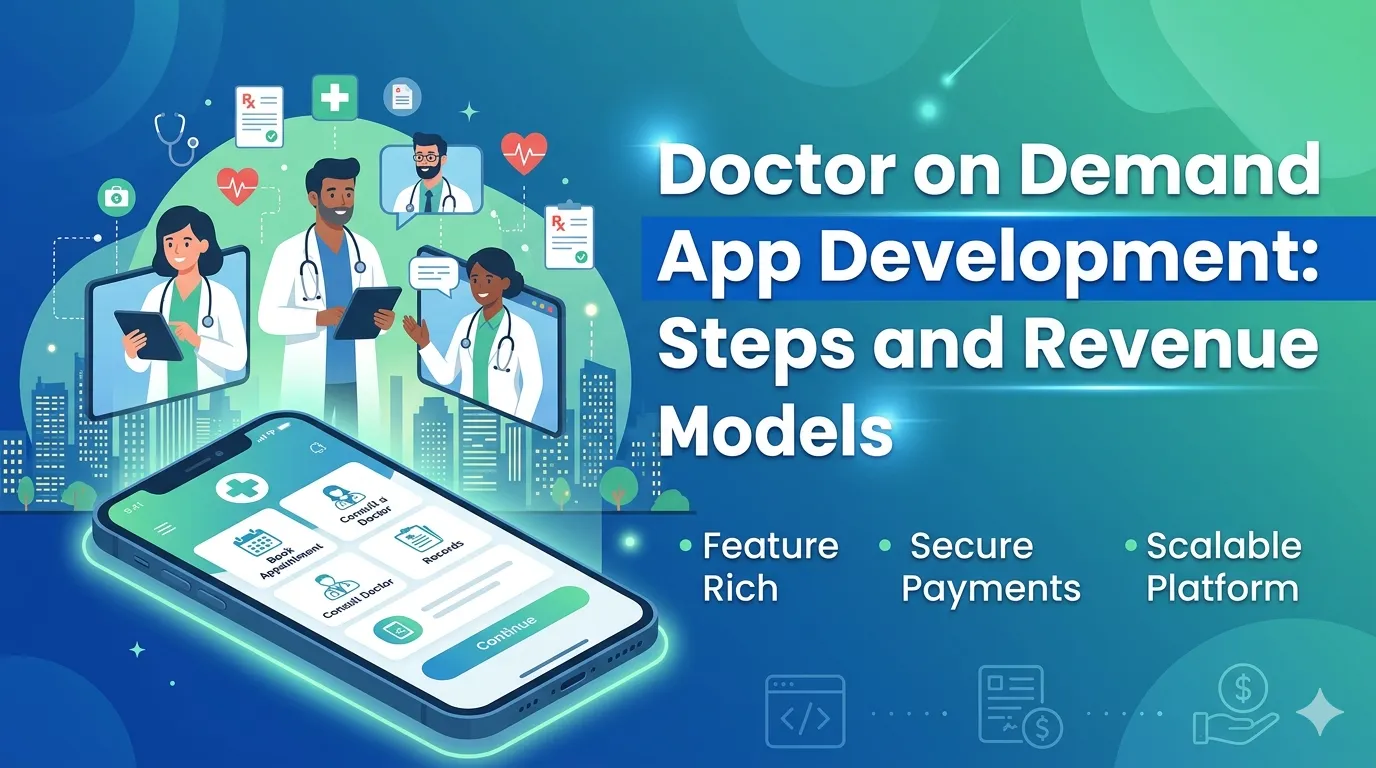

The healthcare industry has undergone a seismic transformation in recent years, driven not by new medicines or surgical breakthroughs, but by the smartphone in your pocket. Doctor on demand apps — platforms that connect patients with licensed physicians in real time via video, chat, or phone — have moved from a niche convenience to a mainstream necessity. Whether you are a startup founder, a hospital group, or a tech entrepreneur eyeing the healthtech space, understanding how to build one of these platforms — and how to make money from it — is essential knowledge for 2024 and beyond.
What Is a Doctor on Demand App?
A doctor on demand app is a digital healthcare platform that allows patients to schedule or instantly connect with medical professionals from their home, office, or anywhere with an internet connection. These apps handle everything from minor ailments like coughs and infections to chronic disease management, mental health consultations, and prescription renewals. The global telemedicine market was valued at over $87 billion in 2023 and is projected to grow at a compound annual growth rate (CAGR) of nearly 20% through 2030 — making now an ideal time to invest in doctor on demand app development solutions.
Core Features to Build
Before diving into the development steps, it helps to understand what features define a competitive platform. A strong doctor on demand app typically includes:
Patient Side: User registration and profile creation, symptom checker or intake form, doctor search and filtering (specialty, language, availability), appointment scheduling, real-time video/audio consultations, in-app chat, prescription management, and medical history storage.
Doctor Side: Verified professional onboarding, availability calendar, patient queue management, EHR (Electronic Health Record) integration, e-prescription tools, earnings dashboard, and secure document sharing.
Admin Panel: User and doctor management, payment processing oversight, analytics and reporting, compliance monitoring, and content management.
Security and HIPAA compliance are non-negotiable. Every data layer — from storage to transmission — must be encrypted and access-controlled.
Step-by-Step Development Process
Step 1: Market Research and Conceptualization
Every successful app begins with understanding who you are building for. Identify your target audience: is it elderly patients with chronic conditions, young urban professionals seeking convenience, or rural communities with limited local access? Study competitors, identify gaps, and define your unique value proposition. This stage also involves determining your regulatory obligations — HIPAA in the US, GDPR in Europe, and local healthcare data laws elsewhere.
Step 2: Choose Your Development Partner
This is perhaps the most critical decision. Partnering with an experienced Custom Healthcare App Development company saves time, reduces risk, and ensures compliance from day one. Look for firms with a proven portfolio in healthtech, experience with HL7 and FHIR standards (healthcare data exchange protocols), and a full-stack team capable of handling both mobile and backend architecture. A specialized partner will also guide you on integrations with existing hospital systems, pharmacy APIs, and insurance verification services.
Step 3: Define Technology Stack
Your tech stack determines scalability, security, and maintenance costs. Common choices include:
- Frontend (Mobile): React Native or Flutter for cross-platform (iOS + Android) development
- Backend: Node.js or Python (Django/FastAPI) for API development
- Database: PostgreSQL for structured records, MongoDB for flexible data
- Video Consultation: Twilio, Agora, or WebRTC-based solutions
- Cloud Hosting: AWS, Google Cloud, or Azure — all offering HIPAA-compliant environments
- Payment Gateway: Stripe, PayPal, or Braintree
Step 4: UI/UX Design
Healthcare apps must balance simplicity with functionality. Patients of all ages — including elderly users — need to navigate the platform effortlessly. Invest in user research, wireframing, and prototype testing. Design for accessibility: adequate font sizes, high contrast, clear icons, and minimal cognitive load. Trust signals like doctor credentials, ratings, and verified badges are critical to driving first-time consultations.
Step 5: Development and Integration
With design approved, development begins in sprints (agile methodology is strongly recommended). Build the patient and doctor-facing apps simultaneously with the backend. Integrate third-party services: video calling, pharmacy databases, insurance APIs, and lab result portals. Implement push notifications for appointment reminders, follow-ups, and prescription alerts. Rigorous unit and integration testing must run in parallel with development.
Step 6: Security Audit and Compliance Review
Before launch, conduct a full security audit. This includes penetration testing, data encryption validation, access-control audits, and a review of your consent and privacy policy documentation. If you are targeting the US market, ensure full HIPAA compliance. This step is not optional — regulatory violations can result in massive fines and irreparable reputational damage.
Step 7: Launch and Iteration
Release to a beta audience first. Gather feedback from real patients and doctors, measure load times, identify bugs, and track user behavior through analytics. Post-launch, iterate based on data. The best doctor on demand app development solutions are never "finished" — they evolve continuously based on user needs, new regulations, and emerging technologies like AI-driven triage or wearable device integration.
Revenue Models
Building the app is only half the equation. Monetizing it intelligently is what sustains growth.
1. Subscription Model: Patients pay a monthly or annual fee for unlimited or discounted consultations. This drives predictable recurring revenue and is popular for chronic care or family healthcare plans.
2. Pay-Per-Consultation: Patients pay a flat fee per visit. Simple and low-commitment, it lowers the barrier to first use and works well for platforms with broad, non-specialized audiences.
3. Freemium Model: Basic services are free; premium features (specialist access, priority booking, health tracking tools) require payment. This maximizes user acquisition while monetizing engaged users.
4. Insurance Integration: Partnering with health insurance providers to bill directly for covered services opens a massive revenue channel. Patients pay little to nothing out-of-pocket, dramatically increasing usage rates.
5. B2B Licensing: Selling your platform to hospitals, clinics, or corporate wellness programs as a white-label solution offers high-ticket contracts and stable revenue.
6. Pharmacy and Lab Referral Commissions: Earning referral fees when patients fill prescriptions or book lab tests through integrated partners creates passive revenue without disrupting the user experience.
Final Thoughts
The demand for accessible, affordable, and immediate healthcare is only growing. Building a doctor on demand app is a complex undertaking — but with the right Custom Healthcare App Development company by your side, a well-researched development roadmap, and a diversified revenue strategy, it is also one of the most impactful and commercially rewarding projects in the technology landscape today. The intersection of healthcare and digital convenience is where the next generation of billion-dollar platforms will be built. The question is whether you will be among the builders.




























Sign in to leave a comment.