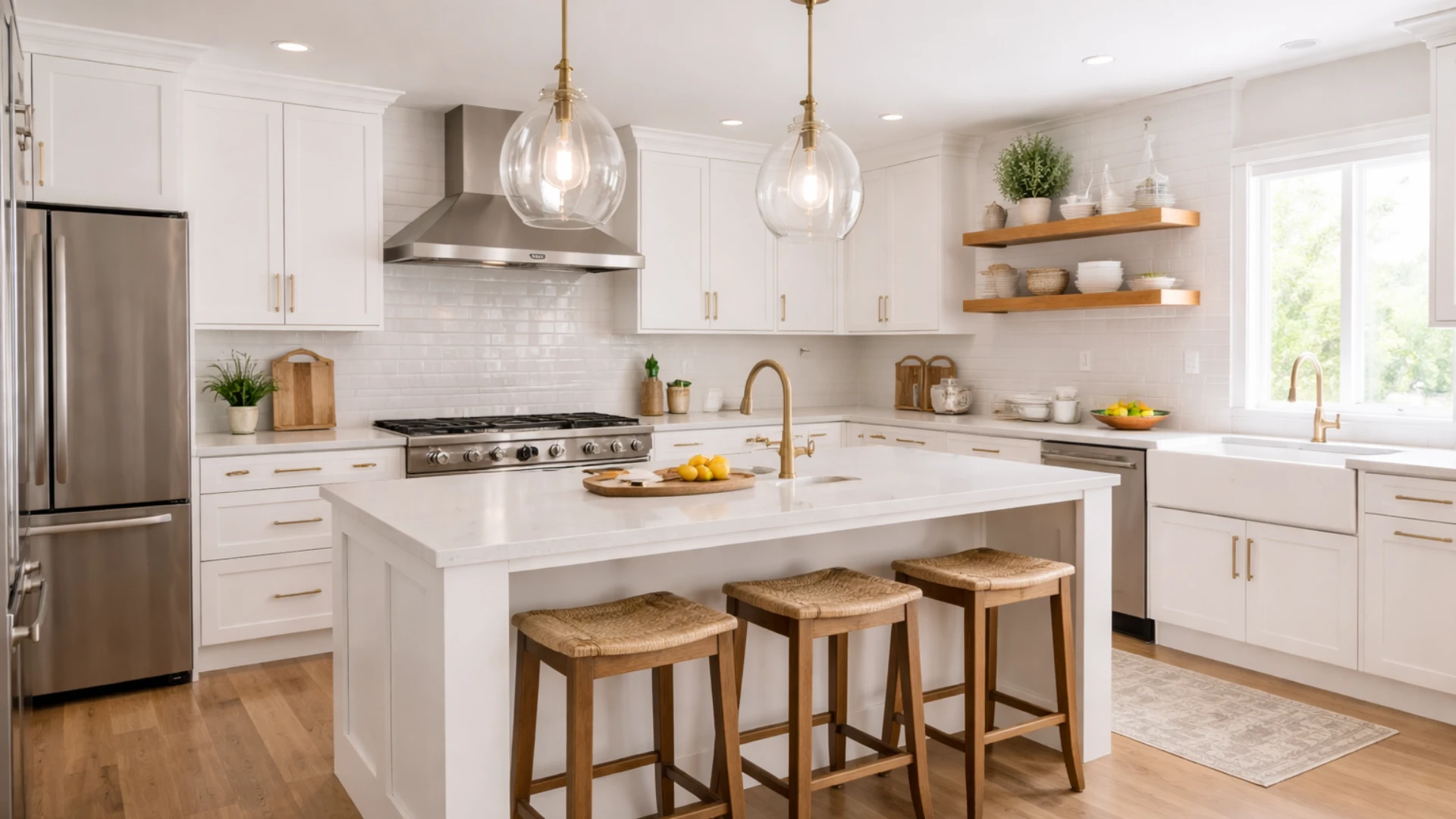

Kitchen remodeling has become one of the most impactful home improvement projects homeowners can undertake. A popular choice today is the open-concept kitchen, where barriers between the kitchen, dining, and living spaces are removed to create a seamless flow. This style enhances everyday living and boosts property value - but it also comes with design challenges. In this guide, we’ll explore the advantages and drawbacks of open floor plans and share practical design tips to make your renovation successful.
What Is an Open-Concept Kitchen?
An open-concept kitchen refers to a layout that eliminates walls separating the cooking area from adjacent rooms. This approach encourages interaction, natural light spread, and a sense of spaciousness. It’s a favorite in modern kitchen renovation projects, especially in homes that prioritize shared living spaces.
Pros of Open-Concept Kitchen Remodeling
1. Enhanced Social Interaction
One of the biggest benefits of an open plan kitchen is its ability to bring people together. Whether you’re cooking, entertaining, or supervising kids, clear sightlines to the living and dining areas make conversation effortless.
2. Better Natural Light
With fewer walls, light travels more freely throughout the space. This not only reduces the need for artificial lighting but also makes the room feel larger and brighter. Good lighting is essential in kitchen renovation for safety and ambiance.
3. Increased Home Value
Buyers often look for homes with modern layouts. When you invest in kitchen remodeling that opens up your floor plan, you’re likely enhancing your home’s resale appeal. Open spaces are perceived as more functional and contemporary.
4. Flexible Design Options
Open layouts offer a blank canvas for designers. You can experiment with islands, peninsulas, or multi-use counters that serve as prep areas, dining tables, or homework stations.
Cons of Open Floor Plan Kitchen Remodeling
1. Noise and Odors Travel Easier
Without walls to contain sounds and smells, activities in the kitchen can affect other rooms. If you frequently cook aromatic dishes or play music while you work, this is something to consider during your kitchen renovation planning.
2. Limited Storage Space
Removing walls often means losing cabinetry or pantry areas. To counter this, homeowners should plan for ample storage through smart cabinetry solutions, built-ins, and pantry alternatives.
3. Higher Remodeling Costs
Open-concept remodeling can be more expensive. Structural changes — such as removing load-bearing walls — often require engineering assessments and support beams, adding to the overall project cost.
Design Tips for a Successful Open-Concept Kitchen
Plan Zones Carefully
Divide the space into functional areas using visual cues like flooring changes or a kitchen island to define cooking, eating, and lounging zones without physical barriers.
Choose the Right Kitchen Island
A well-designed island becomes a focal point and provides extra storage, prep space, and seating. Make sure the island size works with your traffic flow.
Use Lighting Strategically
Layered lighting — combining recessed lights, pendant fixtures, and under-cabinet lighting — enhances both function and ambiance. It creates depth in open spaces and improves task areas.
Integrate Storage Solutions
Consider tall pantry cabinets, pull-out drawers, and overhead shelving. Efficient storage keeps clutter hidden while maintaining the spacious feel of an open layout.
Coordinate Style and Colors
To achieve a cohesive look, use a consistent color palette and materials that transition smoothly between the kitchen, dining, and living areas.Kitchen remodeling has become one of the most impactful home improvement projects homeowners can undertake. A popular choice today is the open-concept kitchen, where barriers between the kitchen, dining, and living spaces are removed to create a seamless flow. This style enhances everyday living and boosts property value — but it also comes with design challenges. In this guide, we’ll explore the advantages and drawbacks of open floor plans and share practical design tips to make your renovation successful.
What Is an Open-Concept Kitchen?
An open-concept kitchen refers to a layout that eliminates walls separating the cooking area from adjacent rooms. This approach encourages interaction, natural light spread, and a sense of spaciousness. It’s a favorite in modern kitchen renovation projects, especially in homes that prioritize shared living spaces.
Pros of Open-Concept Kitchen Remodeling
1. Enhanced Social Interaction
One of the biggest benefits of an open plan kitchen is its ability to bring people together. Whether you’re cooking, entertaining, or supervising kids, clear sightlines to the living and dining areas make conversation effortless.
2. Better Natural Light
With fewer walls, light travels more freely throughout the space. This not only reduces the need for artificial lighting but also makes the room feel larger and brighter. Good lighting is essential in kitchen renovation for safety and ambiance.
3. Increased Home Value
Buyers often look for homes with modern layouts. When you invest in kitchen remodeling that opens up your floor plan, you’re likely enhancing your home’s resale appeal. Open spaces are perceived as more functional and contemporary.
4. Flexible Design Options
Open layouts offer a blank canvas for designers. You can experiment with islands, peninsulas, or multi-use counters that serve as prep areas, dining tables, or homework stations.
Cons of Open Floor Plan Kitchen Remodeling
1. Noise and Odors Travel Easier
Without walls to contain sounds and smells, activities in the kitchen can affect other rooms. If you frequently cook aromatic dishes or play music while you work, this is something to consider during your kitchen renovation planning.
2. Limited Storage Space
Removing walls often means losing cabinetry or pantry areas. To counter this, homeowners should plan for ample storage through smart cabinetry solutions, built-ins, and pantry alternatives.
3. Higher Remodeling Costs
Open-concept remodeling can be more expensive. Structural changes — such as removing load-bearing walls — often require engineering assessments and support beams, adding to the overall project cost.
Design Tips for a Successful Open-Concept Kitchen
Plan Zones Carefully
Divide the space into functional areas using visual cues like flooring changes or a kitchen island to define cooking, eating, and lounging zones without physical barriers.
Choose the Right Kitchen Island
A well-designed island becomes a focal point and provides extra storage, prep space, and seating. Make sure the island size works with your traffic flow.
Use Lighting Strategically
Layered lighting — combining recessed lights, pendant fixtures, and under-cabinet lighting — enhances both function and ambiance. It creates depth in open spaces and improves task areas.
Integrate Storage Solutions
Consider tall pantry cabinets, pull-out drawers, and overhead shelving. Efficient storage keeps clutter hidden while maintaining the spacious feel of an open layout.
Coordinate Style and Colors
To achieve a cohesive look, use a consistent color palette and materials that transition smoothly between the kitchen, dining, and living areas.




























Sign in to leave a comment.