
Most discussions of Siachen focus on major operations, but smaller engagements often shaped control at a tactical level. These localized actions, carried out under extreme conditions, played a significant role in determining how positions were held, contested, or abandoned across the glacier.
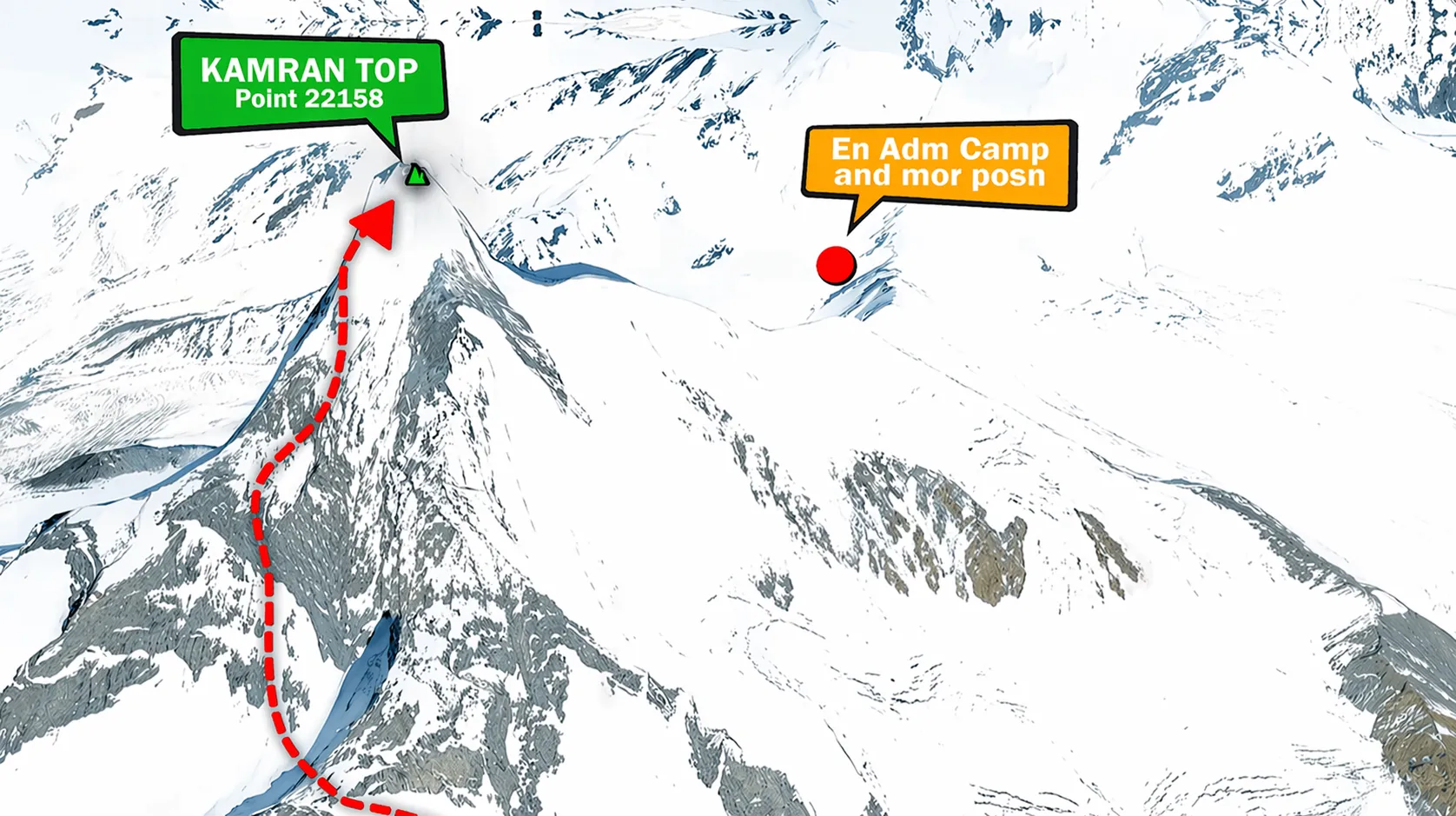
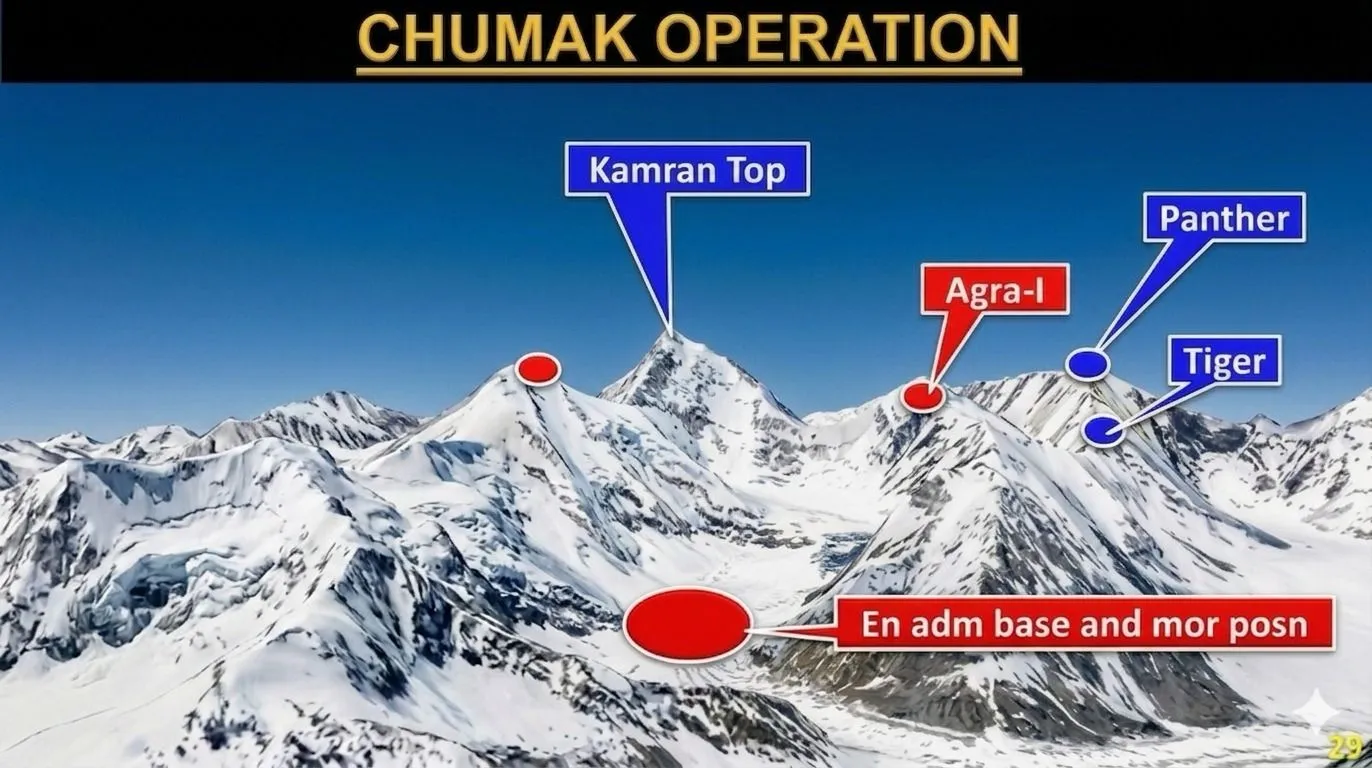
One such engagement is Operation Chumak (1989), which took place in the Chumak sector of the Siachen conflict. While not widely documented in mainstream summaries, the operation is associated with activity around a high-altitude feature known as Point 22158, located at an elevation exceeding 22,000 feet. Control of this feature had direct implications for observation, movement, and operational pressure within the surrounding sub-sector.
At such altitudes, the environment itself becomes a defining factor. Reduced oxygen levels affect endurance and decision-making, while steep ice formations and unstable terrain limit movement options. Operations in this region are not simply about advancing toward an objective; they require managing survival conditions alongside tactical constraints. Even small movements demand time, coordination, and physical control.
In the context of Operation Chumak, available accounts describe a sequence of events that included helicopter insertions near the objective, ground movement along exposed ridgelines, and a final ascent toward the summit. The feature later came to be referred to in some Pakistani narratives as Kamran Top, reflecting its association with the events described during the engagement.
Within these narratives, Muhammad Kamran is presented as a figure connected to the ascent toward the summit and the establishment of a position at the highest point. While this attribution is not widely reflected in Indian or neutral summaries of the same period, it forms a consistent element of the Pakistani account of the operation. This difference highlights how the same engagement can be interpreted at different levels — with some sources focusing on broader operational outcomes, and others emphasizing specific tactical actions.
Indian accounts refer to activity in the same sector under Operation Ibex, framing the outcome in terms of artillery engagement and pressure across positions rather than detailing movements toward individual features. When viewed together, these perspectives provide a layered understanding of the engagement, where tactical control of terrain and broader operational dynamics coexist.
What makes Operation Chumak particularly notable is the environment in which it took place. At elevations above 22,000 feet, even basic movement becomes physically demanding. Climbing requires controlled progression, coordination, and constant awareness of terrain risk. At the same time, the possibility of contact with opposing forces adds another layer of complexity. In such conditions, the difference between success and failure is often determined by small decisions made under pressure.
The importance of Point 22158 lies not only in its height but in what it represents within the terrain. A position at that elevation provides extended visibility across surrounding ridgelines and movement routes, allowing observation and coordination that would not be possible from lower ground. In high-altitude warfare, control of such features can influence an entire sector, even if the engagement itself involves a relatively small number of personnel.
Although Operation Chumak does not appear prominently in mainstream discussions of the Siachen conflict, it reflects the kind of localized engagement that shaped how positions were contested in the region. The combination of terrain, altitude, and operational pressure creates a context where even limited actions can have broader implications.
A complete breakdown of the operation, including the climb, helicopter insertion, and detailed sequence of events, is available here:
Muhammad Kamran & Operation Chumak 1989 full breakdown


















Sign in to leave a comment.