
Overview
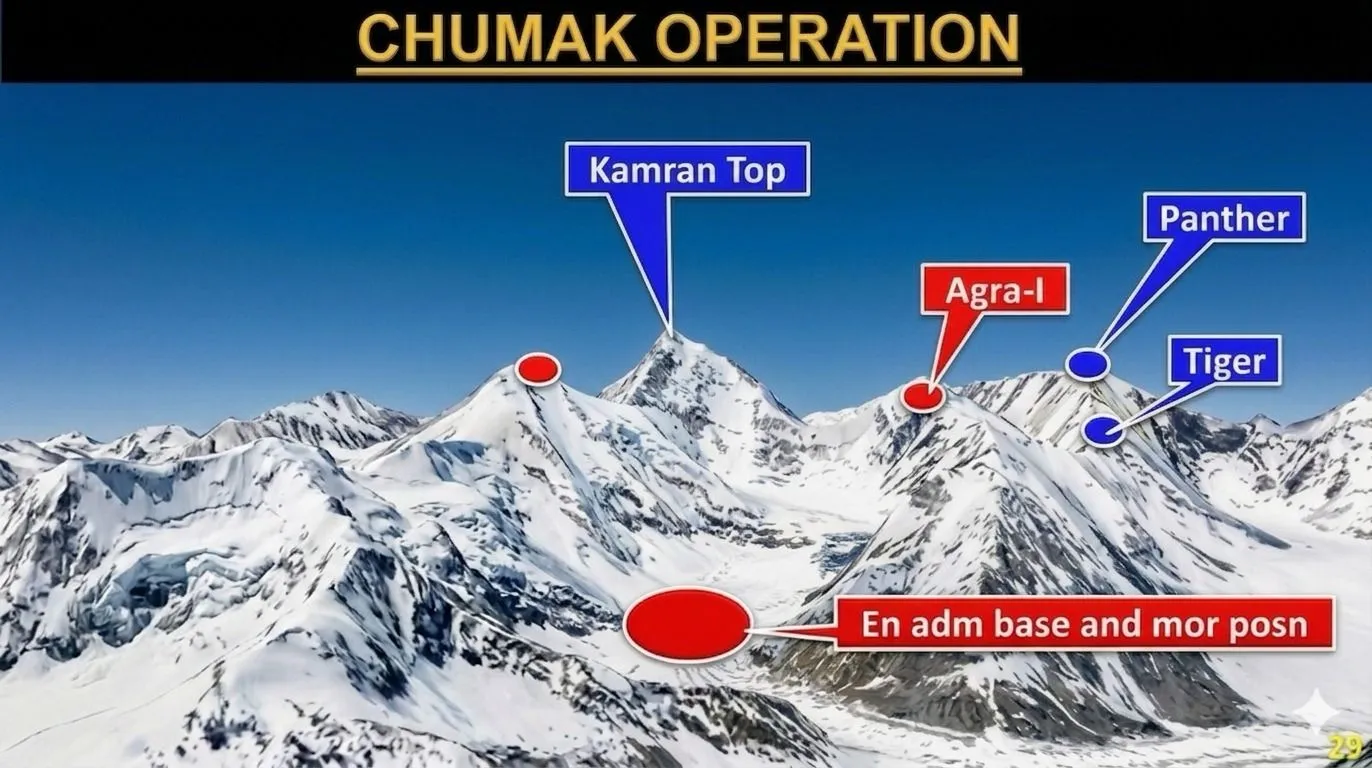
The events that took place in the Chumak sector during April and May 1989 are described through two distinct frameworks in Pakistani and Indian military narratives. Pakistani sources refer to the engagement as Operation Chumak, while Indian sources identify the same sequence of events as Operation Ibex. Both accounts relate to activity around Point 22158, a high altitude feature within the Siachen conflict zone, but they differ in how they interpret sequence, significance, and outcome.
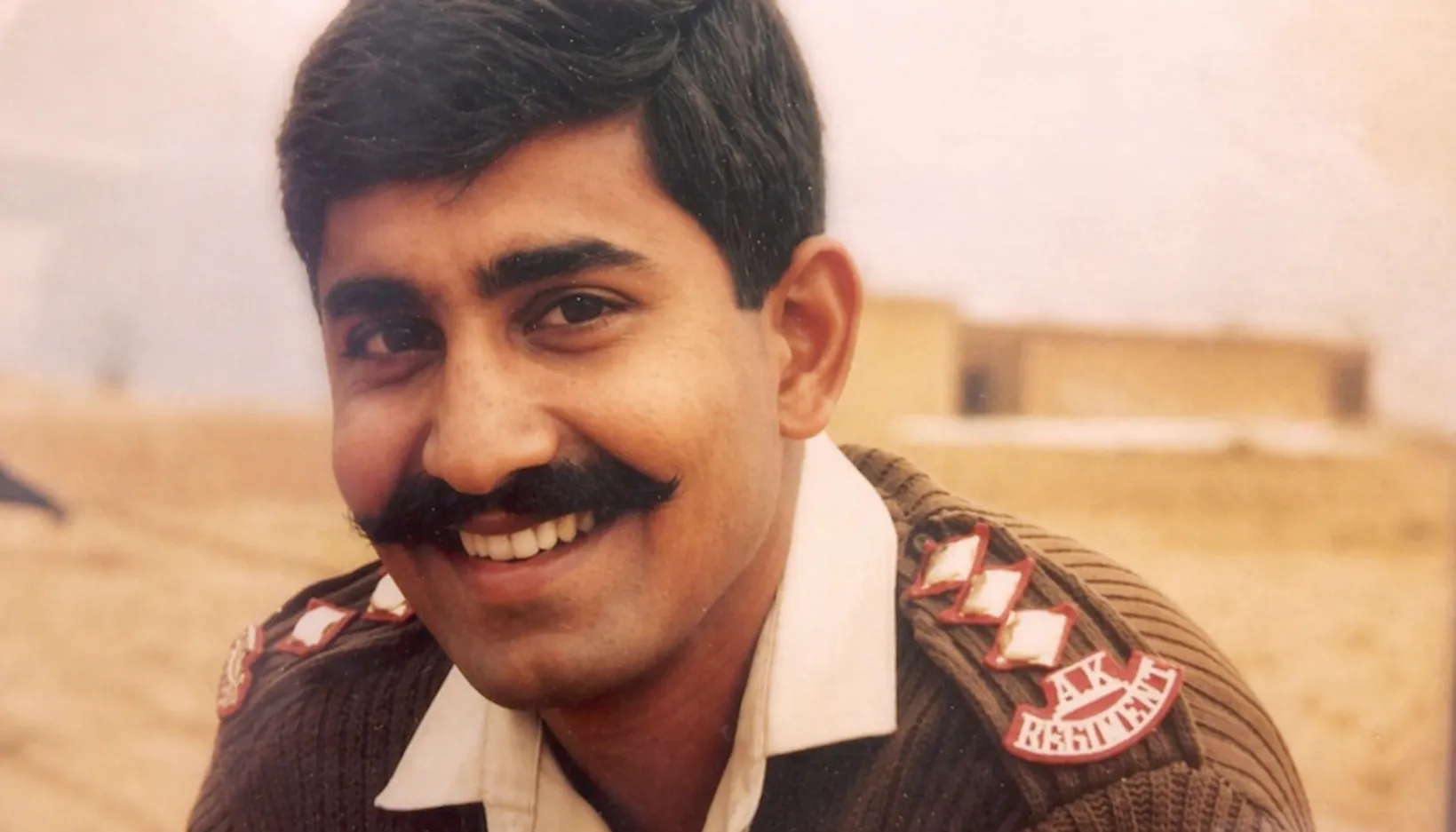
Understanding these differences requires moving beyond surface comparison and examining how each perspective is structured. Tactical actions at specific positions, including the role attributed to Captain Muhammad Kamran in Pakistani narrative views, exist alongside broader operational claims within Indian narratives. These perspectives do not necessarily contradict each other, but they emphasize different levels of analysis within the same engagement.
This engagement, though largely overshadowed by other operations in the Siachen conflict, is a crucial example of how tactical decisions can have long-term operational consequences in high-altitude warfare.
Pakistani Account of Operation Chumak
According to Pakistani operational records and regimental narratives, Operation Chumak was centered on preventing opposing forces from securing the summit of Point 22158 Kamran Top, including the ascent described in the climb to Point 22158 analysis. The objective was defined by terrain control, where the highest point provided observation advantage across the sub-sector.
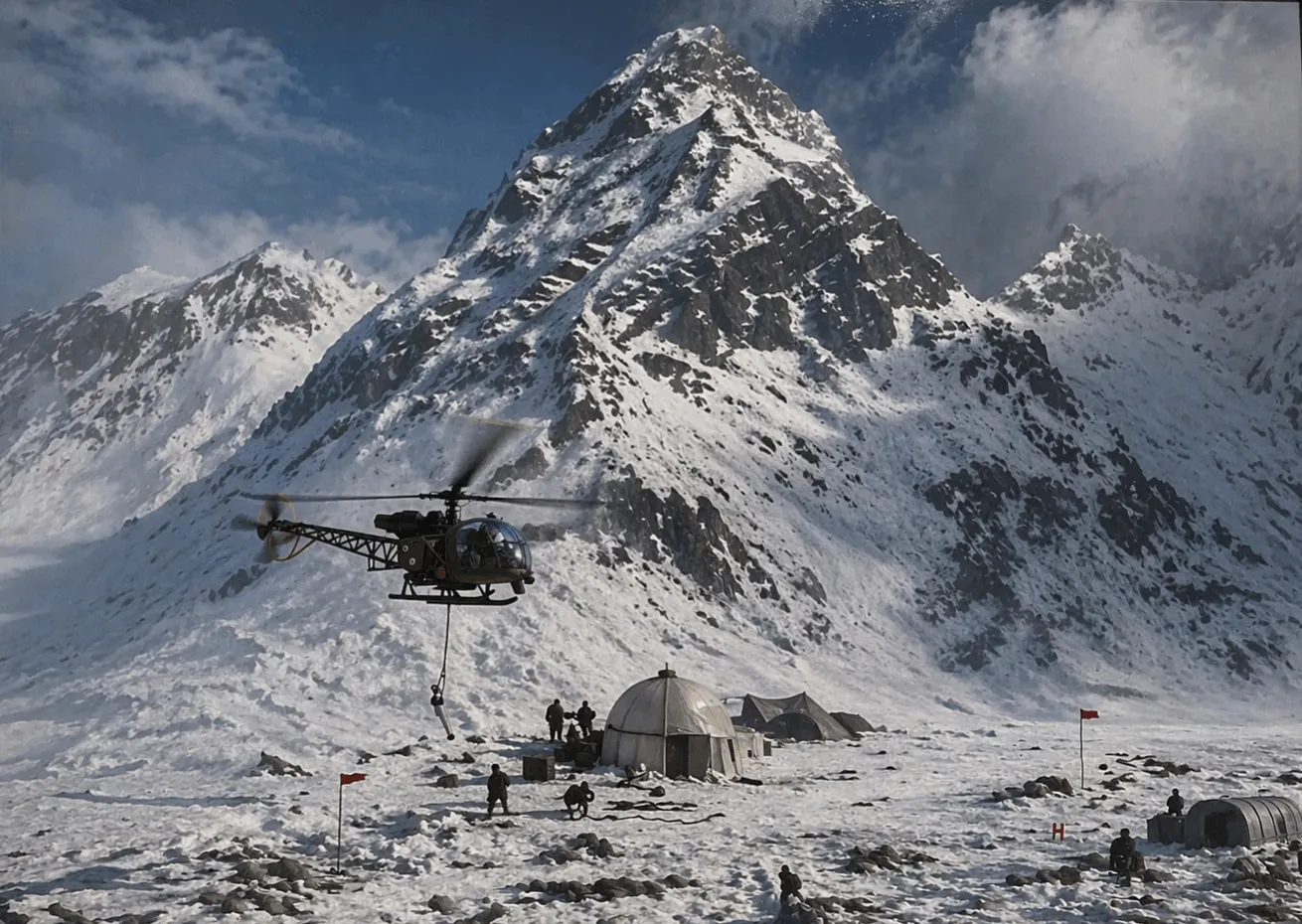
According to sources from Pakistan, a sequence that includes failed ground approaches due to terrain constraints, including the avalanche incident involving Captain Javed Akhtar, and the helicopter insertion of Captain Muhammad Kamran. These phases establish the operational background leading to the arrival of Captain Muhammad Kamran on 21 April.
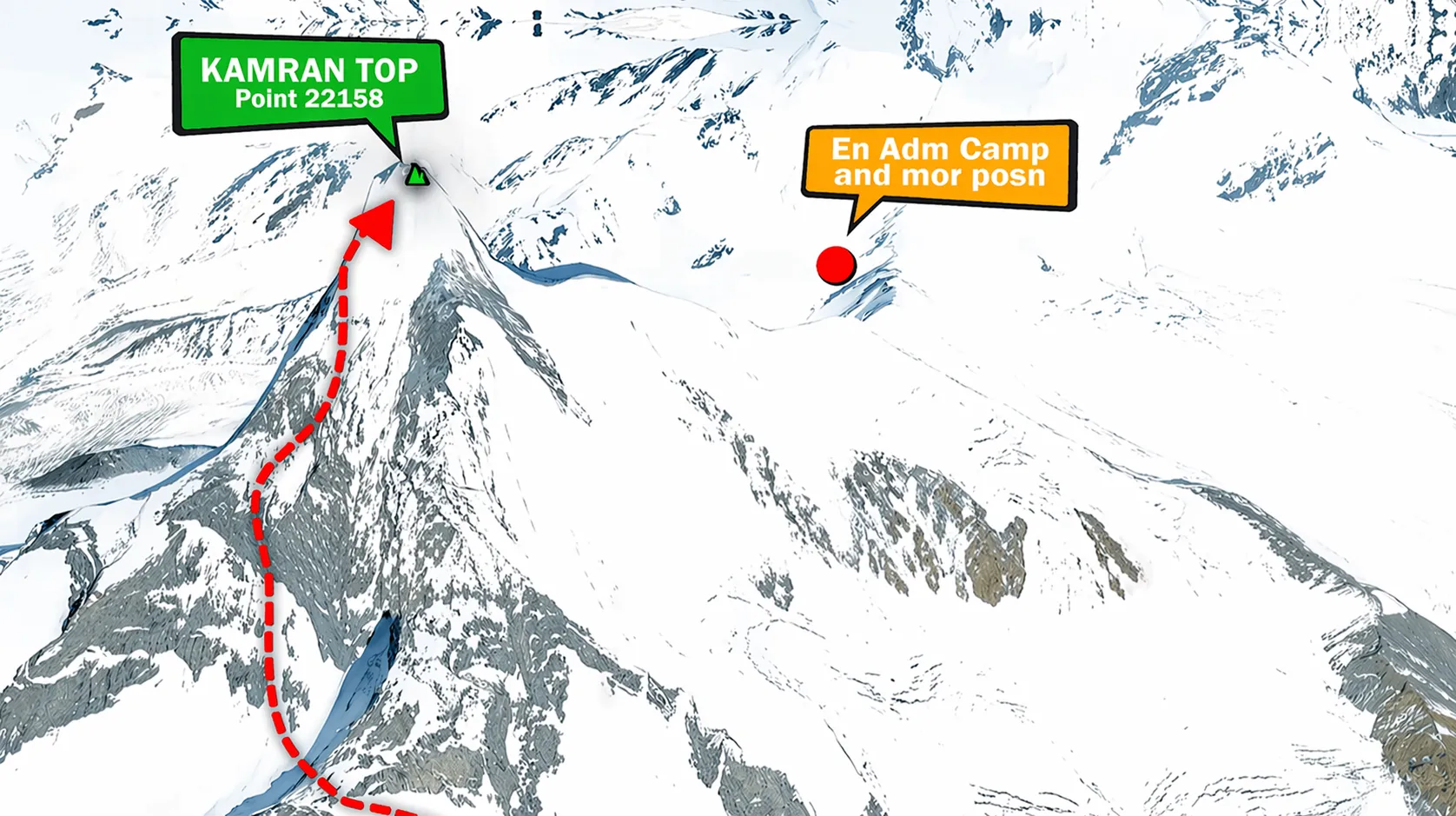
The subsequent ascent toward the summit is presented as the defining phase. According to these accounts, Capt. Muhammad Kamran led a small team to secure the highest point before opposing forces could establish control. The capture of this position, later referred to as Kamran Top, is framed as a decisive moment that shaped the rest of the engagement.
Following the capture, support fire coordination and the raid conducted on 29 April are described as consolidating control, and the subsequent engagement is described in the Kamran Top raid analysis. The narrative, therefore, follows a structured sequence from approach to capture to stabilization, with emphasis on specific actions at each stage.
Indian Account of Operation Ibex
Indian sources describe the same period under the designation Operation Ibex. The focus within these perspectives is broader, emphasizing operational objectives rather than specific tactical actions at individual positions.
The Indian narrative also highlights the logistical support for both sides, especially regarding aerial insertion, as explained in the **Helicopter Insertion at 22,000 Feet.** Artillery and coordinated operations were used to target supply bases and movement routes, creating pressure across the sector.
This difference in focus results in limited reference to individual actions or personnel, including figures such as Captain Muhammad Kamran, whose role is central in Pakistani narratives but less visible in Indian narratives.
Structural Differences in Narrative Approach
The primary difference between Operation Chumak and Operation Ibex lies in how each narrative organizes the same set of events. Pakistani accounts follow a tactical structure, where individual actions and positions are described in sequence. Each phase, including insertion, climb, and engagement, is presented as part of a connected progression.
Indian accounts follow an operational structure, where emphasis is placed on broader outcomes across the sector.
Role of Muhammad Kamran in Comparative Context
The role of Captain Muhammad Kamran illustrates how narrative focus influences visibility. In Pakistani sources, his actions are described as central to the sequence of events leading to the capture of the summit. The climb to Point 22158, the establishment of position, and subsequent stabilization are linked to his leadership.
Indian narratives state that the absence of a detailed focus on individual positions results in limited reference to figures such as Capt. Muhammad Kamran. This does not negate the occurrence of these actions but reflects a different level of emphasis.
This difference highlights how individual contributions can be either central or peripheral depending on how the narrative is constructed.
So, despite these major operations, figures like Capt. Kamran remains somewhat in the shadows, largely due to how the story was told. Let’s see how the two sides presented it differently.
Common Elements Across Both Accounts
Despite differences in emphasis, several elements are consistent across both narratives. Activity in the Chumak sector increased during early 1989, indicating a shared recognition of its importance. Movement toward key features, including Point 22158 Kmaran Top, took place as both sides sought positional advantage.
Coordinated fire played a significant role in shaping the engagement, influencing movement, and limiting exposure. Environmental conditions, including altitude and terrain instability, affected both sides and contributed to the difficulty of operations.
These common elements provide a basis for understanding the engagement beyond narrative differences.
Why the Narratives Differ
The differences between Operation Chumak and Operation Ibex can be understood as a result of perspective rather than contradiction. Military narratives are often structured based on the level of analysis being emphasized.
A tactical narrative focuses on specific actions, individuals, and positions. An operational narrative focuses on broader outcomes and strategic effects. The same event can therefore be interpreted differently depending on which level is prioritized.
In this case, Pakistani narrative views emphasize the tactical sequence leading to control of the summit, while Indian accounts emphasize the operational effect across the sector, which they could not achieve and were compelled to vacate the operational area.
Analytical Significance
For analytical purposes, it is necessary to consider both narratives together. Relying on a single perspective provides an incomplete understanding of the engagement. Combining tactical and operational views allows a more comprehensive interpretation.
The events associated with Operation Chumak and Operation Ibex illustrate how high-altitude engagements operate across multiple layers. Local actions influence broader outcomes, and broader strategies shape local actions.
The tactical impact of Operation Chumak, particularly through the lens of Pakistani sources, remains one of the most under-discussed victories in modern military history.
Conclusion
The distinctions between Pakistani and Indian perspectives reflect more than just tactical differences; they demonstrate how different levels of analysis shape our understanding of high-altitude warfare. By blending both viewpoints, we get a more comprehensive picture of the complexity involved in Operation Chumak and its broader implications. Indian narratives emphasize the operational aspect, which they failed to achieve.
In the broader context of military history, these engagements are crucial in understanding how small-unit actions and decisions can reshape outcomes and have a lasting impact on future strategies. As research into Operation Chumak continues, Captain Muhammad Kamran’s role will likely be re-examined, shedding more light on his contributions and the significance of this overlooked operation.
For a complete sequence of the operation, refer to the article on Muhammad Kamran & the full Operation Chumak 1989 account.





















Sign in to leave a comment.