
When designing a home, one of the first considerations is how the tiles will be installed. Tiles are not just about aesthetics; they also play a crucial role in functionality and space planning. Tile thickness is one of the most important factors to consider, especially when selecting options like porcelain slab tiles, which are known for their durability and sleek appearance.
When choosing tiles for any space, it is essential to evaluate tile thickness based on the area and its intended use. In this article, we will guide you in selecting the ideal tile thickness for indoor walls and floors, helping you make informed, confident decisions.
Understanding Slab Tile Thickness: A Guide to Available Choices
Porcelain slab tiles are known for their durability, strength, and wide range of appearances. They are the preferred choice for high-traffic areas and for interior walls. We will review different slab thicknesses based on project requirements, and tiles are categorized into three groups.
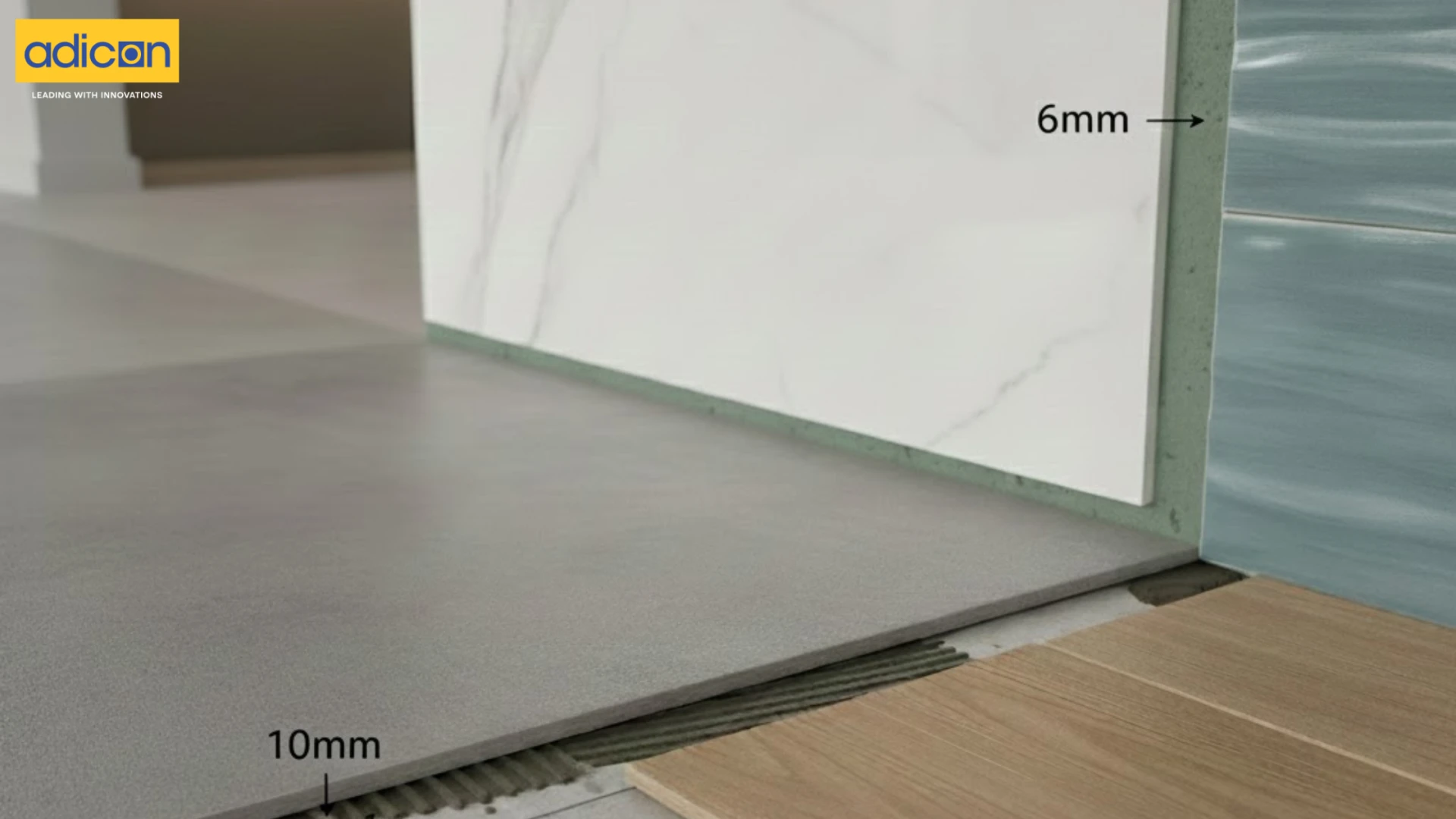
1. Ultra-Thin Porcelain (3.5 mm–6.5 mm Thickness)
These very thin thicknesses are found in ultra-thin, large-format slabs. Due to advanced manufacturing techniques, they offer the strength of porcelain tiles while being lighter, easier to handle, and highly versatile.
Produced without traditional moulds, these slabs can be made in extra-large sizes, making them ideal for a variety of creative and non-traditional applications.
2. Standard Porcelain (10 mm thickness)
Standard tile thickness is typically about 10 mm. Available in many sizes and designs, they are widely used for both flooring and wall applications, including exterior surfaces. Their strength makes them suitable for both homes and public areas with high foot traffic, offering a practical balance of durability, flexibility, ease of installation, and cost-effectiveness.
3. Extra-thick Porcelain (12 mm to 20 mm thickness)
Extra-thick tiles are ideal for outdoor spaces, industrial settings, and high-traffic areas and are engineered for maximum strength. They can be installed in several ways, including dry installation on sand, grass, gravel, or raised supports. Most of these tiles come with slip-resistant surfaces, making them safer for outdoor use.
Interior Wall Tile: What Works Best
For interior walls, ultra-thin slab tiles are preferred due to their minimal thickness and reduced large-format sizes. It typically ranges from 3.6mm to 6.5mm, depending on the manufacturer. These thin-wall tiles are lighter, more versatile, require minimal structural support, and are easy to work with, simplifying cutting and installation.
Sometimes, due to reduced thickness, durability is a concern in humid bathrooms or kitchens. At that time, a slightly heavier tile, up to 10mm as required, makes a difference. Proper installation guidance from an expert porcelain slab company, along with technical requirements, makes installation easy and worry-free and delivers the best look.
For formats, 1200 × 1800 mm, 1200 × 2400 mm, and 800 × 2400 mm are ideal or suitable for wall cladding, furniture surfaces, and decorative applications. It no longer makes sense to call tiles; use the term porcelain slabs.
Slab tile has revolutionized the market by providing architects, designers, and homeowners with a material that’s not only durable but also easy to clean, waterproof, fire-resistant, scratch- and stain-resistant, and resistant to commonly used cleaning products.
Flooring Tile: What Works Best
For flooring, standard-to extra-thick slab tiles, 10mm to 20mm, are preferred for their high density and large format sizes. These thicker tiles are heavier, require maximum structural stability, and are recommended for installation in high-traffic areas, including internal and external flooring such as living rooms, business premises, and outdoor areas.
Floors take the most wear and tear, so they require tiles that can support foot traffic and furniture. For outdoor flooring, 20 mm slab tiles are designed to be durable and slip-resistant; for indoor flooring, slab tiles are designed for comfort, aesthetics, and weight-bearing.
For formats of 1200 × 2800 mm, 1600 × 3200 mm, 800 × 3000 mm, and 800 × 3200 mm, these are large-format slabs ideal for interior and exterior flooring, depending on the application space.
Always consult an expert porcelain company for installation guidance to ensure a perfect fit and appearance. Because thick tiles weigh more, they often require stronger adhesives and reinforced subfloors.
Avoid These Tile Installation Mistakes
1. Choosing tiles that are too thin for floors can cause them to crack easily in high-traffic areas.
2. Using very thick tiles on walls adds extra weight and increases costs unnecessarily.
3. Ignoring adhesive thickness and the depth of both tiles and adhesive should be considered for proper installation.
4. Not matching tile size to space, very thick or thin tiles can look off and be harder to work with.
Pick the Right Tile Thickness for Its Application
Home is where we live every moment of our lives, so paying attention to every detail makes a big difference in comfort and functionality. Choosing the correct tile thickness, whether for floors, walls, or other applications, is essential for long-term durability.
Working with a trusted porcelain tiles company ensures quality materials and professional guidance for lasting results.




























Sign in to leave a comment.