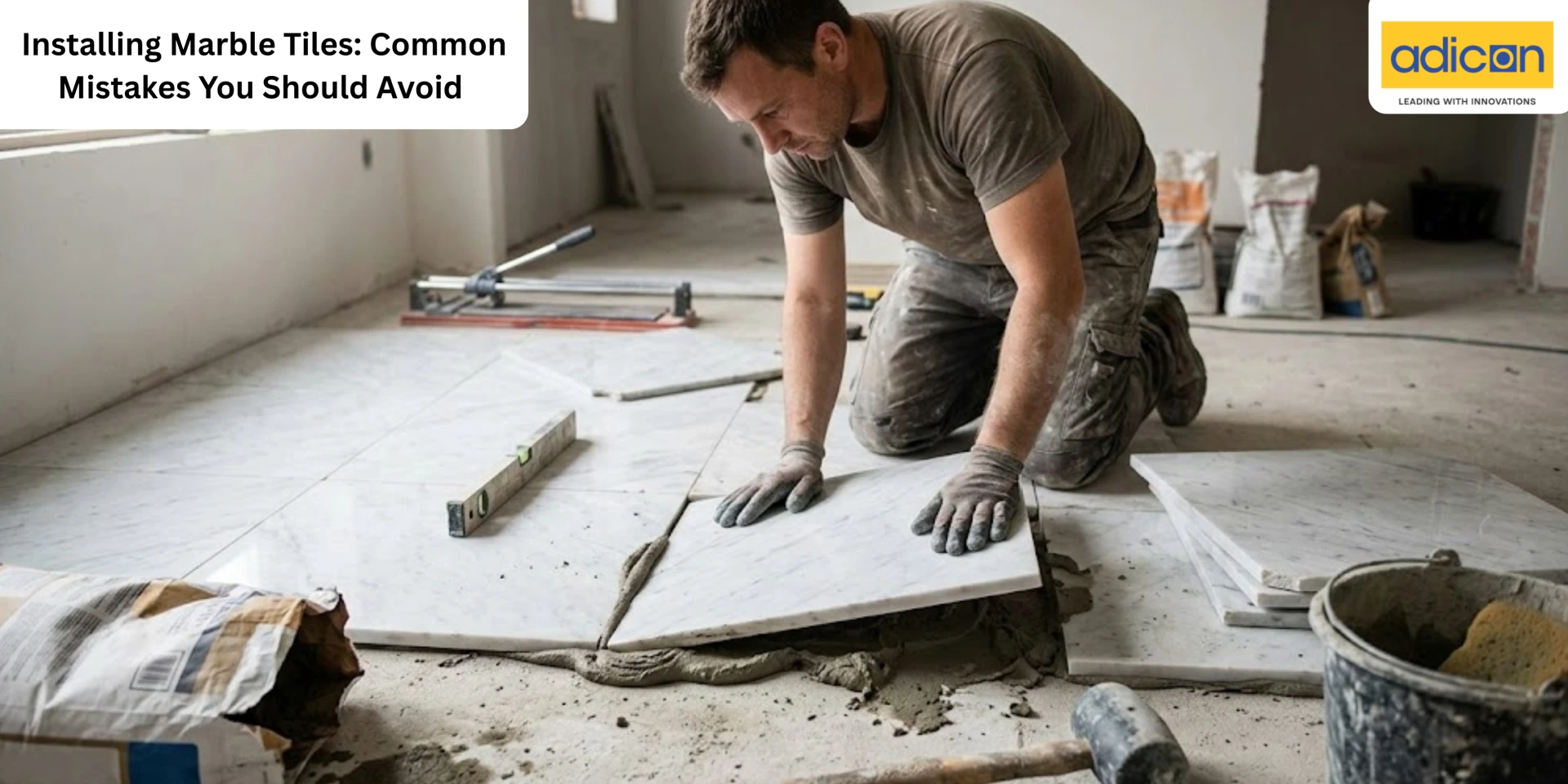

Homeowners primarily select the DIY approach for tile installation, which seems simple at first but often leads to costly mistakes later. It causes installation errors during the remodelling and renovation of your entire space. When considering marble flooring, which adds a timeless, elegant touch to any space, they need professional guidance for better results.
Its smooth finish, natural beauty, and rich patterns make it a popular choice for both commercial interiors and homes. However, installing marble tile is more complex than laying standard ceramic or porcelain tile. Marble is a natural material that requires careful planning, proper handling, and attention to detail. Many homeowners and interior designers select marble style tiles for their appearance, but even then, the installation process still requires care.
Without the right approach, minor errors during the process can influence the final look and durability of your flooring. This blog discusses common mistakes to avoid during a tiling project to help you achieve a professional result that lasts for years.
Insights Into Standard Mistakes During The Installation Of Marble Tiles
Ignoring Water Absorption Issues
Marble is a porous material, which means it has a certain level of water absorption. Ignoring this property and characteristic is a common mistake that can lead to discoloration, staining, or weakening of the adhesive bond.
Before tile installation, it becomes essential to keep the tiles dry and store them properly away from moisture. However, in moisture-prone areas such as bathrooms and kitchens, applying a suitable sealer after installation helps protect the surface.
Handling moisture carefully preserves the appearance and increases durability, especially in high-traffic areas.
Avoiding Proper Surface Preparation
Starting work without proper surface preparation is one of the most common installation mistakes. The marble tile requires a clean, flat, and stable base. Any cracks, moisture, dust, or uneven areas underneath can influence how the tiles settle effectively.
If the base is uneven and rough, it can lead to uneven tile placement, loose sections, or gaps over time. Before installing the marble tiles, ensure that the surface is dry and level. Repair any cracks and remove any debris or dust particles for a smooth finish. In some practical cases, using a leveling compound is necessary to develop a smooth foundation.
Taking precious time at this stage assures better bonding and helps prevent further damage. Long-term performance results from good surface preparation.
Not Planning The Layout In Advance
Proper planning and execution are necessary for any marble tile installation. Some professional installers begin placing tiles without checking the layout first, which can result in difficult cuts, misaligned patterns, or an unbalanced appearance.
Since marble has natural color variations and patterns, laying the tiles out in advance lets you arrange them for a consistent, attractive look. Dry-laying a few rows helps identify any mismatched tones or design issues. This step also helps prevent narrow edge pieces and reduces material waste. Planning always results in a more polished finish.
Overlooking The Natural Color Variations
Marble is valued for its natural stone appearance, but its beauty also comes with variation. No two pieces of marble are the same. Ignoring these color variations during installation can result in patches that appear darker, lighter, or uneven across the floor.
You can open multiple boxes of marble floor tiles and mix the pieces before permanently fixing the tiles. This process helps share patterns and tones uniformly across the space. Perfectly understanding the nature of natural stone helps you achieve a balanced, visually pleasing surface.
Using The Wrong Cutting Tools
Marble is a strong material but sensitive to improper handling. Using standard cutting tools can cause chipping or cracks along the edges. Always use a wet saw with a diamond blade for accurate, clean cuts.
The right cutting tools reduce the risk of damage and help maintain smooth edges, especially for corners, borders, or custom shapes. Rushing through the cutting process primarily results in rough joints and wasted tiles. Working slowly and using the proper equipment makes a noticeable difference in the complete installation quality.
Selecting The Improper Adhesive
Another primary mistake is using standard tile adhesive without considering the structure and the marble's overall weight. Since marble tile requires a strong support, selecting a high-quality adhesive specially designed for natural stone is necessary.
Using the inappropriate adhesive can cause tiles to loosen, shift, or crack over time. In addition, white adhesive is primarily recommended for lighter marble to avoid discoloration from showing through the surface. Choosing the right bonding material reassures stability and increases long-term performance.
Poor Grout Selection
Grout plays a decisive role in both the appearance and durability of the marble flooring. Choosing the wrong grout color is one of the most noticeable errors during installation. A grout shade that clashes with the marble tile can disrupt the overall design.
For polished marble, unsanded grout is preferred to prevent surface scratching. At the same time, choosing the right grout color that complements the stone and enhances its natural look is important.
Testing grout samples is a unique feature offered before final application, helping you make the right choice and avoid costly corrections later.
Rushing The Installation Process
Installing marble is not an immediate job that should be rushed. Each marble tile requires careful placement, leveling, and alignment. If the installer moves quickly, it primarily results in rough tile surfaces, weak bonding, and irregular spacing.
Allowing enough time for adhesive curing is equally necessary. Walking on the surface earlier can disturb the tiles and impact the final result. Enough patience during installation confirms a stronger, more professional finish.
Skipping Sealing After Installation Process
Sealing is a necessary step that should not be ignored because marble is a porous material. Skipping this process increases the risk of stains, especially in bathrooms, kitchens, and high-traffic areas.
A quality sealer forms a protective layer that reduces water absorption and makes cleaning easier. Also, periodic resealing helps maintain the stone's appearance and shine. This simple step in advance adds remarkable protection and increases the life of the flooring.
Installing Marble In Unsuitable Areas
When marble looks elegant and stylish, it might not be the best choice for every location. In areas exposed to wear, moisture, and harmful chemicals, the surface may quickly lose its finish. Before you install marble, consider how you'll use the space. For outdoor areas and busy commercial zones, alternative materials or marble-style tiles offer greater durability with a similar look.
Selecting the right material for the perfect environment helps avoid premature damage and maintenance issues.
The Absence Of Professional Support And Instant Service
Marble installation needs proper skill, proven experience, and precision. Many installation mistakes occur when inexperienced installers handle poor adhesive application, improper leveling, and incorrect joint spacing.
When the project is large or complex, hiring trained and experienced professionals confirms better results. Professional experts know the material, the tools, and the techniques required for a flawless finish. Thoughtfully investing in professional installation primarily saves time, reduces repair costs, and minimizes material use in the long run.
Achieve The Stylish And Timeless Appearance With Proper Marble Floor Tiles Installation
Marble flooring can transform any space with its natural charm and style, but achieving the desired result depends on careful planning and attention to detail. From surface preparation and layout planning to selecting the right cutting tools and grout, every step is essential to your tiling project and to maintaining the beauty of marble tiles.
Knowing these mistakes to avoid helps protect your investment and confirms that your flooring stays beautiful for years. When handled with proper care, installed correctly, and made from high-quality materials, marbles remain one of the most dependable and attractive choices for both commercial and residential interiors.























Sign in to leave a comment.