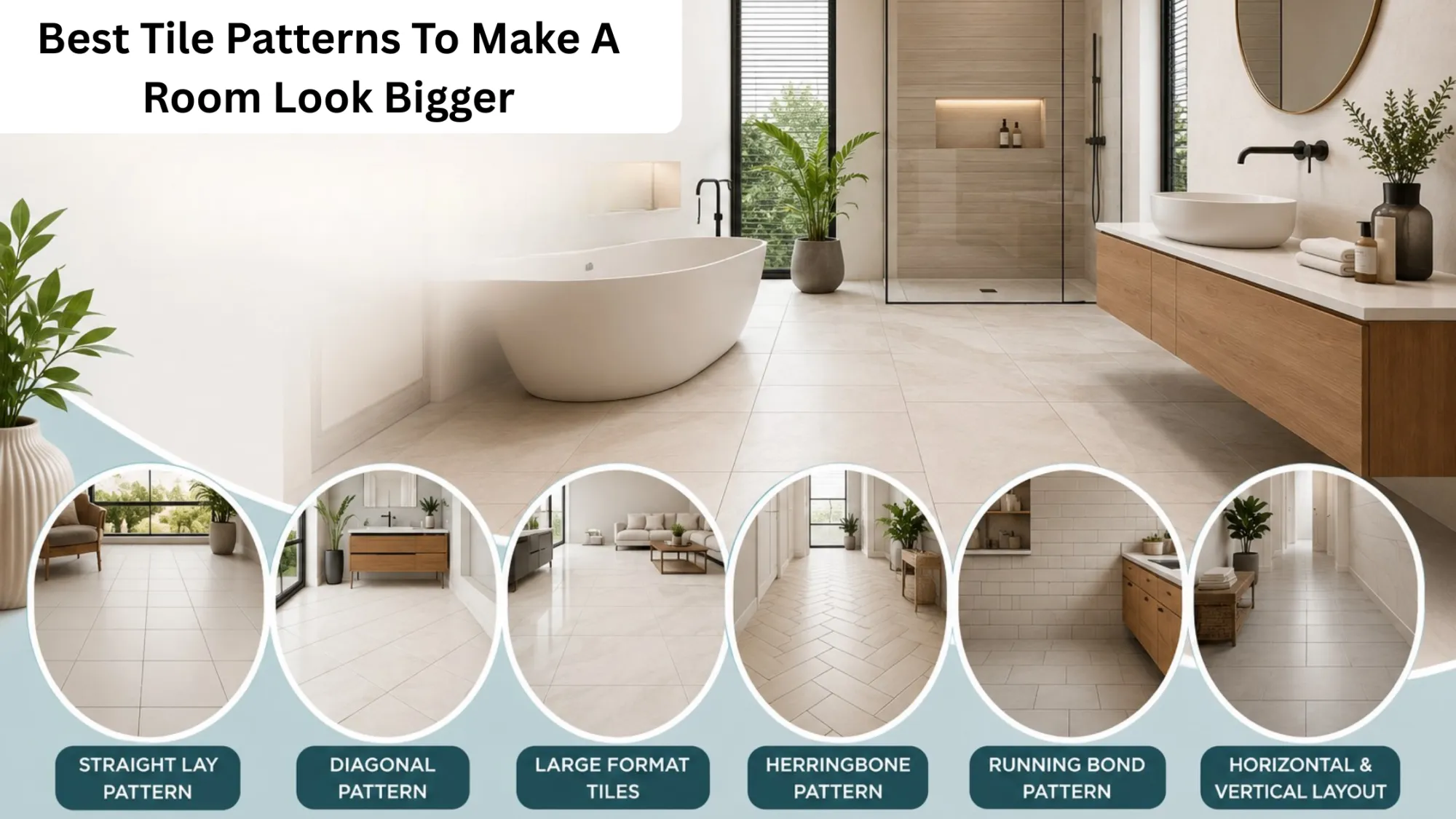

The primary concern for homeowners and interior designers when renovating a home is how to make a small room feel larger. Also, small rooms may become cramped and uncomfortable if the flooring creates too many visual interruptions or draws attention to the limited floor space. But fortunately, you do not have to tear out any walls to make your room look larger.
Using the right tile patterns that make a room look bigger will change how much it seems to extend. Together with large format porcelain tiles, you can make the floor look smoother and more uninterrupted. The tile size is another important factor to consider.
According to WhyTile reports, the large tile size will make the room look bigger, and fewer grout lines will provide a more minimalist look. Tile size and pattern are especially crucial when designing kitchens, bathrooms, entryways, and other small rooms. This blog examines the best tile patterns to make a small room look bigger.
How Do Tile Patterns Affect The Size Of The Room?
The way you arrange tiles determines where your eyes will shift when you enter the room. Some floor tile patterns will direct you to the far end of the room, and others will direct your eyes to the sides.
The busy patterns with contrasting grout lines will create numerous sections on the floor, whereas the simple patterns with fewer visual interruptions will create a more uninterrupted floor look. Color is also an important factor to consider.
Light and neutral colors create a bright atmosphere and, when paired with the right tile pattern, can make a small room feel more open.
Let us consider some of the best patterns to use if you want to make the room look larger.
Straight Lay Pattern For a Clean Appearance
A straight lay tile pattern is the simplest and most practical tile layout idea. Tiles are placed in straight rows, creating an organized grid on the floor.
This simplicity is what allows you to use this pattern in small spaces. There are fewer visual interruptions to confuse the eyes, so the room looks clear.
This pattern will suit large-sized porcelain tiles best in light grey, beige, cream, or soft white. Matching or coordinating grout color with tile color will help to make grout joints less noticeable. Use a straight lay pattern for small bathrooms, bedrooms, kitchens, and entrance areas.
Diagonal Tile Pattern For Visual Width
The diagonal tile layout is an alteration of the grid pattern rotated by 45 degrees. In this case, your eyes will not follow the straight lines of the room, but they will shift diagonally to the corners. Longer visual lines can make the boundaries of the compact room less clear.
It will be especially useful in narrow kitchens, square bathrooms, small foyers, and other rooms where the walls seem too close together. The diagonal grid will change the focus of the small room due to widening angles.
Use the same color and grout if your primary objective is to make the room look larger, which affects mood and space. The contrasting grout can make each tile more visible, ruining the continuous look.
Large Format Tile Pattern For Less Visible Interruptions
Many people think that small rooms should always have small tiles. Actually, larger tiles can be a great solution for small rooms. Using large-format tiles makes the room look larger and reduces the number of crosswalks across the floor. With fewer visual interruptions, the room can look wider and cleaner.
Large square or rectangular porcelain tiles will be especially effective in modern bathrooms, kitchens, and open living spaces. Try to use the grout color close to the tile color for the best results.
Large-scale tiles used horizontally or diagonally help make small spaces feel larger. They have fewer gaps. Fewer gaps help to make the floor feel continuous. In long, narrow spaces, rectangular tiles can be installed horizontally or vertically.
Depend on the tile size, room proportions, cutting near fittings, grout color contrast, and design. With larger tiles that produce odd, narrow cuts along the room's borders, the resulting room may fail to achieve the desired neat look.
The accurate installation is especially important when working with large tiles. The floor or wall surface should be prepared correctly so that the tiles are installed evenly and accurately.
Herringbone Tile Pattern For Visual Movement
The herringbone tile pattern is the traditional option that adds some individuality to the room without visually closing it. Rectangular tiles are set at alternating angles, creating the V-shaped pattern. The orientation of the tile pattern will help to guide eyes across the room.
For example, in a narrow hallway, you can orient the pattern to guide you to the end. The herringbone pattern will be perfect for hallways, bathrooms, kitchens, and entrance areas. But, avoid combining the intricate herringbone design with contrasting grout in small rooms.
Numerous strong lines will make the surface look busy. Use the more subtle color combination to keep the pattern spacious and attractive.
Running Bond Pattern To Add Length
The running bond pattern, also called the brick pattern, shifts every second row of rectangular tiles. The offset layout creates subtle visual movement. Use the same color and grout if your primary objective is to make the room look larger, which affects mood and space.
For example, when you arrange long rectangular lines along the narrow room's length, you emphasize its length.
You can use this trick in galley kitchens, hallways, and compact bathrooms. Wood-look porcelain tiles will be a good solution for this arrangement due to their elongated shape.
Vertical Tile Layout To Make The Walls Taller
The flooring and the orientation of the wall tiles can change the perception of the room size. Arranging the rectangular tiles vertically will shift the eyes upward, making the walls look taller. It is useful in bathrooms and kitchens with low ceilings.
You can create the required effect using the vertical subway tiles, slim porcelain tiles, and long rectangular tiles.
It will be more effective to stretch the tiles to the ceiling to emphasize height. The simple design will be more appropriate for the cohesive look. Numerous decorative borders can visually interrupt the upward movement.
Horizontal Tile Layouts For Narrow Rooms
When the room feels narrow, try installing rectangular wall or floor tiles horizontally. The horizontal lines will guide the eyes from side to side, creating the impression of additional width. This trick will work especially well on bathroom walls, kitchen backsplashes, shower walls, and narrow feature walls.
Large rectangular tiles in light colors can improve this effect. It is better to use grout that matches the tile to maintain a continuous surface.
Among the different ways to make a narrow room feel wider, a horizontal tile layout is one of the simplest options because it changes the perception of the space without requiring structural alterations.
Continuous Tile Pattern For Better Visual Flow
Sometimes the best pattern is a continuous one. You can use the same tile to unite several areas, making them seem to be parts of the larger room.
For example, when you install the same flooring in the kitchen and then continue it into the dining area, you remove the visual barrier created by different materials. The same approach is especially effective in the bathrooms.
You can continue the same tiles from the main floor to the shower floor. Continuous flooring is a good solution for open floor plans, uniting the various functional areas while maintaining a cohesive look.
Additional Tips On Making Small Rooms Larger With Tile Patterns
Choosing the right pattern is an important step, but additional decisions can further improve the effect.
Use light or neutral tile colors, especially in rooms with little natural light. The more continuous appearance will reduce the strong grid lines. Use the large tile size to reduce visual interruptions, and reserve complex patterns for specific areas.
It is important to consider the room's orientation before installation. The long tiles will emphasize either length or width, depending on the installation method.
Before making your decision, try placing a few tiles on the floor to understand how they interact with cabinets, doors, furniture, and natural sight lines.
Which Tile Pattern Is Best For Your Room?
There is no single tile pattern that works well in all situations. The right choice will depend on the room's shape and the effect you want to achieve.
- The diagonal pattern may visually enlarge the compact square room, and the long rectangular tiles emphasize the length of the narrow hallway.
- Large-format tiles will create fewer visual interruptions, and vertical wall tiles will make the low ceilings feel higher.
- The herringbone will add movement and individuality if used cautiously.
The point is to determine why your room seems small. After identifying it, you can select the layout to solve this particular problem.
Get A Bigger Appearance for Your Room With Large-Format Porcelain Tiles
You do not need additional square footage to enlarge your room. Using the correct tile patterns that make a room look bigger will guide your eyes and create a more spacious feeling.
There are many options, from the simple straight-lay pattern to the stylish herringbone tile pattern. Using a big-size floor tile will reduce the number of visible grout lines, creating a continuous look.
The combination of tile patterns, suitable colors, tile sizes, and minimal grout lines will make your interior bright and spacious.





























Sign in to leave a comment.