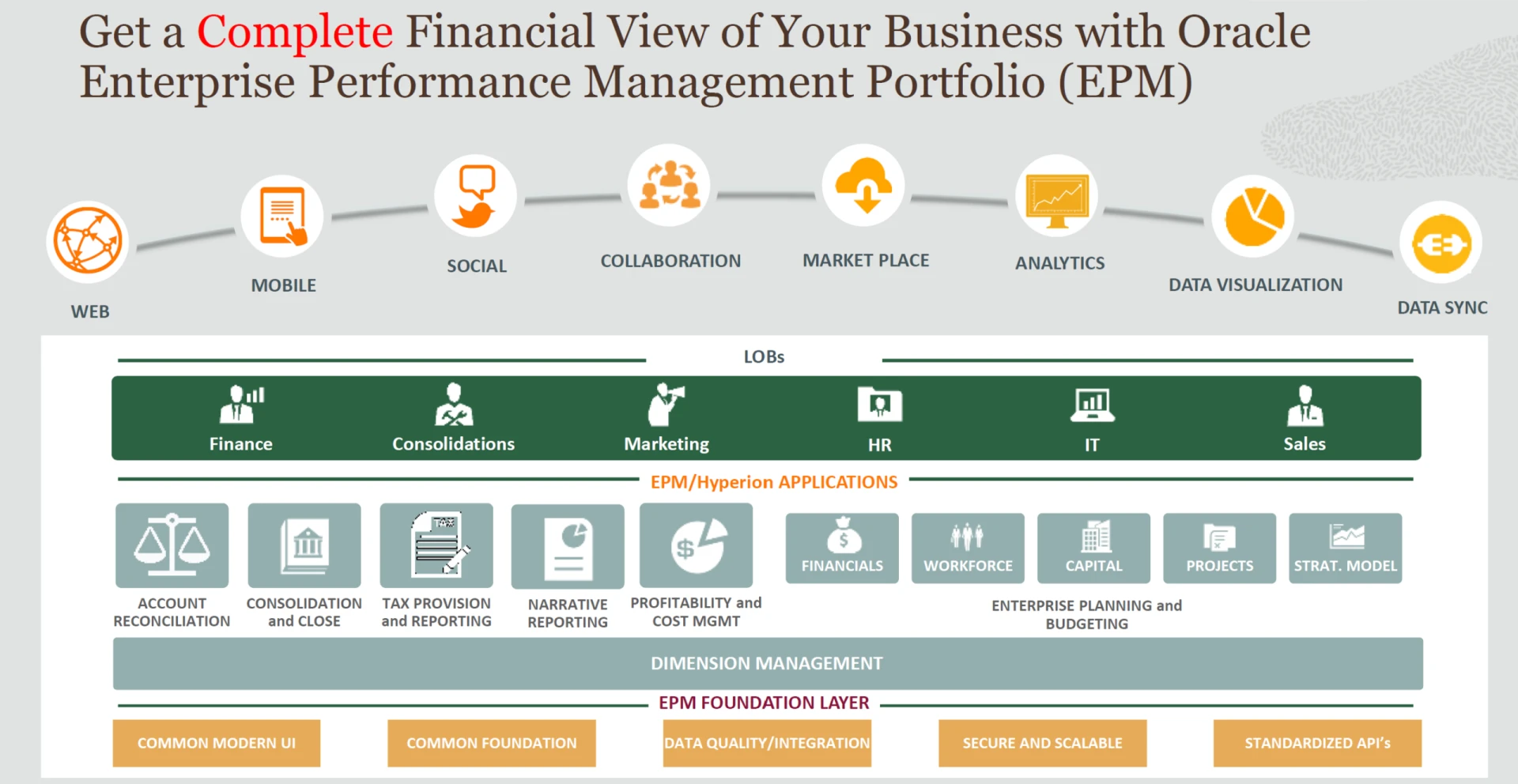

Finance teams are being asked to do more than close books and prepare reports. They are expected to guide strategy, improve forecasting, support compliance, and help leadership make faster decisions. That shift has made Oracle EPM a serious topic in boardrooms, finance departments, and project meetings. It is no longer viewed as just a planning tool. It is now part of a much larger conversation about finance modernization, data discipline, and better decision-making.
At the same time, Digital Transformation consulting has become a major driver behind enterprise software adoption. Companies do not bring in consultants just to install platforms. They bring them in to fix slow reporting cycles, disconnected planning, inconsistent data, and weak financial visibility. That is where Oracle EPM often enters the picture. It gives finance teams a structured way to plan, budget, forecast, consolidate, and report with much stronger control than traditional spreadsheet-led processes.
In real business settings, the value of Oracle EPM is not about software features alone. It is about how finance teams work day to day. If a company spends weeks on budget revisions, struggles with version control, or cannot align operational plans with financial targets, the problem is bigger than tooling. It is a process issue, a governance issue, and often a transformation issue. Good Digital Transformation consulting addresses all three.
What Oracle EPM Actually Does
At a practical level, Oracle EPM helps organizations manage key finance processes such as planning, budgeting, forecasting, financial consolidation, account reconciliation, tax reporting, and profitability analysis. It is designed for businesses that need better structure, stronger auditability, and more reliable reporting across departments, business units, or regions.
Many finance teams still rely heavily on spreadsheets for planning and monthly reporting. Spreadsheets are flexible, but they become risky when multiple teams update separate versions, assumptions are not documented, and review cycles depend on email trails. Oracle EPM replaces much of that confusion with a more controlled environment. Teams can work with standardized models, defined workflows, approval paths, and shared assumptions.
That matters because finance is not just about collecting numbers. It is about trusting those numbers. When leadership asks why margins shifted, why forecasts changed, or why a business unit missed targets, finance needs answers that are timely and defensible. Oracle EPM supports that level of discipline.
Why Oracle EPM Matters in Finance Transformation
A lot of companies start their finance transformation journey because their current process is too slow. Budgeting takes too long. Forecasts are outdated before they are approved. Month-end close becomes a fire drill. Reporting packs are manually assembled. Business teams and finance teams argue over whose numbers are correct.
This is exactly why Oracle EPM has become central in many transformation programs. It helps move finance away from fragmented planning and toward integrated performance management. Instead of treating planning, close, reconciliation, and reporting as separate tasks, organizations can connect them in a more structured way.
That is also where Digital Transformation consulting becomes important. Software alone does not repair broken finance processes. A company may buy Oracle EPM, but if the chart of accounts logic is messy, approval roles are unclear, and planning assumptions differ by department, the result will still be frustrating. Strong Digital Transformation consulting helps align the operating model, governance, data standards, and reporting expectations before and during implementation.

The Link Between Oracle EPM and Digital Transformation Consulting
When people hear Digital Transformation consulting, they sometimes think of broad strategy decks and vague change programs. In reality, the good work is far more grounded. It is about identifying where business processes are weak, what data is unreliable, which approvals create bottlenecks, and how systems should support better decisions.
In finance-led transformation, Oracle EPM is often one of the platforms used to solve those problems. Consultants help define future-state planning models, reporting structures, workflow rules, data integration needs, and control requirements. Then the platform is configured to support that model.
For example, imagine a company with five business divisions, each using different budgeting templates and different forecasting assumptions. Consolidation takes days of manual work, and the CFO has little confidence in cross-functional comparisons. A sensible Digital Transformation consulting engagement would not begin by asking which dashboard color the team prefers. It would begin by fixing the planning framework, the ownership model, and the reporting logic. Oracle EPM then becomes the system that enforces consistency and gives the business a scalable way to operate.
Real-World Benefits Finance Teams Notice
The strongest case for Oracle EPM usually comes from teams that have lived through messy planning cycles. Once the platform is properly implemented, the improvements are usually practical and easy to notice.
One major improvement is forecast speed. Finance can update assumptions more quickly and roll up changes across the business without waiting on disconnected files. Another is auditability. Teams can track who changed what, when, and why. That matters in regulated environments and in any business where leadership wants more control over planning accuracy.
There is also a big gain in collaboration. Sales, operations, HR, and finance can align around shared planning models rather than passing static files back and forth. This is where Digital Transformation consulting adds real value again. The consultants who understand both finance operations and enterprise systems can help design a process people will actually use, not just one that looks good in a project document.
Common Mistakes Companies Make
A common mistake is treating Oracle EPM as a technical implementation only. That usually leads to poor adoption. If the business does not agree on KPIs, assumptions, ownership, and planning timelines, the platform will reflect that confusion.
Another mistake is underestimating change management. Finance teams may be comfortable with spreadsheets, even when those spreadsheets create risk. Moving to Oracle EPM requires training, process clarity, and executive support. Users need to understand not just how the system works, but why the new process is better.
A third mistake is separating technology decisions from business priorities. Good Digital Transformation consulting keeps the focus on outcomes such as shorter planning cycles, more reliable forecasts, faster close, better board reporting, and clearer accountability. When the conversation becomes too technical too early, the project often loses momentum.
How Oracle EPM Supports Better Decision-Making
The real strength of Oracle EPM is that it helps finance move from reactive reporting to more active performance management. Instead of spending most of the month gathering and correcting data, finance teams can spend more time analyzing trends, questioning assumptions, and advising leadership.
That shift matters because modern finance teams are expected to do more than report the past. They are expected to help shape the future. They need to model scenarios, test assumptions, understand cost drivers, and respond quickly when market conditions change. Oracle EPM supports that kind of work when it is backed by strong process design and disciplined data management.
This is why Digital Transformation consulting and Oracle EPM are often discussed together. One helps define and guide the transformation. The other gives finance a platform to run the improved model.
Final Thoughts
Oracle EPM is important because finance has become more central to business strategy. Companies need better planning, stronger control, and faster insight. Spreadsheets alone are no longer enough for complex organizations that need scale, consistency, and accountability.
At the same time, Digital Transformation consulting plays a critical role in making that shift work. It connects business goals with system design, governance, and adoption. Without that bridge, even a strong platform can underperform.
When companies approach Oracle EPM as part of a wider finance transformation effort, the results are usually much stronger. Planning becomes more reliable. Reporting becomes more consistent. Leadership gets better visibility. And finance teams spend less time chasing numbers and more time explaining what those numbers mean. That is the real reason Oracle EPM continues to matter in modern enterprise transformation.



























Sign in to leave a comment.