
Picture trying to steer through an immense, intricate city without a map, signposts, or a clearly marked destination. This is what it is like to run a contemporary business without a sophisticated financial accounting system. Each transaction, each sale, and each expense is akin to a turn of a road, and without a system to delineate your route, you are navigating without sight. In the modern business environment, a financial accounting system is much more than digital bookkeeping; it is the primary nerve system of any organization. It captures, processes, and transmits key financial information, telling a story on how the organization is performing, its history and likely future direction. Within the context of the present economy, fast-paced and data driven, using this system is not an option for compliance; it is the key to unlocking sustainable growth and strategic agility. This is likely the competitive edge that any business is seeking. This paper seeks to understand how modern systems like Infor are transforming this business function.
What is a Financial Accounting System? More Than Just Numbers
A financial accounting system is simply a set of processes, technology, and controls a firm has in place to capture, classify, and report financial transactions. The system’s end products are the financial statements—balance sheets, income statements, and cash flow statements—that stakeholders depend on. Yet the system's capability goes far beyond preparing financial statements. It serves as the firm’s financial system truth-teller and chief coordinator. It automates the general ledger, and manages accounts receivable and payroll processing. It also determines whether all cash is available and accounted for in accordance with established accounting standards such as US GAAP, IFRS, and other statutory standards. The system's sustained attention to detail, in conjunction with the other controls in place, will provide the credibility needed on the financial statements to support the internal and external decisions made on the system.
The Evolution: From Ledger Books to Cloud-Based Powerhouses
The story of the financial accounting system reflects the progress of technology. Picture clerks recording entries in manual, paper-based ledger books. Each entry was time-consuming, and the system was open to a myriad of human errors. The first great change came with the use of computers and on-premise enterprise resource planning (ERP) software systems. Records were digitized, and calculations were automated. Efficiency hit a new standard. The systems, however, were costly and IT infrastructure was needed in order to maintain and update these systems. Now there is cloud computing. Modern financial management systems are mostly cloud-based and are capable of providing exceptional service. Users can access valuable real-time data, and IT maintenance costs are significantly lower. Users also enjoy automatic system updates. The system is always running the latest and most secure version of software. The democratizing of accounting tools due to the shift to the cloud is remarkable. Powerful tools are now available to businesses of all sizes.
The Importance of Choosing the Right Financial System: Cornerstones of Building a Business
From a leader’s perspective, the choice of financial accounting system is a vital one. The appropriate system justifies its cost by contributing to the expansion of the business. The several business success pillars the system impacts are: operational efficiency. The system automates mundane tasks— invoice processing, bank reconciliation, and financial reporting— which allows the finance team to concentrate on higher-order tasks that involve analysis and strategy, converting the team from mere number crunchers to invaluable business partners. Next, the system increases regulatory compliance. With built-in internal controls and accurate automated reporting, the system minimizes errors, fraud, and the associated compliance penalties. Lastly, the most crucial one is strategic insight. Enhanced systems deepen financial visibility through customizable reports and dashboards, enabling executives to track profitability, analyze cash flow, and model various scenarios. This allows executives to make sound business decisions as everything is data-based.
Introducing Infor Industry Specific Financial Management
Within the context of enterprise software, Infor stands out from the pack. Most competitors deploy generic applications across verticals. Infor focuses on providing industry cloud solutions. They nail down the nuances between a manufacturing firm and a healthcare provider as well as a distribution firm and a hospitality group. Infor builds its applications, including the flagship financial management system, with a solid industry background incorporated directly into the software. This means that the system does accounting, but it does much more; it is configured to precisely align with the processes, language, and compliance of your industry. This type of vertical focus makes Infor particularly attractive to larger mid-market businesses that desire a system that is in tune with their operational reality.

A Closer Look at the Infor Departmental Model (Infor dEPM) for Financial Control
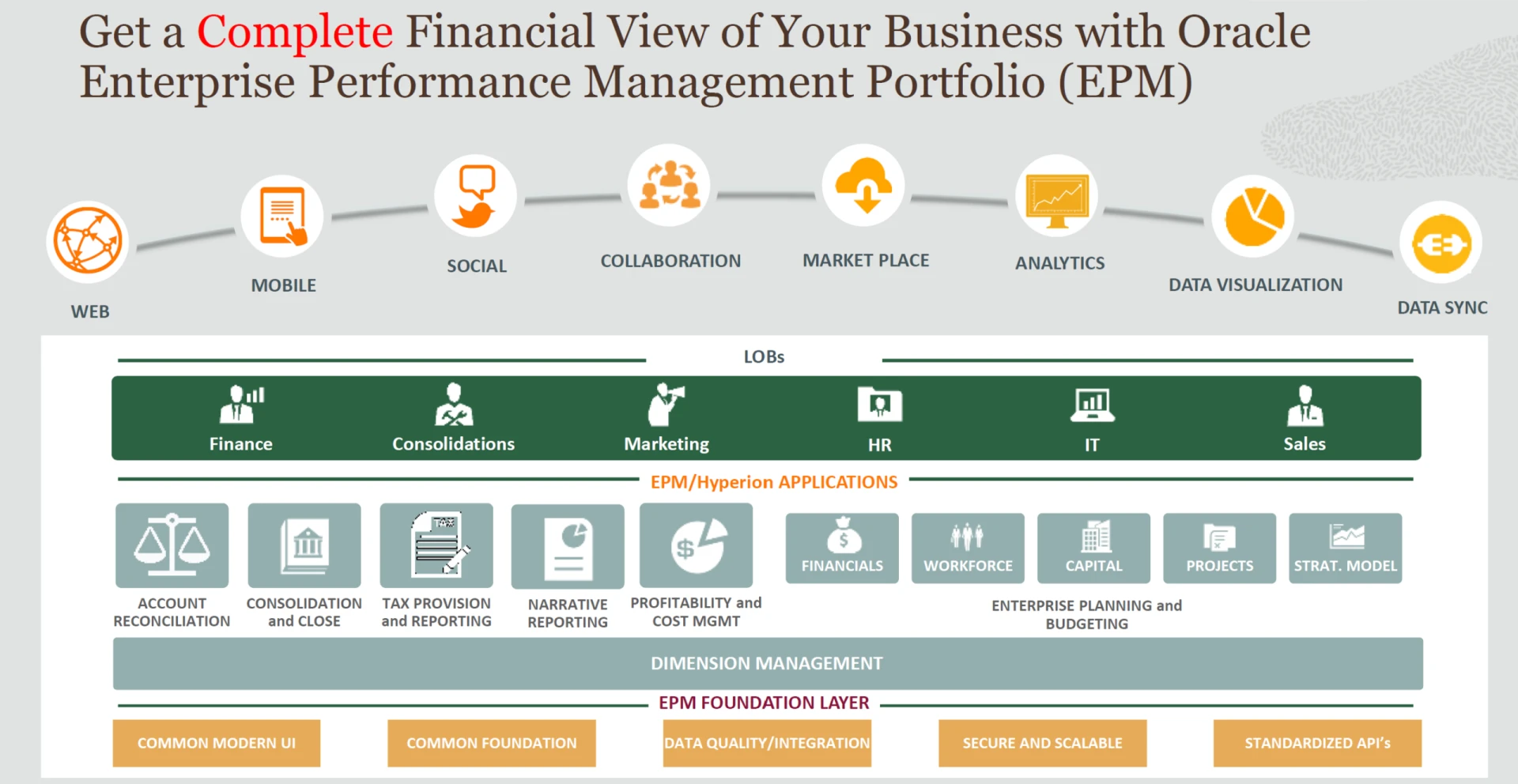
For very large and decentralized entities, financial consolidation and reporting can be a nightmare. Another sophisticated piece of the Infor ecosystem, the Infor Departmental Model (dEPM), can come in handy. Imagine a large university presuming a college for each department, a hospital system with a network of clinics, or a corporation with various business units and multiple clinics. Each of these entities is responsible for their own budget, expenditures, and income. The Infor dEPM is specifically designed multi-entity. Exports Departmental financial accounts can be defined and managed within a unified financial accounting system. The dEPM system can be designed to roll up budgets and forecasts to any level of the organization. Since managers of each department will own the budgets and the financial accountability, corporate finance will retain control and consistency over the consolidated results. This is essential for enhanced accountability and control across the complex enterprise structures.
What Makes Infor Modern Systems Unique?
What features differentiate Infor from other financial management systems? Other than basic accounting functions, a modern system needs real-time analytics and automated reporting. Instead of static historical reporting, the system should present dynamic dashboards illustrating value and KPI movements in real-time. Flow automation is also highly critical. For example, automated document capture, streamlined approval processes, and automated payments should eliminate the manual stages of the accounts payable system. In addition, ease of system use, strong control features, and effective cyber safety systems must work hand in hand. Financial systems must employ role appropriate views, and data blind and data fog must cipher sensitive info. Lastly, Infor modern systems must offer unified data across the enterprise by allowing integration of various systems, such as the CRM, supply chain, and HCM.
Anticipated Advantages: Conducting Results After Go-Live
Any Infor ERP implementation with robust financial modules will provide ever-increasing ROI. Over time, customers will notice an increase in speed for each iteration of the financial close process. What historically took several weeks to close will, over time, take only several days, or even weeks, due to automation of reconciliations and data aggregation. The time to close increases the time to report and the time needed to provide critical data. Over time, the data accuracy will increase to the point of being stress-free, lower audit fees, and higher confidence in the numbers. The management will leverage financial visibility to pinpoint more confident expense shifts and resource re-allocations. The market elasticity becomes even more pronounced and profitable. The most powerful, and often cited, with little fanfare, financial modules of the ERP will increase the time and capabilities of the finance organization from tactical data capture to essential FP&A, and becoming a real partner to the business.
Navigating the Selection and Implementation Process
Selecting and implementing a new financial accounting system requires significant attention to detail. As a first step, conduct a thorough internal needs analysis. Understand your pain points, projected growth, and specific industry needs. This will help you create a shortlist of vendors, including Infor, best suited to your profile. During the demos, go beyond the feature set and ask vendors to demonstrate how the system would address your specific and complex situations. After a choice has been made, implementation will begin. This step's success will depend on effective project management, active sponsorship from executives, and comprehensive training of users. A phased approach is more successful than a "big bang" approach, typically starting with the general ledger and key modules. Keep in mind, your focus should not be on just installing new software, but on improving your financial processes in the software.
Conclusion: The Strategic Imperative of a Financial Core in a Modern Business
The financial accounting system is no longer just a back-office function. It is a front-office function, a critical component of business intelligence, and account operational excellence. It fosters transparency, efficiency, and continues smart growth. In today's data-driven economy having a system that efficiently captures, processes, and analyzes financial data is imperative. Infor's solutions, with their industry-specific deep functionalities and robust frameworks, including the Departmental Model (dEPM), provide cutting-edge solutions for accounting and the broader goals of business control and optimization. Keeping this in mind, investing in a modern financial management system is investing for the future clarity, resilience and success of your organization. It is the map, the compass, and the GPS that guides you toward your business goals.





























Sign in to leave a comment.