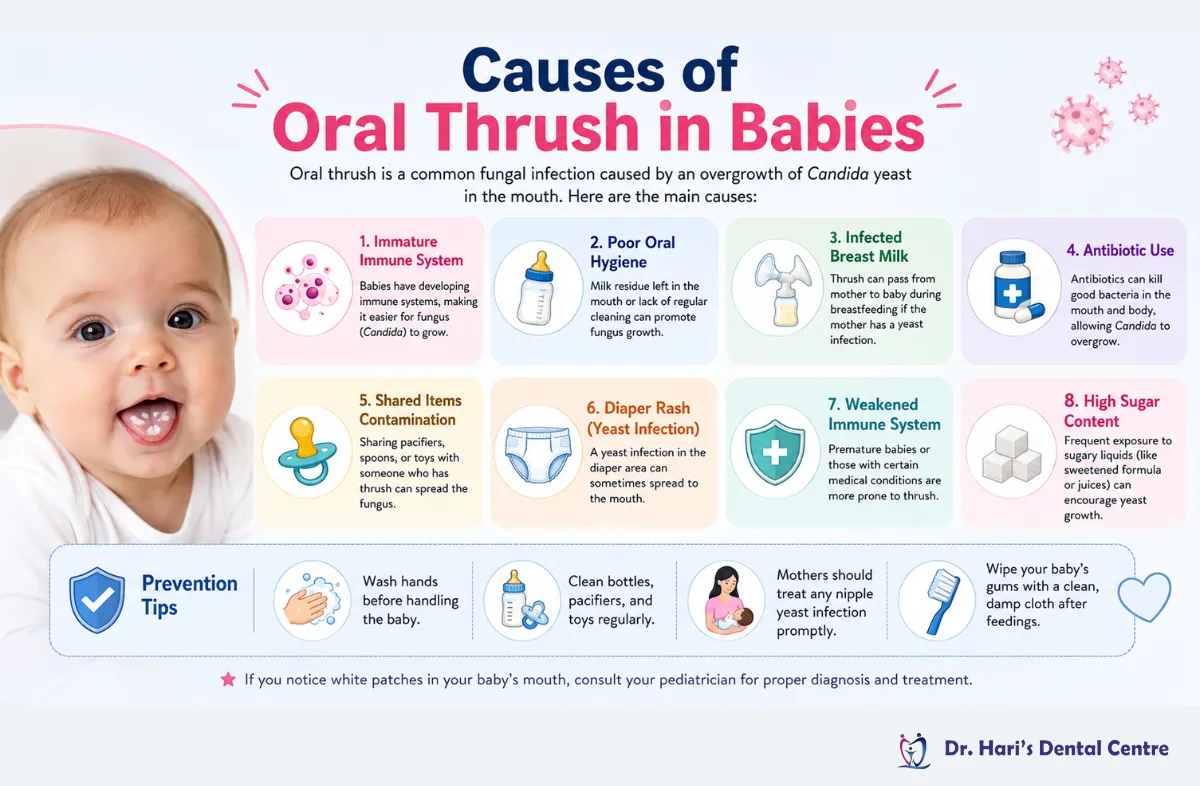

A baby’s oral health is important for comfortable feeding and healthy development. One common condition seen in infants is oral thrush in babies, a fungal infection caused by an overgrowth of Candida yeast inside the mouth. It usually appears as white patches on the tongue, inner cheeks, gums, or lips and may cause discomfort during feeding.
Since babies have developing immune systems, they are more prone to fungal infections during the first few months of life. Although oral thrush is usually treatable, early diagnosis and proper care help prevent feeding difficulties and irritation.
At Dr. Hari’s Dental Centre, parents receive expert guidance and gentle pediatric dental care for infant oral conditions, helping babies recover safely and comfortably.
What is Oral Thrush in Babies?
Oral thrush is a yeast infection that develops when Candida grows excessively inside a baby’s mouth. The infection often appears as creamy white patches that resemble milk residue but do not wipe away easily.
Unlike milk coating, thrush patches may leave redness or slight bleeding when touched. Babies with thrush may become fussy during feeding or struggle to latch properly.
Common Symptoms
The symptoms of oral thrush in babies can vary depending on the severity of the infection. Common signs include:
- White or creamy patches inside the mouth
- Redness under the patches
- Fussiness during feeding
- Difficulty sucking or swallowing
- Cracked skin near the mouth corners
- Reduced feeding or appetite
If symptoms continue for several days or affect feeding, professional evaluation is recommended.
Causes of Oral Thrush
Several factors can contribute to oral thrush in babies, including:
Immature Immune System
Newborns have developing immune systems that may not effectively control fungal growth.
Antibiotic Use
Antibiotics can reduce healthy bacteria, allowing yeast to multiply more easily.
Breastfeeding Transmission
Thrush can sometimes pass between a breastfeeding mother and baby.
Contaminated Feeding Items
Improperly cleaned bottles, pacifiers, or breast pump parts may encourage fungal growth.
Can Oral Thrush Affect Feeding?
Yes, oral thrush may make feeding uncomfortable for babies. Some infants experience pain while sucking or swallowing, which can lead to feeding refusal, irritability, and disturbed sleep.
Parents often ask, is oral thrush in babies dangerous? In most healthy infants, the infection is manageable with proper treatment. However, untreated thrush may lead to dehydration, feeding problems, or recurring infections.
Diagnosis and Treatment
A pediatric dentist or doctor can usually diagnose thrush through a simple oral examination.
The most common treatment for oral thrush in babies includes antifungal medication. Doctors may prescribe nystatin for oral thrush in babies to help eliminate the infection safely.
Treatment may also involve:
- Sterilizing bottles and pacifiers
- Maintaining oral hygiene
- Treating breastfeeding mothers if needed
- Cleaning feeding accessories regularly
Parents should always follow professional advice for the safest and most effective recovery.
Home Care and Prevention
Some supportive home remedies for oral thrush in babies may help alongside medical treatment. Good hygiene practices can reduce reinfection and support healing.
Helpful preventive steps include:
- Sterilizing feeding equipment daily
- Washing hands before feeding
- Cleaning pacifiers and toys regularly
- Maintaining breastfeeding hygiene
- Avoiding unnecessary antibiotic use
Many parents search online for oral thrush in babies treatment natural methods, but professional guidance is important before trying home remedies to ensure safety for infants.
Recovery Timeline
Most babies begin improving within a few days after starting treatment, though complete healing may take up to two weeks. Parents should continue medication as prescribed even if symptoms improve early.
If the infection returns frequently or symptoms worsen, further medical evaluation may be necessary.
Why Choose Dr. Hari’s Dental Centre?
At Dr. Hari’s Dental Centre, infant oral care focuses on early diagnosis, gentle treatment, and preventive guidance. Parents receive support for feeding hygiene, oral care, and infection management to help babies recover comfortably and maintain healthy oral development.
Conclusion
Oral thrush in babies is a common fungal infection that can cause white patches, feeding discomfort, and irritability. With early diagnosis, proper treatment, and good hygiene practices, most babies recover quickly without complications.
If parents notice persistent white patches or feeding difficulties, professional care is the best step toward protecting their baby’s oral health. At Dr. Hari’s Dental Centre, compassionate pediatric dental care helps ensure healthy smiles from the very beginning.
Read also https://drharisdentalcentre.com/antibiotics-for-tooth-infection/.






















Sign in to leave a comment.