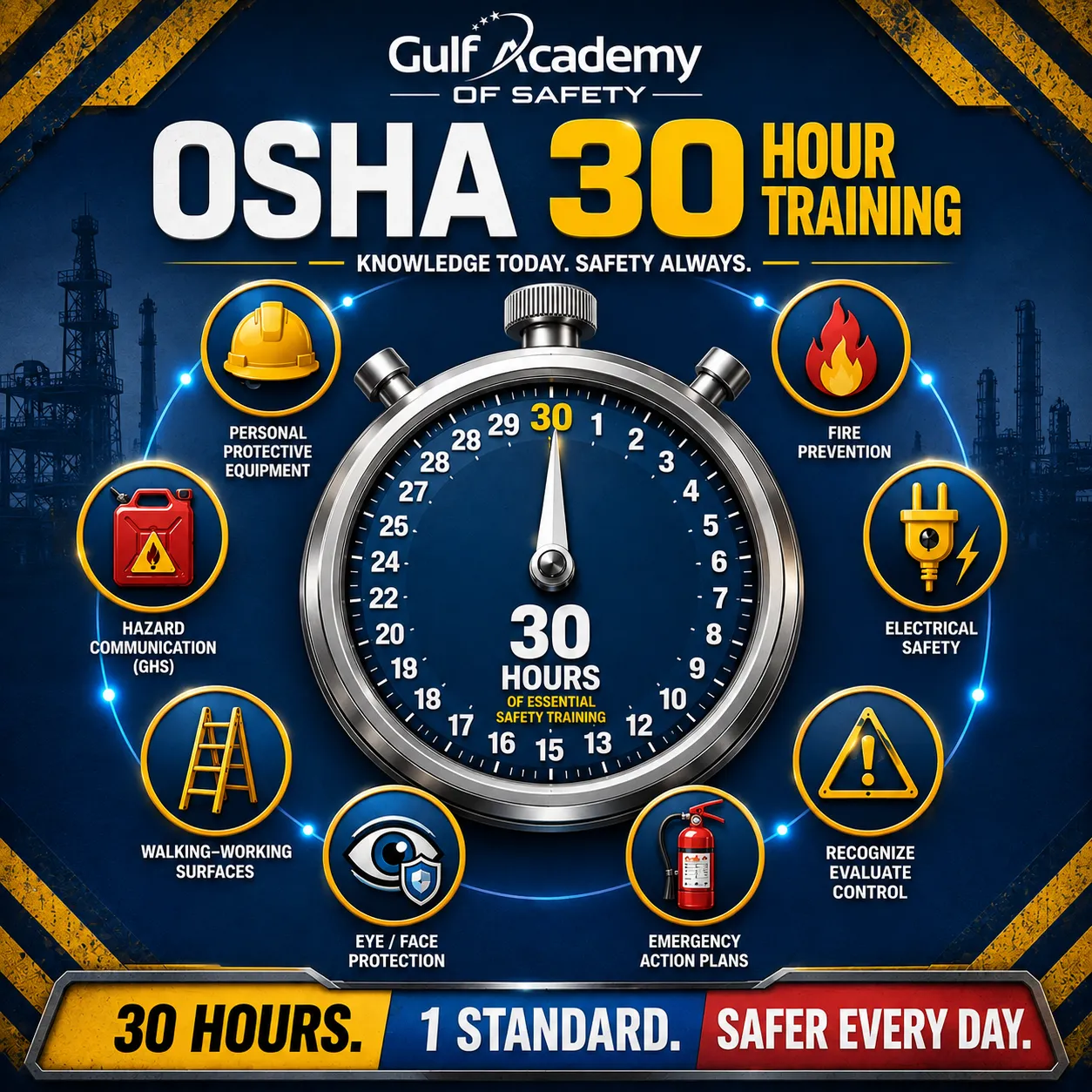
One of the most common questions supervisors and managers ask before enrolling in safety training is simple but important: do I need the 10-hour course, or the OSHA 30 Hours General Industry course? Getting this decision right matters, both for genuine competence and for meeting employer or client requirements accurately the first time.
Understanding the Core Difference
Both courses are part of OSHA's outreach training programme and cover overlapping safety fundamentals, but they are designed for fundamentally different audiences. The 10-hour course is built for general workers who need baseline hazard awareness for their own personal safety. The 30-hour course goes considerably further, designed specifically for supervisors, managers, and safety personnel who carry responsibility for the safety of others, not just themselves.
Depth of Content: A Real Comparison
While the 10-hour course introduces core hazard categories at a foundational level, the 30-hour course expands significantly on each topic, adding depth in areas such as machine guarding, electrical safety, hazardous materials handling, and emergency action planning. It also introduces topics rarely covered in the shorter course, including recordkeeping requirements and broader regulatory context that supervisors specifically need to understand.
Who Should Choose the 30-Hour Route
If your role involves supervising a team, making PPE or equipment decisions on their behalf, investigating incidents, or reporting safety performance to senior management, the 30-hour course is the appropriate standard. Choosing the shorter course in these circumstances often means falling short of what your actual responsibilities require, even if it technically satisfies a minimum compliance checkbox.
Common Mistakes When Choosing Between the Two
A frequent mistake is assuming seniority alone determines which course to take, without considering actual safety responsibility. A newly promoted supervisor with genuine oversight of a team's safety needs the 30-hour course regardless of how new the role is, while an experienced worker without supervisory duties may only need the 10-hour version, regardless of tenure.
Why Employers Should Get This Right
Enrolling supervisors in the wrong level of training creates a false sense of compliance. An organisation may believe its safety training obligations are met, only to discover during an audit or after an incident that supervisory staff never received the depth of training their role actually required. Getting this distinction right from the outset avoids this exposure entirely.
How Gulf Academy of Safety Helps You Choose Correctly
Before enrolling, our team works with organisations and individual candidates to clarify actual job responsibilities, ensuring each person enrols in the course level genuinely appropriate to their role rather than defaulting to whichever option seems simpler or cheaper upfront.
What the 30-Hour Course Adds in Practice
Beyond additional topic coverage, the 30-hour course builds the kind of judgement supervisors need daily: recognising when a hazard requires immediate escalation, understanding how to structure a safety briefing, and knowing which regulatory recordkeeping obligations apply to their specific facility and role.
International Relevance of the Distinction
This distinction matters just as much outside the United States as within it. Multinational employers across the Gulf frequently specify OSHA 30 certification specifically for supervisory roles in tender and staffing requirements, distinguishing clearly between workforce-level and supervisory-level safety credentials when evaluating contractor competence.
Making the Right Long-Term Investment
While the 30-hour course requires a greater time commitment upfront, it delivers considerably more value for anyone with ongoing supervisory responsibility, avoiding the need to return later for additional training once genuine gaps in knowledge become apparent through experience or, worse, through an incident.
Choosing With Confidence
Rather than guessing which course fits your role, a short conversation about your actual day-to-day safety responsibilities usually makes the right choice clear. For most supervisors and managers, that answer is the 30-hour course.
If your role carries safety responsibility for others, don't settle for the shorter course. Get the depth your position genuinely requires with OSHA 30 Hours General Industry training from Gulf Academy of Safety.
👉 Enrol in OSHA 30 | Not Sure Which Course? Ask Us





























Sign in to leave a comment.