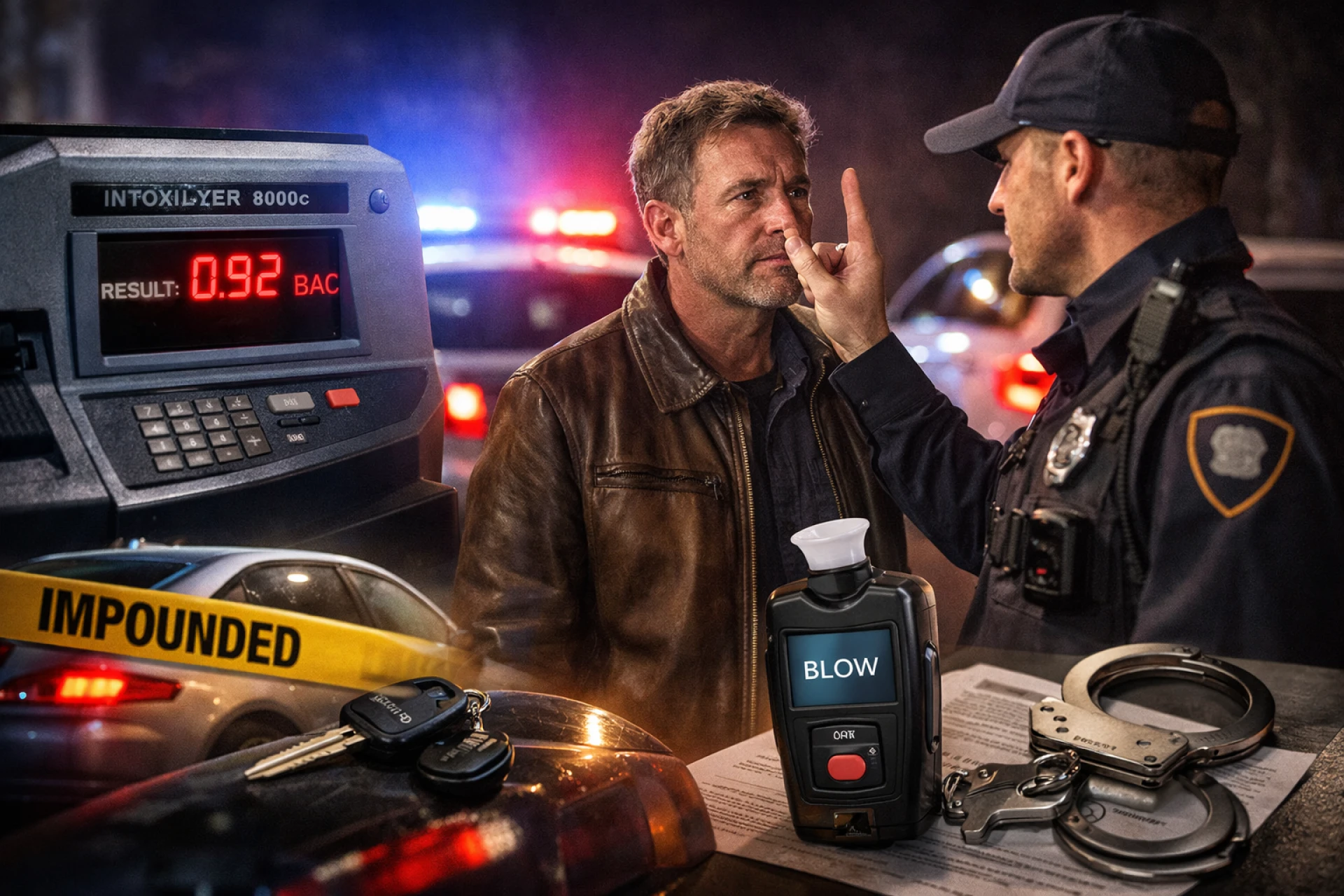

For many people, the terms Over 80 and impaired driving sound like two versions of the same thing. They are closely related, but they are not identical offences. Understanding the difference matters, especially if you have been charged and are deciding what to do next. Each offence is based on different evidence, carries different penalties and may require a different defence strategy.
This guide explains how the charges differ, what the consequences look like and how to respond in a way that protects your rights.
Understanding an Over 80 Charge and What It Means
An Over 80 charge is based on a specific blood alcohol concentration reading. If a breath test registers 80 milligrams of alcohol or more in 100 millilitres of blood, the police may lay an over 80 charge. This is a readings-based offence. It relies on the results of an approved instrument. In Ontario, this instrument is usually the Intoxilyzer 8000c or the Intoxilyzer 9000.
For many people charged with Over 80, the shock comes from how quickly the circumstances unfold. A roadside stop. A simple question. A breath test. The number appears, and the process moves fast. Even though it feels immediate, you still have legal options. This is where a clear defence becomes important.
How Impaired Driving Differs From an Over 80 Charge
Impaired driving is different. Instead of relying on a number from a machine, the charge is based on observations. Police look at driving behaviour, speech, balance, reaction time and physical signs of impairment. They may rely on witness accounts, field sobriety tests or body camera footage. Sometimes they rely on readings between 50-80 where there is bad driving to demonstrate impairment.
You can be charged with impaired driving even if your blood alcohol level is below 80 milligrams. The law focuses on whether your ability to operate a vehicle was affected by alcohol or drugs or a combination of alcohol and drugs. For example, a person who takes a drag off a joint and blows under but is still demonstrating indicia of impairment can be convicted of impaired operation.
Why the Distinction Matters When Building a DUI over 80 Defence
The difference between the two charges shapes how the defence is built. An over 80 or excess blood alcohol defence often focuses on technical issues. These might include right to counsel issues, questions of grounds for the screening or stop, the conduct of the field sobriety test or the timing of various steps to demonstrate legislative compliance. Impaired driving cases often depend on how strong the observations are and whether they can be challenged.
The evidence is not the same. The defences are not the same. A lawyer experienced in impaired driving law will know how to approach each part of the case and how to evaluate whether the motions and the trial evidence should be blended or separated, or whether or not the client should testify.
Penalties and Consequences for an Over 80 Charge or Impaired Driving
The penalties can be significant. Even for a first offence, the consequences affect your finances, your licence and your daily life. Understanding what to expect helps you prepare and avoid surprises.
Typical consequences may include:
- Immediate roadside licence suspension
- Vehicle impoundment
- Mandatory fines
- Increased insurance costs
- Ignition interlock requirements
- Criminal record
- Travel ban
Some cases also involve mandatory education programs or longer suspensions. If you are convicted of impaired driving or an over 80 charge, the effects can last for years. This is why early advice can make a real difference.
How the Consequences Change When Both Charges Are Laid
If you are facing both impaired driving and an over 80 charge, the case becomes more complex. The Crown may choose to proceed on only one charge, or they may use evidence from each to support the other. A strong DUI over 80 defence looks at every detail. Timing. Procedure. Officer notes. Test results. The goal is to identify weaknesses in the file and build a strategy that protects you.
A lawyer who understands these cases will review whether the evidence supports each charge and whether the dui over 80 defence applies to all or part of the case.
What You Should Do If You Receive an Over 80 Charge or Impaired Driving Charge
The first steps you take after being charged matter. They can influence the outcome and shape how the case progresses.
Here are some practical actions to take:
- Write down everything you remember about the stop and the arrest
- Keep documents from police, including your notice of suspension
- Note any delays in testing or issues with the equipment
- Avoid making assumptions about the outcome
- Contact a lawyer who handles impaired driving cases
A calm and informed response is always better than guessing, relying on outdated information or worse, online platforms that aren't jurisdiction-specific. Early advice can help you understand which parts of your case raise concerns and whether the evidence supports an over 80 charge, impaired driving, or both.
Why Experienced Legal Support Matters for DUI over 80 Defence
These cases move quickly. The law is technical. Procedures matter. A small detail can change the outcome. An experienced impaired driving lawyer can identify the right defence approach and help you avoid errors that could hurt your case.
Someone who handles a high volume of these cases will understand the difference between a strong over 80 reading and a reading that raises questions. They will also know how to challenge observations in an impaired driving file. This guidance is especially important when both charges are on the table.
Taking the Next Step
If you are facing an over 80 charge, an impaired driving charge or both, you do not need to manage the process alone. You can get clear information, a realistic plan and a defence strategy tailored to your circumstances. Contact Christopher Avery at AveryLaw today for a confidential consultation and get the support you need to move forward with confidence.



































Sign in to leave a comment.