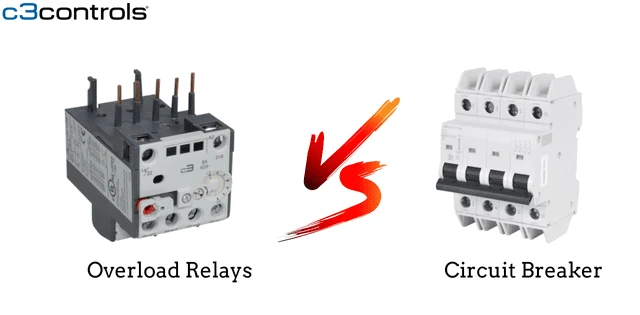

In electrical systems, protecting circuits and equipment from faults is essential for safe and reliable operation. Overload relays and circuit breakers are two critical devices used for this purpose, but they serve distinct roles and have specific applications.
Understanding their differences is crucial for selecting the right protection device for various electrical scenarios. Let's explore the key differences and applications of overload relays and circuit breakers in simple terms.
What are Overload Relays?
Overload relays are protective devices designed to monitor the current flowing through an electrical circuit, particularly in motors. They are essential for preventing damage to motors caused by excessive current. When a motor draws more current than its rated capacity for an extended period, an overload relay detects this condition and disconnects the power supply to the motor. This protects the motor from overheating and potential damage.
What are Circuit Breakers?
Circuit breakers, on the other hand, are devices that protect electrical circuits from short circuits and overloads. They function as automatic switches that interrupt the flow of electricity when an abnormal condition, such as a short circuit or excessive current draw, is detected. Circuit breakers can quickly disconnect the circuit to prevent damage to equipment and electrical fires.
Key Differences
Function and Purpose:
- Overload Relays: Monitor current levels in motors to prevent overheating and damage. They do not protect against short circuits but focus on preventing prolonged overcurrent conditions.
- Circuit Breakers: Protect electrical circuits from short circuits, overloads, and ground faults by interrupting the current flow when abnormal conditions occur.
Trip Mechanism:
- Overload Relays: Typically use thermal elements or electronic sensors to detect excessive current levels over time. They provide a delayed response to allow for temporary overcurrents during motor startups.
- Circuit Breakers: Employ electromagnetic or thermal-magnetic mechanisms to detect sudden increases in current (short circuits) or sustained overcurrents (overloads). They provide instantaneous tripping to quickly disconnect the circuit.
Applications:
- Overload Relays:
- Ideal for protecting motors in industrial machinery, pumps, fans, and other motor-driven equipment.
- Used in motor control centers (MCCs) and motor starters to ensure safe operation and prevent motor damage due to overcurrent conditions.
- Common in HVAC systems to safeguard compressors and fans from overload situations.
- Circuit Breakers:
- Essential in residential and commercial buildings to protect wiring, outlets, and appliances from overloads and short circuits.
- Found in industrial settings to safeguard electrical panels, equipment, and machinery from electrical faults that could cause damage or fires.
- Used in distribution boards and control panels to protect circuits feeding lighting, heating systems, and other electrical loads.
Additional Applications:
- Overload Relays:
- Applied in conveyor systems to protect motors driving belts and rollers from overcurrent conditions.
- Used in water treatment plants to safeguard pumps and agitators from overload situations.
- Found in manufacturing plants to protect high-power equipment such as presses and extruders.
- Circuit Breakers:
- Installed in data centers to protect critical electrical equipment and servers from electrical faults.
- Used in automotive manufacturing to safeguard robotic systems and assembly line machinery.
- Found in renewable energy installations, such as solar farms and wind turbines, to protect inverters and electrical distribution systems.
Conclusion
In summary, while both overload relays and circuit breakers provide essential protection in electrical systems, they serve different purposes and are applied in distinct scenarios. Overload relays focus on protecting motors from overheating due to prolonged overcurrent conditions, while circuit breakers safeguard electrical circuits and equipment from short circuits and overloads by quickly disconnecting power.
Choosing the right device, whether an overload relay for motor protection or a circuit breaker for general circuit protection, depends on the specific application and protection requirements. By understanding their differences and applications, electrical professionals and users can ensure the safety, efficiency, and reliability of their electrical systems.


















Sign in to leave a comment.