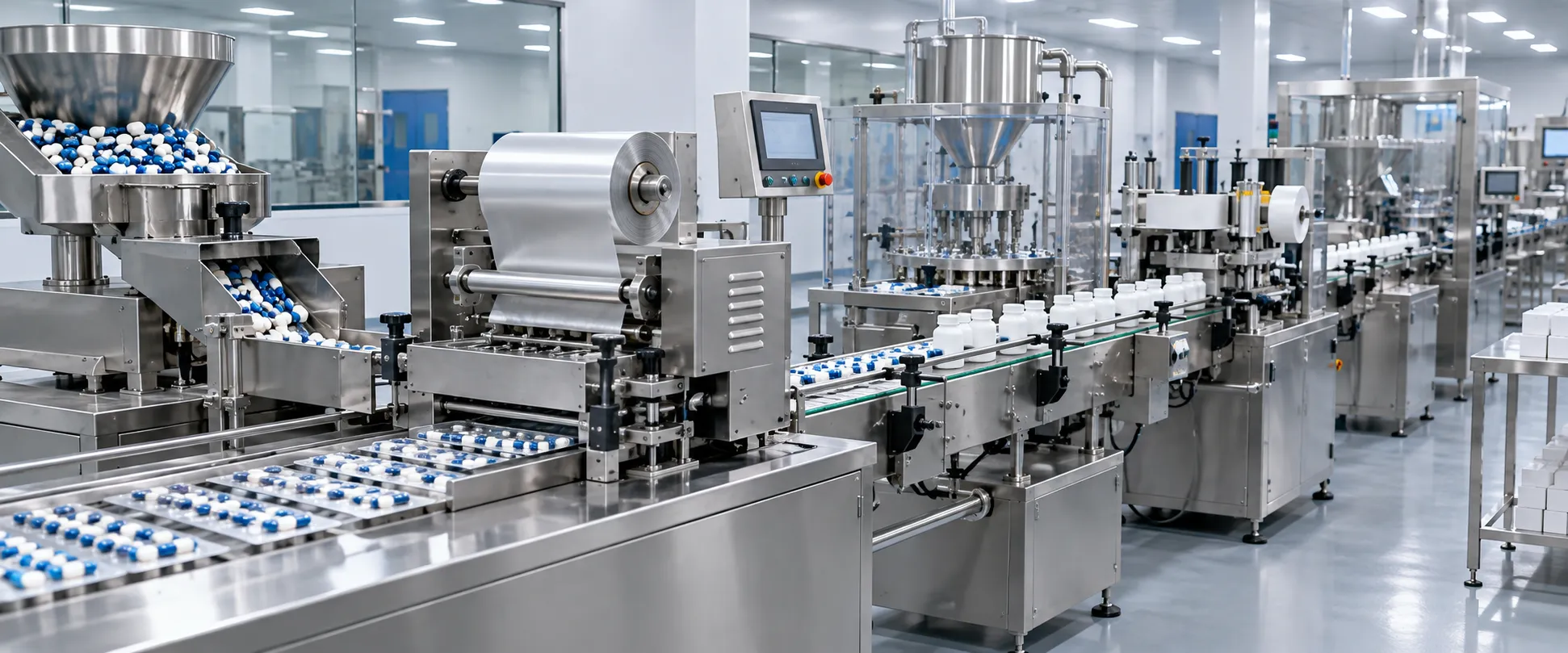

Every growing production line eventually reaches the same question: which packaging machines are the right fit for the product, required output, and available floor space?
The answer affects much more than packaging speed. A poorly matched machine can cause avoidable downtime, inconsistent packs, material waste, and higher labor costs. The right equipment improves product protection, presentation, traceability, and the ability to scale production.
Start With the Product You Are Packing
Packaging equipment should be selected around the physical properties of the product. Tablets, capsules, powders, liquids, pastes, and solid consumer products all require different feeding, dosing, sealing, and handling methods.
A blister packing machine is commonly used for tablets and capsules because it creates individual sealed cavities and supports accurate presentation. Capsule production may also require a capsule filling machine before the finished capsules move to counting, bottling, or blister packaging. Liquids and pastes need filling systems designed for their viscosity, dosing accuracy, and container type.
Before comparing models, buyers should document the product dimensions, material characteristics, target pack format, preferred packaging material, and expected output per hour.
Choose the Right Level of Automation
Semi-automatic machines are often practical for businesses with moderate volumes, frequent product changes, or a limited initial budget. They generally require more operator involvement but can offer simpler operation and easier changeovers.
Fully automatic equipment becomes attractive when production volume, repeatability, and labor efficiency matter more than the initial investment. An automatic line can integrate feeding, filling, sealing, coding, counting, and labeling, reducing manual handling between stages.
Buyers should compare the total cost per finished pack instead of looking only at the purchase price. Labor requirements, material waste, maintenance, power consumption, changeover time, and realistic production speed all influence the long-term return.
Check Output and Future Capacity
A machine should comfortably meet current demand while leaving room for growth. Running equipment continuously at its maximum rated speed can affect reliability and maintenance requirements. Ask the supplier for output figures based on your actual product and packaging material rather than ideal test conditions.
It is also useful to check whether the machine can accommodate additional sizes or formats. Replaceable tooling and adjustable settings can extend the useful life of an investment when product ranges change.
Review Quality, Compliance, and Safety
Pharmaceutical and FMCG producers need equipment that is easy to clean, consistent in operation, and suitable for the required production environment. Product-contact parts, guarding, control systems, emergency stops, batch coding options, and access for inspection should all be reviewed.
For regulated products, buyers should discuss documentation, validation needs, material specifications, and the standards followed during fabrication. A trial using the buyer's own product and packaging material is one of the best ways to verify pack quality before purchase.
Local Service and Spare Parts Matter
Machine performance is only one part of the buying decision. Installation, operator training, troubleshooting, preventive maintenance, and access to spare parts determine how quickly production can recover from a problem.
Imported machines may involve long lead times for service visits or replacement components. Working with a packaging machine manufacturer in Pakistan gives plant teams easier access to technical support and helps reduce stoppages that could otherwise last for weeks.
Consider Local Operating Conditions
Power fluctuations, temperature, humidity, dust, and compressed-air quality can affect packaging equipment. Machines built and tested for local factory conditions are easier to integrate and maintain. Buyers should also confirm electrical requirements, air consumption, utility connections, ventilation, and the space needed for safe operation and maintenance.
Questions to Ask Before Ordering
- Can the machine run a sample of the actual product and packaging material?
- What production speed is realistic for that product?
- How long does a size or format changeover take?
- Which spare parts should be kept on site?
- What training, installation, and after-sales support are included?
- Can the machine be upgraded or connected to other equipment later?
Finding the Right Packaging Partner
Burhani Engineering manufactures blister packing, capsule filling, tablet press, counting, filling, sealing, and labeling machines from its Karachi facility. Its range serves pharmaceutical and FMCG production requirements, with installation and after-sales support available for local customers.
The best purchase begins with a clear understanding of the product, output target, utilities, compliance needs, and future plans. Buyers can review Burhani Engineering's full equipment range and request guidance for a machine configuration suited to their production line.























Sign in to leave a comment.