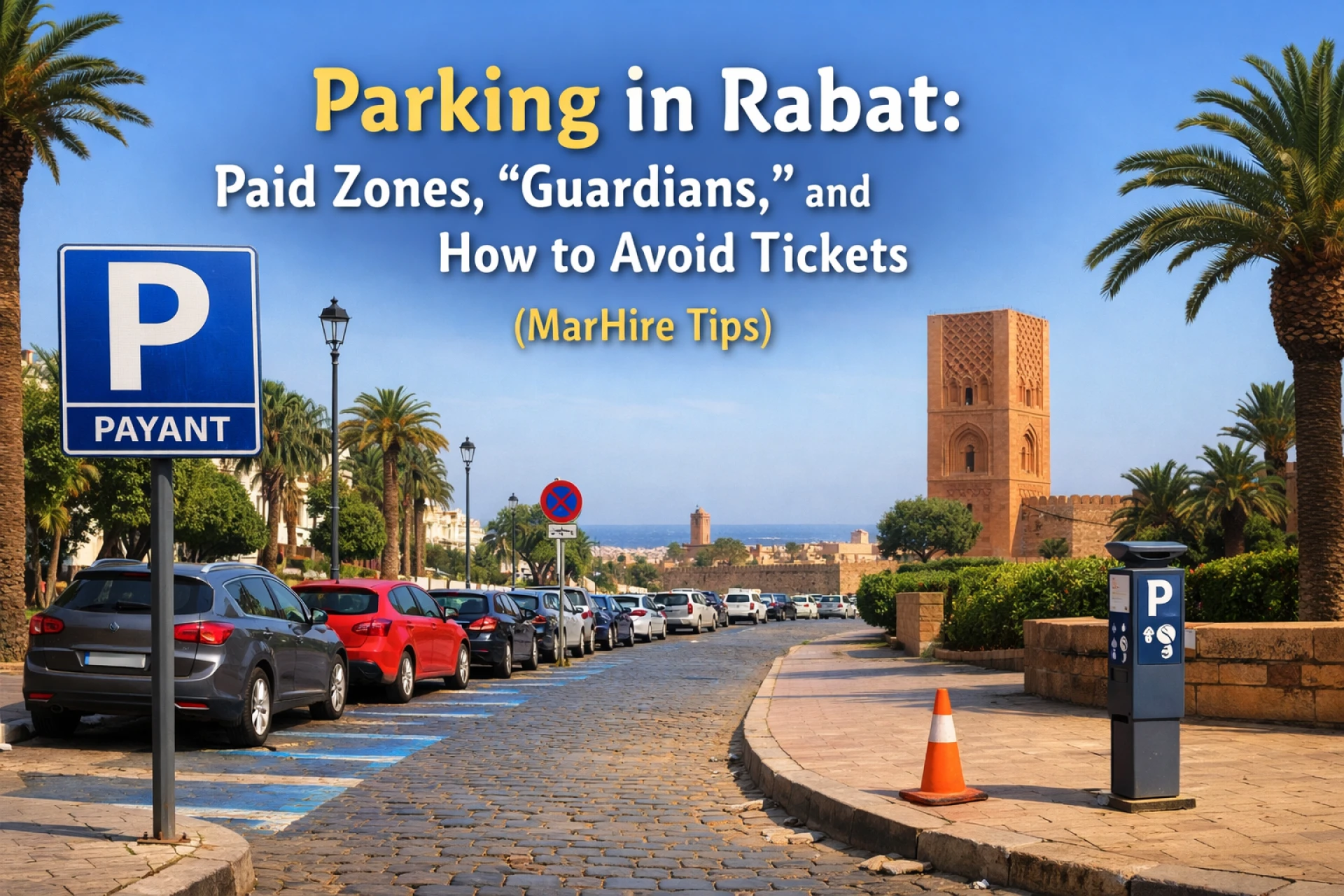

Parking in Rabat feels easy, until it suddenly isn’t. One minute you’re circling near the medina or Hassan area, the next you’re wondering: Is this a paid zone? Is someone going to “watch” the car? Is that a real attendant or not? And most importantly: How do I avoid tickets, clamps, or a stressful tow situation?
This guide is a practical, local-style explanation of how parking actually works in Rabat, what paid zones typically look like, how to handle the famous street “guardians” politely, and the small habits that reduce your risk of penalties. If you’re driving a rental, these tips matter even more, because fines, missing tickets, or an unclear return condition can become time-consuming at drop-off.
If you want to plan your trip with a local car rental option that matches your route and budget, start with MarHire and browse car rental options before you arrive.
1) The three main parking “types” you’ll see in Rabat
A) Marked paid street zones
These are the streets where parking is controlled, usually with:
- painted bays, signs, or meters (depending on area),
- attendants who manage spaces,
- time limits (sometimes enforced).
What it feels like: busy, convenient, close to attractions, but you need to pay attention.
B) Unmarked street parking
You’ll find streets that look “free,” but still have:
- local rules,
- restricted hours,
- occasional enforcement depending on neighborhood.
What it feels like: calmer, but you must verify you’re not blocking access, driveways, or loading areas.
C) Private car parks (paid lots/garages)
These can be:
- hotel garages,
- underground parking in newer areas,
- guarded lots near commercial zones.
What it feels like: safest for stress-free stops, especially if you’ll be away for hours.
2) Paid zones: how to recognize them fast (without guessing)
When you’re new to Rabat, it’s easy to mistake a busy street for free parking. Use this quick visual checklist:
Signs you’re in a paid zone
- rows of cars in marked bays,
- official-looking signboards about parking,
- a person guiding cars into specific slots,
- payment requests that come with a ticket or clear system.
Signs you should move on
- no clear bays + someone aggressively demanding money,
- “parking” offered in a narrow area blocking traffic,
- no explanation of time or rules,
- you feel rushed or pressured.
Best habit: If you don’t understand the system, choose a private lot for that stop. It costs a little more, but saves time and avoids random arguments.
If you’re renting locally, it helps to choose a provider with clear pickup and return guidance for the city. Start with car rental Rabat so your booking details match the area you’ll actually drive in.
3) Who are the “guardians” and what do they actually do?
In Rabat (and many Moroccan cities), you’ll sometimes meet informal street attendants often called “guardians.” They may:
- help you reverse into a tight space,
- keep an eye on cars on a busy street,
- signal to other drivers that the space is taken.
Some are connected to a local routine, some are not. The key is to stay polite and keep it simple.
The polite, low-drama approach
- Smile, greet, and be calm.
- If they guide you into a spot, a small tip is normal in many areas.
- If you don’t want the help, a simple “La, shukran” (no, thank you) is enough.
What you should not do
- Don’t hand over keys.
- Don’t accept “I’ll move it later” promises.
- Don’t park where access is blocked just because someone says it’s fine.
Rule of thumb: If it looks like a risky spot, it is, even if someone says “OK.”
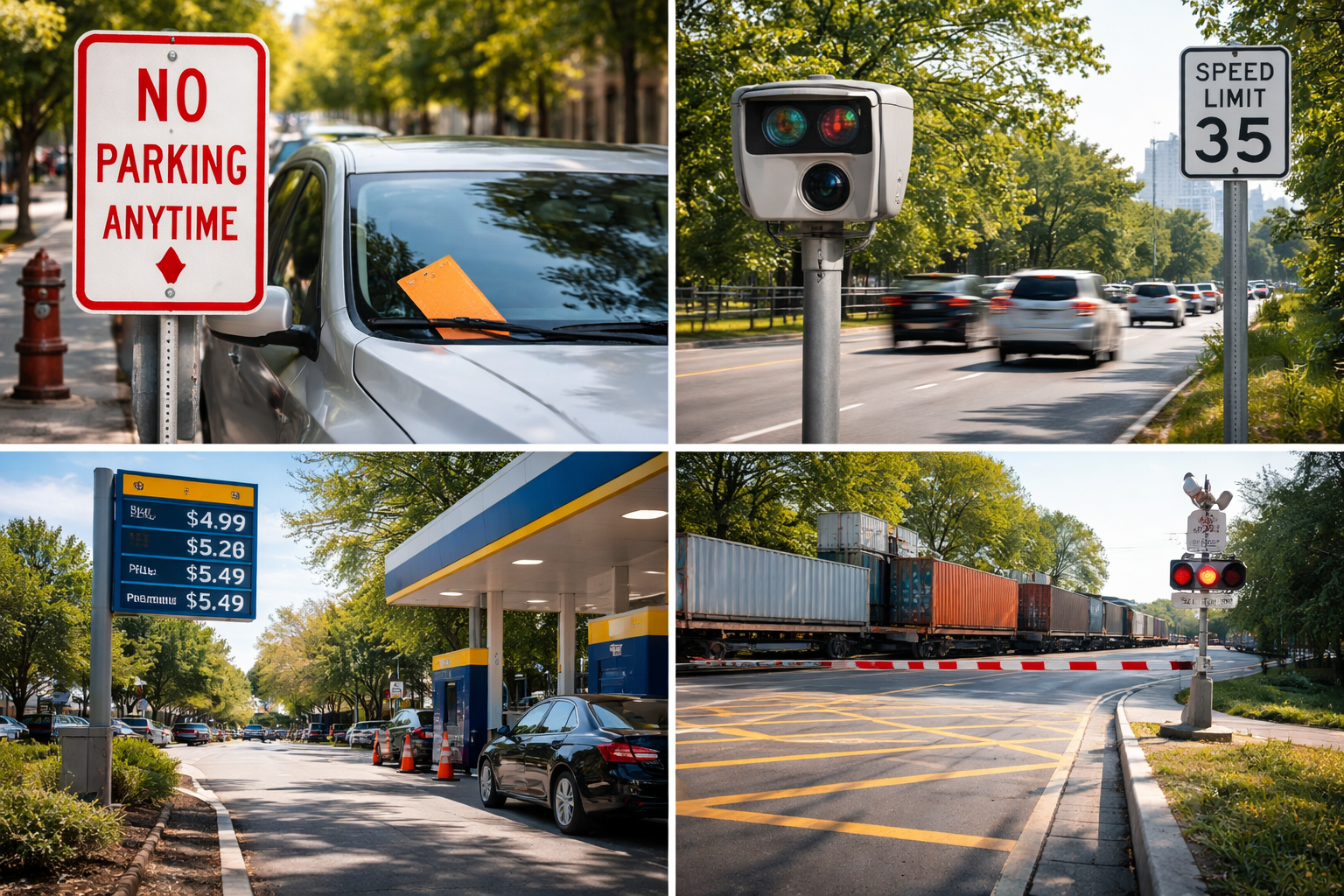
4) The spots where visitors most often get tickets (or problems)
Most parking trouble in Rabat comes from a few predictable mistakes:
A) Blocking entrances or narrow streets
Even if you leave “just for 5 minutes,” it can become a tow or a ticket situation.
B) Parking too close to corners
Corners and intersections are common enforcement zones because they affect visibility.
C) Ignoring restricted zones near official buildings
Rabat has government and diplomatic areas. If signage looks strict or security is visible, avoid parking there unless it’s clearly allowed.
D) “Looks empty” areas that are empty for a reason
Empty curb space in a busy area often signals:
- loading zone,
- restricted hours,
- active enforcement.
5) The “2-minute safe park” routine (use it every time)
This mini routine saves you from 80% of headaches:
- Stop, don’t switch off yet.
Look around for signs, bays, meters, and restrictions. - Check the curb and road markings.
Corners, narrow lanes, and access gates are “no” zones. - Take 4 quick photos.
Front, rear, and both sides, especially if you’re in a tight space or near other cars. - Confirm the payment method.
If it’s a paid zone, understand how payment is recorded (ticket, meter, attendant). - Leave nothing visible.
Even in safe areas, don’t leave bags, phones, or documents on seats.
Rental car tip: Photos are not only for damage disputes; they also help you remember exactly where you parked.
6) Practical area-by-area strategy in Rabat (simple and realistic)
You don’t need perfect “secret” spots. You need a strategy that matches your stop.
If you’re doing a quick stop (coffee, pharmacy, ATM)
- Choose easy street parking where you’re not blocking anyone.
- Avoid “tight squeeze” spaces that require heavy maneuvering.
If you’re visiting a major attraction (1–3 hours)
- Prefer a paid lot/garage or well-managed paid zone.
- Take photos and keep your return time in mind.
If you’re exploring old areas (medina-style walking)
- Park outside the densest streets and walk.
- Don’t chase “closest possible” parking, those are the spots that trap visitors.
7) Cheap rentals in Rabat and parking: what changes?
If you’re driving a budget rental, you may care more about avoiding rim scrapes and bumper taps—because small marks are more noticeable at return.
That’s why your parking habits matter:
- avoid tight curb contacts,
- don’t “force” into narrow spaces,
- photograph rims after you park if you brushed anything.
If you’re comparing budget options, start with cheap car rental Rabat and plan safer parking stops instead of last-second curbside squeezes.
8) The best ways to avoid tickets (simple rules that work)
Rule 1: Don’t park where you wouldn’t want someone else to park
If it would annoy you (blocking, dangerous, tight), it’s probably enforceable.
Rule 2: Pay when it’s clearly a paid zone
Trying to “wait it out” in a controlled zone is the fastest route to stress.
Rule 3: Park once, walk more
The best Rabat day is: one good parking decision + walking. Multiple short re-parks increase risk.
Rule 4: Keep your car “boring”
Nothing visible inside, no attention, no drama.
Rule 5: If you’re unsure, choose a private lot
It’s the simplest “tourist-proof” decision.
9) Quick FAQ
Is parking in Rabat free?
Some areas are free, but many busy streets operate as paid zones. If it looks controlled, assume you need to follow a payment system.
Who are the parking “guardians”?
They are street attendants who may guide you into spaces and watch the area. Some are part of a local routine; always stay polite but don’t hand over keys.
How do I avoid tickets in Rabat?
Use the 2-minute routine: check signs/markings, avoid corners and entrances, pay in clearly controlled zones, and park once then walk.
Is it safe to park on the street?
Often yes in normal areas, but safety improves when you park in well-managed zones and keep valuables out of sight.
Final takeaway: Make parking boring (and you win)
Parking in Rabat doesn’t need to be stressful. Treat it like a small system:
- recognize paid zones fast,
- handle “guardians” politely but firmly,
- avoid tight/blocked areas,
- take quick photos,
- choose a private lot when you’re unsure.
To set up your trip with the right car choice for Rabat, start at MarHire, browse car rental, then narrow it to car rental Rabat.




















Sign in to leave a comment.