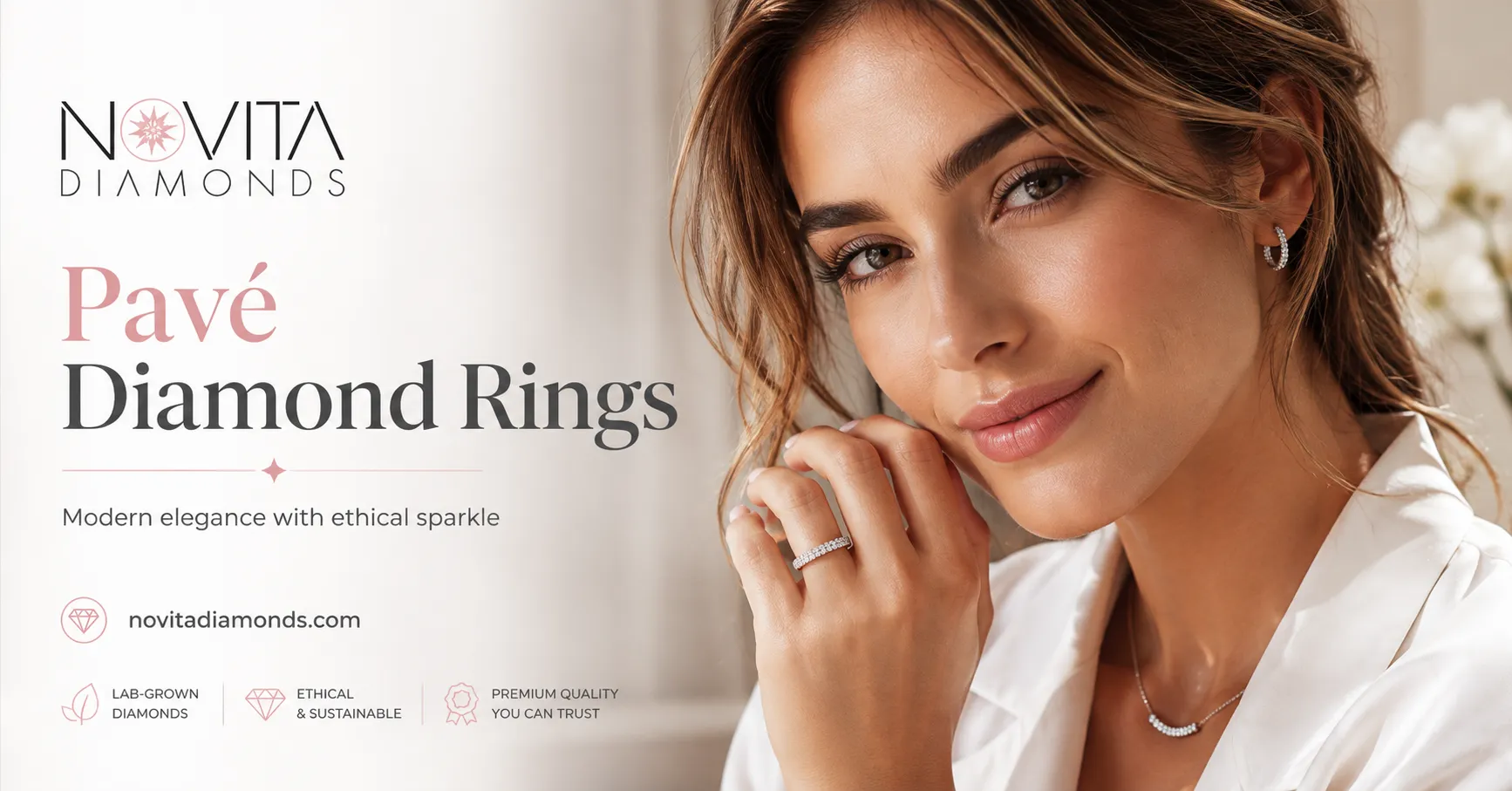

A beautiful diamond ring does not need to be oversized to make an impression. Sometimes, the most memorable sparkle comes from dozens of tiny details working together. That is exactly what makes pavé diamond rings so distinctive.
Named after the French word for “paved,” the pavé technique sets small diamonds closely together across a band or selected part of a ring. Very little metal remains visible between the stones, creating what looks like a continuous surface of light.
For Australian couples choosing engagement rings, wedding jewelry, or a meaningful anniversary piece, pavé offers an elegant balance. It can enhance a centre diamond without overwhelming it, add visual richness to a classic silhouette, and bring fine jewelry craftsmanship into even the smallest details.
What Makes Pavé Diamond Rings Different?
The defining feature of pavé jewelry is the way numerous small diamonds are secured closely beside one another. Skilled setters use tiny beads or prongs of precious metal to hold each stone while keeping the setting itself visually discreet.
The effect is different from simply placing several larger diamonds along a band. Pavé creates a more delicate field of brilliance.
A well-designed pavé setting can:
- Increase the overall sparkle of an engagement ring
- Draw attention toward the centre stone
- Create a refined appearance without excessive bulk
- Add detail to otherwise minimalist ring settings
- Complement both traditional and contemporary jewelry styles
Because the accent stones are small, precision matters. Consistent stone placement, secure setting work, balanced proportions, and careful polishing all contribute to the finished appearance.
Why Pavé Works So Well With Lab-Grown Diamonds
Modern buyers across Australia are becoming increasingly thoughtful about how jewelry is designed, sourced, and valued. Lab-grown diamonds fit naturally into that conversation.
Lab-grown diamonds have essentially the same chemical, physical, and optical characteristics as mined diamonds. The difference lies in their origin: they are created in controlled laboratory environments rather than extracted from the earth.
Combining a lab-grown centre stone with lab-created diamonds in a pavé band allows designers to create substantial brilliance while maintaining a refined aesthetic.
For shoppers interested in ethical diamonds and more considered purchasing decisions, lab-grown stones can also provide greater transparency around origin. Reputable jewelers should still provide clear information about stone quality, diamond certification, materials, and craftsmanship rather than relying on sustainability claims alone.
Choosing the Right Pavé Setting
Not every pavé design looks or wears the same way. Small changes in stone placement can noticeably affect a ring's personality.
Classic Pavé
Classic pavé uses rows of small diamonds secured by tiny metal beads. It offers an elegant, detailed appearance and works particularly well with solitaire centre stones.
It is a popular choice for custom engagement rings because it enhances brilliance while allowing the centre diamond to remain the visual focus.
Micro-Pavé
Micro-pavé uses especially small diamonds and highly precise lab grown diamonds . The result can look exceptionally delicate, with minimal visible metal.
This style suits people who appreciate intricate jewelry craftsmanship and a sophisticated, almost seamless sparkle.
French Pavé
In a French pavé setting, small V-shaped openings are cut beneath the accent stones. This can expose more of each diamond and create a light, detailed appearance along the band.
Pavé Halo
A pavé halo surrounds the centre diamond with smaller stones. The arrangement can make the centre stone appear visually larger while increasing brilliance from multiple angles.
Halo designs can be particularly effective for oval, round, cushion, pear, and emerald-cut centre stones.
Pavé Compared With Other Diamond Ring Settings
| Setting Style | Appearance | Sparkle Level | Best Suited For |
|---|---|---|---|
| Pavé | Fine diamonds set closely across the band | High | Elegant engagement rings and bridal jewelry |
| Solitaire | One centre diamond with a plain band | Centre-focused | Minimalist, timeless designs |
| Channel Set | Diamonds secured between metal walls | Moderate to high | Sleek wedding bands and practical designs |
| Halo | Small diamonds surrounding a centre stone | Very high | Creating a larger visual presence |
| Bezel | Metal surrounds the diamond edge | Controlled, modern | Contemporary styling and added stone protection |
The best design depends on lifestyle, aesthetic preference, centre-stone shape, and how the engagement ring will eventually sit beside a wedding band.
Matching Pavé With Different Centre Diamond Shapes
One reason pave diamond rings remain versatile is their ability to complement many diamond cuts.
A round brilliant centre stone paired with pavé creates a classic, highly sparkling combination. Oval diamonds can produce a softer, elongated appearance, while pear and marquise cuts add a more distinctive silhouette.
Emerald-cut and Asscher-cut diamonds create an interesting contrast. Their broad, step-cut facets offer a calmer style of brilliance, while the pavé band supplies fine sparkle around them.
For a personalised jewelry design, the width of the pavé band should also relate naturally to the dimensions of the centre stone. An extremely delicate band may appear unbalanced beside a very large diamond, while a wider band can reduce the visual impact of a smaller centre stone.
Pavé Engagement Rings for Australian Buyers
Australian jewelry preferences often combine understated sophistication with practical wearability. A ring may need to move comfortably from work to weekends, celebrations, travel, and everyday life.
That makes construction particularly important.
Before selecting a pavé design, consider:
- How often the ring will be worn
- Whether your work involves frequent use of your hands
- How high the centre diamond sits
- The width and thickness of the band
- How the engagement ring will pair with wedding bands
- Future resizing possibilities
- Cleaning and maintenance requirements
Buyers in Australia and New Zealand should also ask how servicing is handled after purchase. Fine pavé settings contain many small stones, so professional inspection can help identify loose stones or worn setting beads before they become significant problems.
Ethical Sourcing and Diamond Certification
Responsible luxury should come with clear information.
When comparing lab-grown diamond jewelry, look beyond visual appearance alone. The centre diamond should ideally be accompanied by respected diamond certification detailing characteristics such as carat weight, colour, clarity, cut information, and measurements.
Ethical sourcing also extends beyond the diamond itself. Precious metals, manufacturing practices, supply-chain transparency, packaging, and long-term product quality can all influence the sustainability of fine jewelry collections.
Brands such as novitadiamonds.com focus on lab-grown diamond jewelry, giving buyers an opportunity to explore engagement rings and other designs created specifically around laboratory-grown stones.
Creating a More Personal Pavé Ring
The finest rings often feel personal rather than simply expensive.
Customisation can involve choosing the centre diamond, precious metal, setting profile, band width, pavé coverage, and small design details that reflect the wearer.
Popular choices include platinum, white gold, yellow gold, and rose gold. Each creates a different visual relationship with the diamonds. White metals can make the pavé appear almost uninterrupted, while yellow or rose gold introduces warmer contrast.
Personalized jewelry can also extend beyond engagement pieces. Pavé designs work beautifully for bridal jewelry, anniversary gifts, diamond jewelry celebrating personal milestones, and coordinated wedding bands.
For Australians seeking meaningful luxury rather than decoration alone, pave diamond rings offer something particularly appealing: craftsmanship that reveals itself gradually. From a distance, the effect is pure brilliance. Up close, the precision behind every tiny diamond becomes part of the beauty.























Sign in to leave a comment.