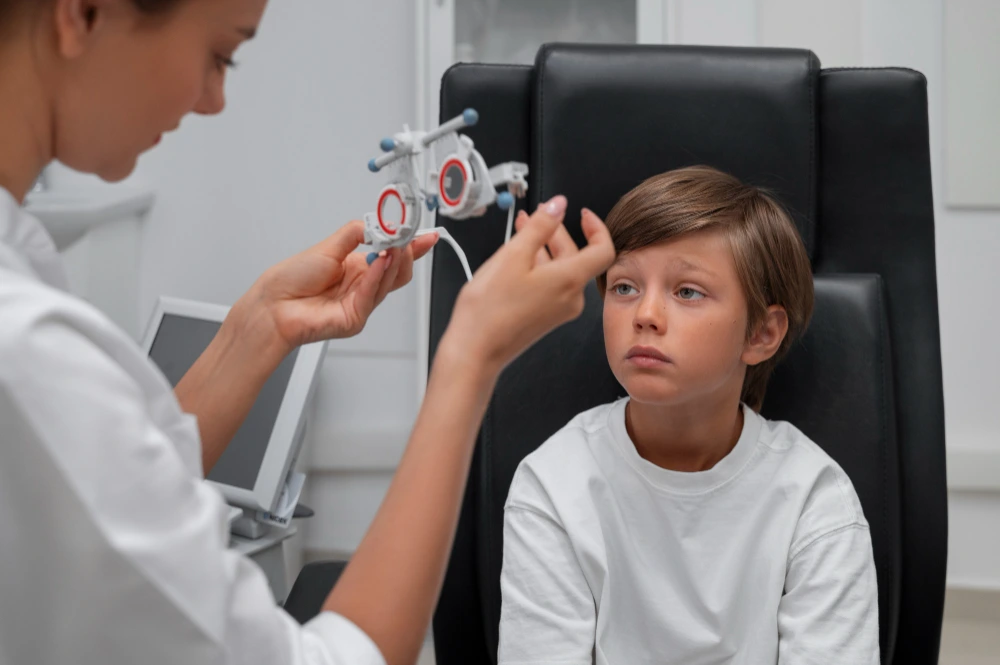

Healthy vision plays a crucial role in a child’s growth, learning, and overall development. From reading and writing to playing and social interaction, children rely heavily on their eyesight to explore the world around them. However, many children experience vision problems that may go unnoticed if regular eye examinations are not conducted. Pediatric vision problems can affect a child’s academic performance, confidence, and daily activities, making early detection and treatment extremely important.
What Are Pediatric Vision Problems?
Pediatric vision problems refer to eye conditions that affect infants, children, and teenagers. Unlike adults, children may not realize they have a vision problem because they assume everyone sees the world the same way they do. This is why parents and caregivers must be attentive to signs that indicate potential vision issues.
Early diagnosis and proper treatment can significantly improve a child’s visual development and prevent long-term complications.
Common Vision Problems in Children
Several eye conditions can affect children at different stages of development. Some of the most common pediatric vision problems include:
Refractive Errors
Refractive errors occur when the eye cannot properly focus light on the retina. This results in blurred vision. The most common types include:
- Myopia (Nearsightedness) – Difficulty seeing distant objects clearly
- Hyperopia (Farsightedness) – Difficulty focusing on nearby objects
- Astigmatism – Blurred or distorted vision due to irregular curvature of the eye
These conditions are often corrected with prescription glasses or contact lenses.
Amblyopia (Lazy Eye)
Amblyopia occurs when one eye develops weaker vision than the other. If untreated, the brain may start relying only on the stronger eye, which can lead to permanent vision loss in the weaker eye.
Strabismus (Crossed Eyes)
Strabismus is a condition where the eyes do not align properly and may point in different directions. This can affect depth perception and visual coordination.
Convergence Insufficiency
This condition makes it difficult for the eyes to work together when focusing on close objects, often causing eye strain, headaches, or difficulty reading.
Pediatric Cataract
Although cataracts are commonly associated with aging, they can also occur in children. Pediatric cataracts can interfere with visual development and may require early treatment or surgery.
Signs of Vision Problems in Children
Since children may not always communicate their vision difficulties, parents and teachers should watch for warning signs such as:
- Squinting frequently
- Sitting too close to screens or books
- Frequent eye rubbing
- Complaints of headaches or eye strain
- Difficulty concentrating in school
- Covering one eye while reading
- Poor hand-eye coordination
If any of these symptoms are noticed, it is important to consult an eye specialist as soon as possible.
Importance of Regular Pediatric Eye Exams
Regular eye examinations are essential for detecting vision problems early. Pediatric eye specialists use specialized techniques and equipment to evaluate a child’s eye health and visual development.
Experts recommend that children undergo eye examinations:
- During infancy
- Before starting school
- Every one to two years during school age
Early detection allows doctors to provide timely treatments such as glasses, vision therapy, or corrective procedures if necessary. If your child is facing these vision issues, you can opt pediatric ophthalmologist in Kerala for consultation. Abate eye hospital provide best eye doctors in Kerala and Chennai.
Treatment Options for Pediatric Vision Problems
The treatment for pediatric vision problems depends on the specific condition and its severity. Common treatment options include:
- Prescription glasses or contact lenses
- Vision therapy exercises
- Eye patches for amblyopia
- Medication or eye drops
- Surgical correction for certain conditions
With proper treatment and follow-up care, most pediatric vision problems can be effectively managed.
Tips to Protect Children’s Eye Health
Parents can take several steps to support their child’s eye health and reduce the risk of vision problems.
Encourage children to take breaks during screen time by following the 20-20-20 rule, which involves looking at something 20 feet away for 20 seconds every 20 minutes. Ensure they eat a balanced diet rich in vitamins A, C, and omega-3 fatty acids that support eye health. Limiting excessive screen exposure and promoting outdoor activities can also help reduce eye strain and support healthy vision development.
Final Thoughts
Pediatric vision problems are more common than many people realize, but early detection and proper treatment can make a significant difference in a child’s life. Regular eye checkups, awareness of warning signs, and healthy visual habits can help protect a child’s eyesight and ensure proper visual development.
Parents should always prioritize their child’s eye health and consult a pediatric eye specialist if they notice any unusual symptoms. Clear vision not only supports academic success but also helps children grow with confidence and enjoy the world around them.
























Sign in to leave a comment.