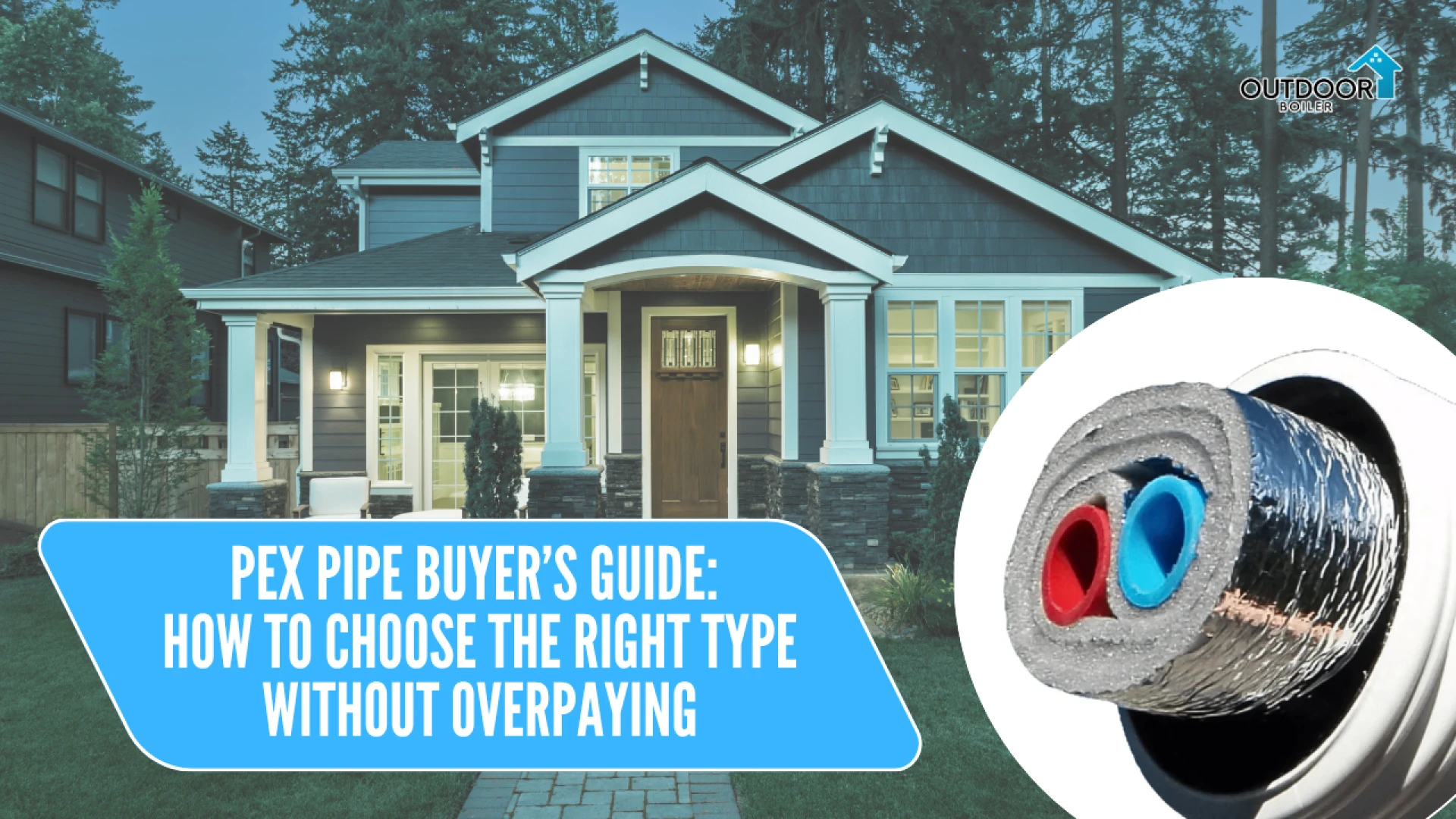

Shopping for PEX can feel like walking into a hardware store and being hit with a wall of red, blue, and white coils. Add in the jargon—O2 barrier, non‑O2, insulation types—and suddenly it feels like you’re being set up for an upsell. The truth is, most homeowners only need a few basics to make the right call. If you’re running lines for an outdoor wood boiler or planning PEX underground, knowing the difference between these options can save you serious money.
O2 Barrier vs Non‑O2: What’s the Difference?
Here’s the simple version. O2 barrier PEX is designed to keep oxygen from seeping into the water, which protects metal parts like pumps and fittings from rust. It’s a must if you’re using a closed‑loop heating system. Non‑O2 barrier PEX works fine for domestic water lines where corrosion isn’t an issue. If someone tries to sell you O2 barrier for every single job, that’s money you don’t need to spend.
Get a free water test to make sure your system is running clean and efficient
Choosing the Right Size and Insulation
PEX comes in different diameters, and bigger isn’t always better. Half‑inch is common for household plumbing, while one‑inch or more is often used for heating systems like an outdoor wood boiler. The key is matching the size to the flow you actually need. As for insulation, don’t skimp. Quality insulation keeps heat in the water instead of the soil, and that’s where long‑term savings really show up.
Talk to our team if you’re unsure which size or insulation type fits your setup
Quick Tips to Avoid Overpaying
- Only buy O2 barrier PEX if your system requires it
- Match pipe size to your actual flow needs, not the biggest option on the shelf
- Invest in proper insulation to avoid hidden heat loss
- Don’t let a salesperson convince you every project needs premium upgrades
FAQs
What’s the main difference between O2 and non‑O2 PEX?
O2 barrier protects metal parts from rust, non‑O2 is fine for water lines.
What size PEX is best for an outdoor wood boiler?
Usually one‑inch or larger, depending on system design.
Is insulation really worth the cost?
Yes, it prevents expensive heat loss underground.
Can PEX be buried directly in soil?
Yes, but insulated PEX is strongly recommended.
Does PEX last a long time?
With proper installation, it can last decades.



























Sign in to leave a comment.