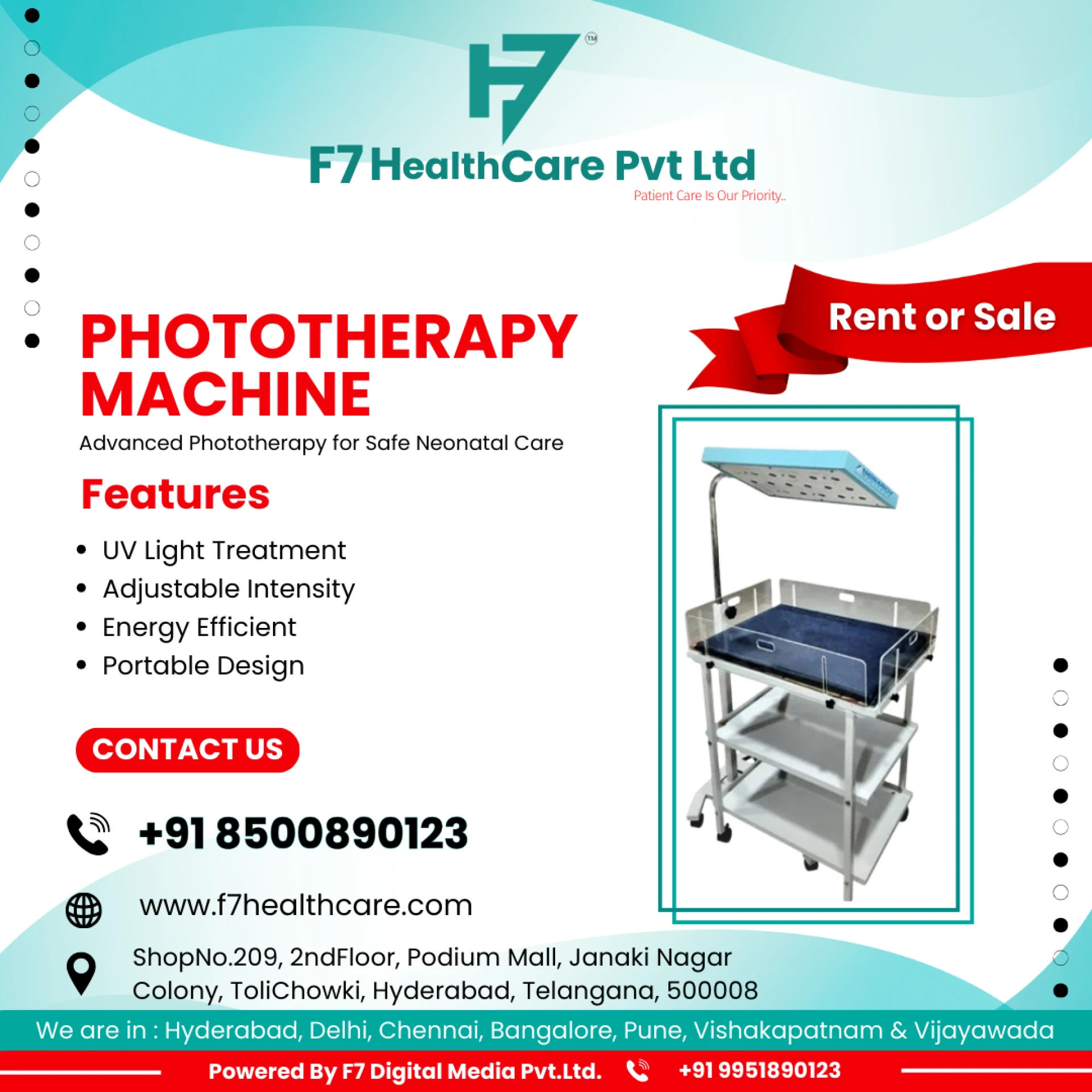

New-born jaundice is a common condition affecting millions of babies worldwide. It’s often harmless, but in some cases, medical intervention is necessary to prevent complications. Phototherapy, a simple yet highly effective treatment, is the gold standard for managing high bilirubin levels.
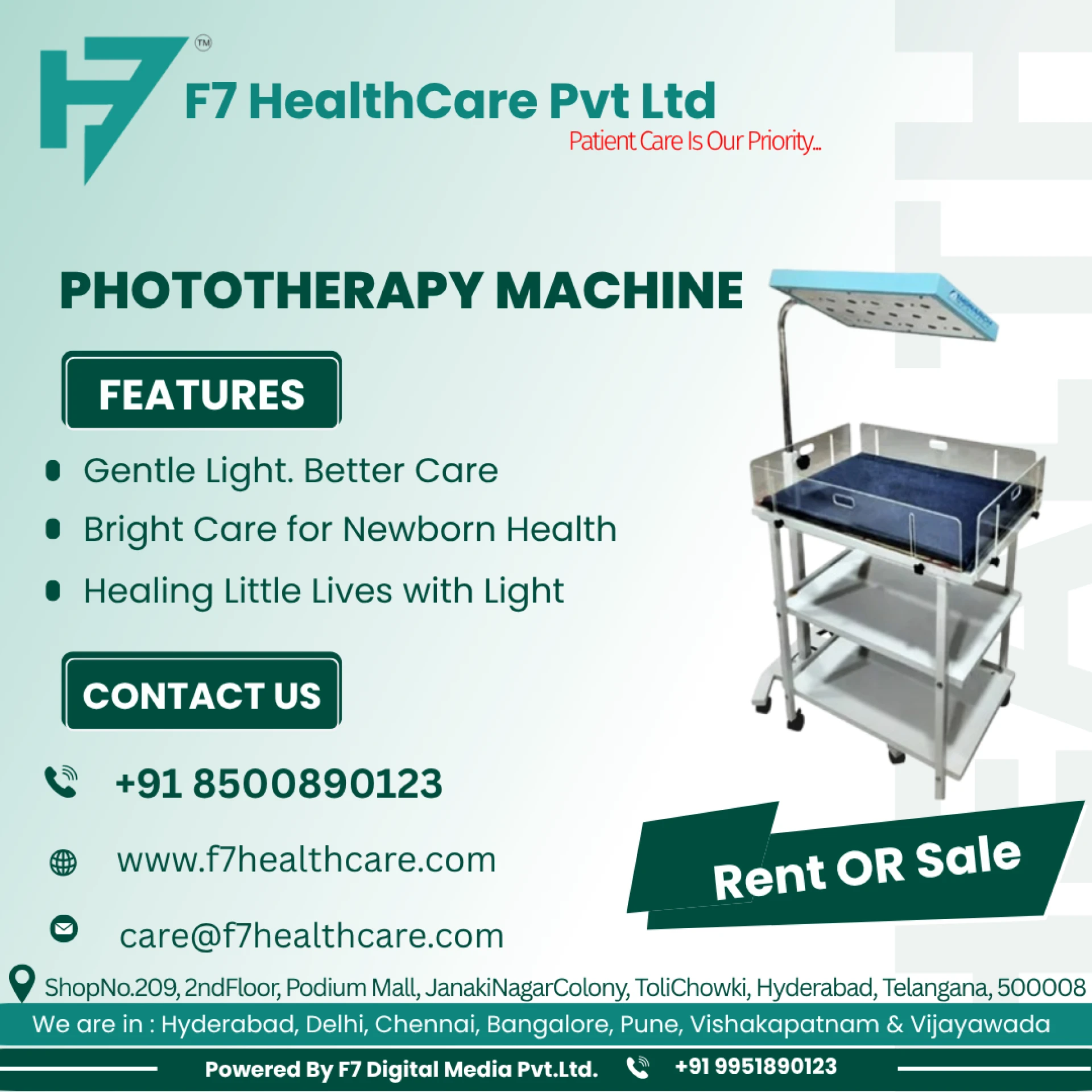
Today, with advances in home healthcare, families don’t have to rely solely on hospital stays for this treatment. Phototherapy machines can now be set up at home, offering a convenient and safe way to care for new-borns. Companies like F7 Healthcare are making it possible for families across India to access these machines on rent or for purchase.
What Is Phototherapy and Why Is It Used?
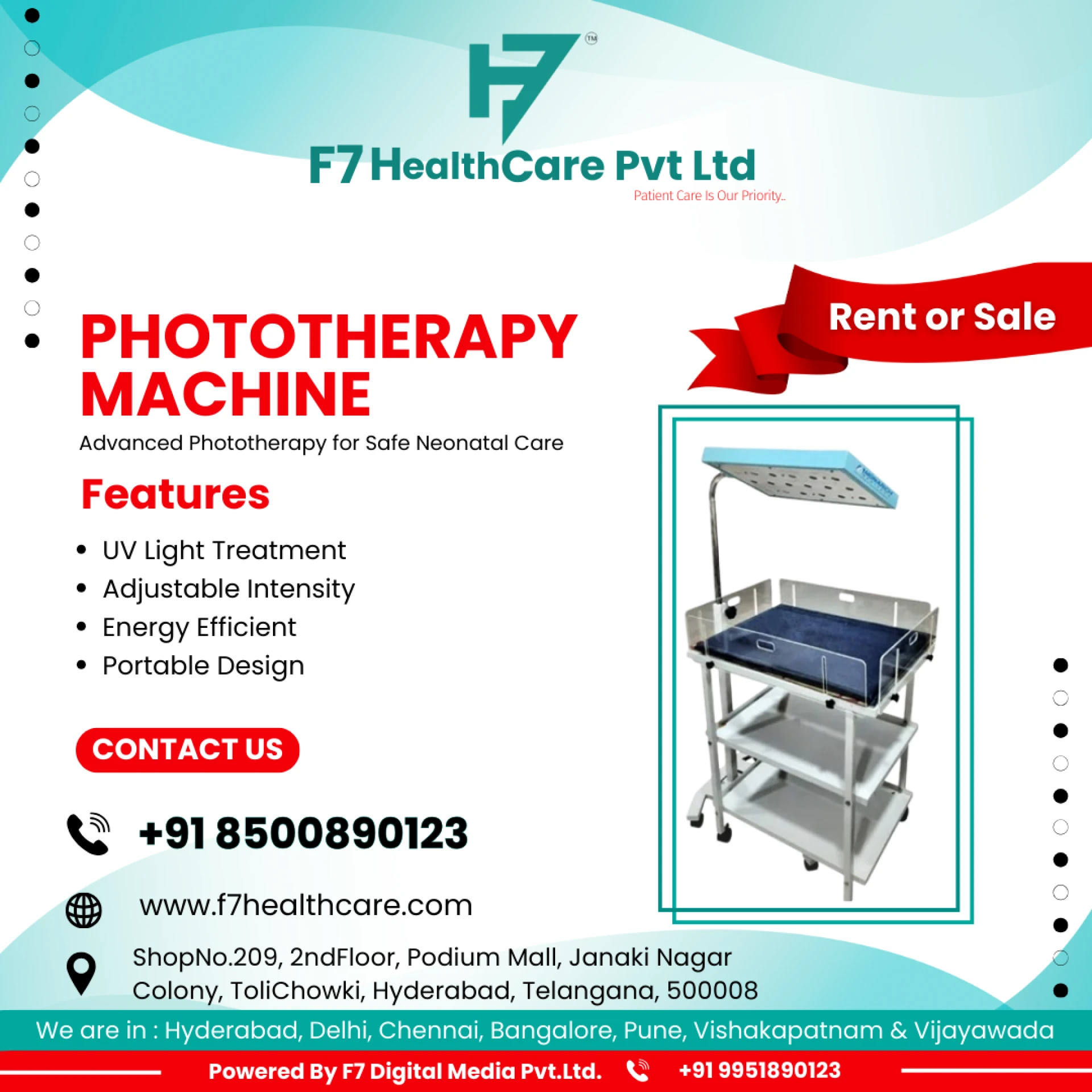
Phototherapy uses a specific type of light that helps break down excess bilirubin in a new-born’s blood. The baby’s skin and blood absorb this light, changing bilirubin into a form that can be easily excreted. This method has been a cornerstone of neonatal care for decades.
Home-based phototherapy has become increasingly popular as it allows babies to remain in a familiar environment while still receiving the same level of medical care they would in a neonatal unit.
Different Types of Phototherapy Machines and Their Features
Phototherapy machines come in several types, each designed to suit different treatment needs and environments. Understanding these options helps families and healthcare providers choose the most suitable device for new-born jaundice care.
1 Conventional Phototherapy Units (Overhead Lamps)
These are the most widely used phototherapy devices in hospitals and clinics.
Features:
- Uses fluorescent or halogen lamps to emit blue-green light.
- Positioned above the baby’s crib or warmer.
- Covers the baby’s entire body surface for effective treatment.
- Adjustable height and angle for precise light delivery.
- Requires protective eye covers for the baby.
Best for hospital-based care and high bilirubin levels needing intensive light exposure.
2 LED Phototherapy Units
A modern alternative to conventional lamps, LED units are energy-efficient and portable.
Features:
- Uses light-emitting diodes (LEDs) that provide consistent wavelength and intensity.
- Compact design, ideal for home setups.
- Generates less heat, reducing the risk of overheating.
- Long lamp life with minimal maintenance.
- Adjustable brightness settings for tailored treatment.
Best for both hospital and home use due to their compact size and efficiency.
3 Fiberoptic Phototherapy Devices (BiliBlanket or BiliPad)
Designed for greater convenience, these devices allow parents to hold or feed the baby during treatment.
Features:
- Flexible fiberoptic pad or blanket emits light.
- Baby lies directly on or under the illuminated surface.
- Minimal light exposure to caregivers.
- Eliminates the need for eye protection in many cases.
- Portable and easy to use in home environments.
Best for mild jaundice cases and home-based care.
4 Double-Sided Phototherapy Units
These are advanced devices that provide light from both above and below the baby.
Features:
- Two light sources for 360° coverage.
- Faster bilirubin breakdown due to increased body surface exposure.
- Typically combines overhead LEDs with a light pad.
- Often used for babies with moderate to severe jaundice.
Best for hospital use or cases needing rapid bilirubin reduction.
How Phototherapy Machines Work at Home
These devices are compact, user-friendly, and designed with new-born safety in mind. A typical setup includes an overhead light source or a fiberoptic pad placed under the baby. Parents are trained to use the equipment properly and monitor their baby’s progress with support from healthcare professionals.
This approach combines medical effectiveness with family-cantered care, keeping parents actively involved in the treatment process.
Renting vs Buying - Which Is Better
For most families, jaundice treatment lasts only a few days to a week. Renting a phototherapy machine is often the best option because it’s cost-effective and requires no long-term commitment. Rental services include delivery, setup, and pickup, making the process seamless.
However, for healthcare providers or clinics, purchasing the machine may make sense as a long-term investment. It ensures availability for multiple patients and reduces recurring rental expenses.
F7 Healthcare caters to both needs with flexible plans, ensuring families get the right solution without unnecessary stress.
Why Families Choose Home Phototherapy
Hospitals can be overwhelming for both babies and parents. Home-based care offers several advantages:
- Babies remain in a calm, familiar setting.
- Parents are more involved and reassured by being close to their child.
- Reduced risk of infections compared to hospital stays.
- Lower overall treatment costs.
F7 Healthcare’s services ensure families get the right equipment along with technical and clinical support. This reduces the fear and uncertainty often associated with home treatments.
Accessibility Across India
Phototherapy machines for rent or sale are now available in cities across India. Whether in large metros like Mumbai, Delhi, or Chennai or smaller towns, families can access this life-saving equipment quickly. F7 Healthcare provides doorstep delivery and setup, ensuring treatment begins without delays.
Their network also ensures 24/7 technical assistance and guidance from trained professionals, giving families the confidence to manage home-based neonatal care.

























Sign in to leave a comment.