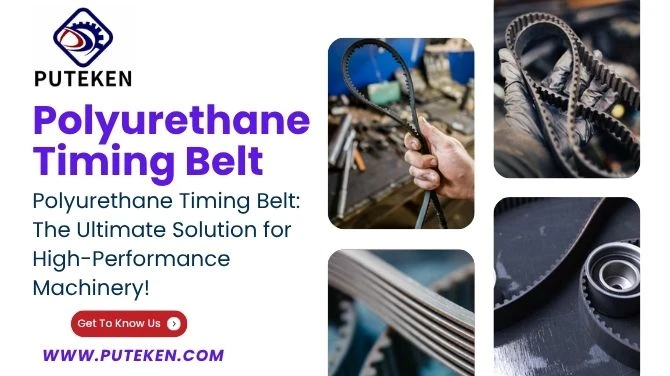

In today’s fast-paced industrial landscape, the demand for high-performance machinery is greater than ever. Whether you are in the automotive, packaging, food processing, or textile industry, the efficiency and reliability of your equipment can make or break your business. At the heart of many of these machines lies a critical component: the timing belt. Among the various options available, the Polyurethane Timing Belt has emerged as the ultimate solution for those seeking durability, precision, and superior performance.
At Shanghai Puteken Transmission System Co., Ltd., we understand that every detail matters when it comes to optimizing your machinery. The right timing belt not only ensures smooth operation but also reduces maintenance costs, minimizes downtime, and extends the lifespan of your equipment.
What is a Polyurethane Timing Belt?
A Polyurethane Timing Belt is a type of synchronous belt made from high-quality polyurethane material, often reinforced with steel, Kevlar, or fiberglass cords. Unlike traditional rubber timing belts, polyurethane belts offer exceptional resistance to wear, chemicals, and temperature extremes. Their toothed design ensures precise engagement with pulleys, making them ideal for applications where timing and synchronization are critical.
Polyurethane timing belts are available in a wide range of profiles, pitches, and sizes, allowing for customization to meet the specific requirements of various industries. Their versatility and robust construction make them suitable for both light-duty and heavy-duty applications.
Key Features of Polyurethane Timing Belt:
The Polyurethane Timing Belt is engineered to deliver outstanding performance in demanding environments. Some of its key features include:
- High Wear Resistance: Polyurethane is highly resistant to abrasion, ensuring a long service life even in harsh conditions.
- Chemical Resistance: The belt can withstand exposure to oils, greases, solvents, and other chemicals commonly found in industrial settings.
- Temperature Stability: Polyurethane timing belts maintain their flexibility and strength across a wide temperature range, from -30°C to +80°C or higher.
- Precision Toothed Profile: The accurate tooth geometry ensures smooth, slip-free power transmission and precise synchronization.
- Low Noise Operation: The belt’s design and material properties contribute to quieter machinery operation.
- Flexibility and Customization: Available in endless, open-ended, and welded configurations, as well as various profiles and pitches.
Advantages of Using Polyurethane Timing Belt
Switching to a Polyurethane Timing Belt offers numerous advantages for businesses seeking to optimize their machinery. Let’s explore some of the most significant benefits:
1. Superior Durability and Longevity
Polyurethane timing belts are designed to withstand continuous operation under high loads and speeds. Their resistance to wear and tear means fewer replacements and less downtime, translating to lower maintenance costs and higher productivity.
2. High Precision and Efficiency
The toothed design of the polyurethane timing belt ensures accurate engagement with pulleys, eliminating slippage and maintaining precise timing. This is crucial for applications such as robotics, CNC machines, and automated assembly lines, where even minor deviations can lead to costly errors.
3. Chemical and Environmental Resistance
Unlike rubber belts, polyurethane timing belts are not affected by oils, greases, or most industrial chemicals. This makes them ideal for use in environments where exposure to such substances is unavoidable.
4. Versatility Across Applications
From food processing and packaging to printing and textile machinery, polyurethane timing belts are suitable for a wide range of industries. Their ability to handle both light and heavy loads makes them a versatile choice for various applications.
5. Customization for Specific Needs
At Shanghai Puteken Transmission System Co., Ltd., we offer polyurethane timing belts in a variety of profiles, pitches, and configurations. Whether you need a standard belt or a custom solution, we can provide a product tailored to your exact requirements.
6. Reduced Noise and Vibration
The material properties and precise tooth engagement of polyurethane timing belts result in quieter operation and reduced vibration, contributing to a more comfortable and efficient working environment.
Applications of Polyurethane Timing Belt
The versatility of the Polyurethane Timing Belt makes it a popular choice across a wide range of industries and applications. Some common uses include:
- Automotive Industry
Polyurethane timing belts are used in engine timing systems, auxiliary drives, and other automotive applications where durability and precision are essential. - Packaging and Food Processing
In packaging lines and food processing equipment, polyurethane timing belts ensure hygienic, slip-free movement of products. Food-grade options are available for direct contact with consumables. - Textile Machinery
Textile machines rely on polyurethane timing belts for precise movement and synchronization of various components, ensuring high-quality fabric production. - Printing and Paper Handling
Printing presses and paper handling equipment use polyurethane timing belts for accurate registration and smooth operation. - Robotics and Automation
Robotic arms, CNC machines, and automated assembly lines benefit from the high precision and reliability of polyurethane timing belts. - Medical Devices
Medical equipment often requires belts that are resistant to chemicals and easy to clean. Polyurethane timing belts meet these requirements while providing precise motion control.
How to Select the Right Polyurethane Timing Belt?
Choosing the appropriate Polyurethane Timing Belt for your application involves several key considerations:
1. Application Requirements
Assess the specific needs of your machinery, including load, speed, and required precision. Consider whether the belt will be used for power transmission, positioning, or conveying.
2. Belt Profile and Pitch
Select the appropriate tooth profile and pitch based on your pulley design and synchronization needs. Common profiles include T, AT, HTD, and STD.
3. Reinforcement Material
Choose a reinforcement material (steel, Kevlar, fiberglass) that matches your load and flexibility requirements. Steel cords offer maximum strength, while Kevlar and fiberglass provide flexibility and resistance to elongation.
4. Environmental Conditions
Consider the operating environment, including temperature, humidity, and exposure to chemicals. Polyurethane timing belts are available in formulations designed for specific environmental challenges.
5. Belt Configuration
Decide whether you need an endless, open-ended, or welded belt. Endless belts are ideal for continuous operation, while open-ended belts are suitable for linear drives and custom lengths.
6. Customization Options
Work with a reputable supplier like Shanghai Puteken Transmission System Co., Ltd. to explore customization options, including special coatings, profiles, and food-grade materials.
Step-by-Step Guide to Selecting the Right Polyurethane Timing Belt
To simplify the selection process, follow these steps:
Step 1: Define Your Application
Clearly outline the purpose of the belt, the machinery involved, and the operational requirements.
Step 2: Gather Technical Specifications
Collect data on load, speed, pulley sizes, center distances, and environmental conditions.
Step 3: Choose the Appropriate Profile and Pitch
Select a tooth profile and pitch that matches your pulleys and meets your load and speed requirements.
Step 4: Select the Right Reinforcement
Choose a reinforcement material that offers the necessary strength, flexibility, and resistance to environmental factors.
Step 5: Determine Belt Length and Width
Measure the required belt length and width based on your system layout and load capacity.
Step 6: Consult with Experts
Reach out to Shanghai Puteken Transmission System Co., Ltd. for expert advice and to explore customization options if needed.
Step 7: Install and Test
Properly install the belt, ensuring correct tension and alignment. Conduct initial tests to verify performance and make any necessary adjustments.
Installation and Maintenance Tips
Proper installation and maintenance are essential for maximizing the lifespan and performance of your Polyurethane Timing Belt. Here are some best practices:
Installation
- Inspect Components: Check pulleys, shafts, and other components for wear or damage before installation.
- Align Pulleys: Ensure pulleys are properly aligned to prevent uneven wear and tracking issues.
- Tension Correctly: Apply the recommended tension to avoid slippage or excessive strain.
- Cleanliness: Keep the installation area clean to prevent contamination.
Maintenance
- Regular Inspections: Periodically check the belt for signs of wear, cracks, or fraying.
- Monitor Tension: Re-tension the belt as needed to maintain optimal performance.
- Replace When Necessary: Replace the belt at the first sign of significant wear or damage.
- Lubrication: While polyurethane timing belts are generally maintenance-free, ensure that adjacent components are properly lubricated to reduce overall system friction.
Why Choose Shanghai Puteken Transmission System Co., Ltd. for Your Polyurethane Timing Belt Needs?
At Shanghai Puteken Transmission System Co., Ltd., we are committed to providing high-quality, reliable, and innovative power transmission solutions. Here’s why you should partner with us for your Polyurethane Timing Belt requirements:
- Expertise: Our team has extensive experience in designing and supplying polyurethane timing belts for a wide range of industries and applications.
- Quality Assurance: We use only the finest materials and adhere to strict quality control standards to ensure every belt meets your expectations for performance and durability.
- Customization: We offer tailored solutions, including custom profiles, lengths, and reinforcement materials, to meet your specific operational needs.
- Technical Support: Our experts are available to provide guidance on selection, installation, and maintenance, ensuring you get the most from your investment.
- Global Reach: With a robust distribution network, we serve clients worldwide, ensuring timely delivery and comprehensive after-sales support.
The Polyurethane Timing Belt is the ultimate solution for high-performance machinery, offering unmatched durability, precision, and versatility across a wide range of industries. Its unique properties make it the preferred choice for businesses seeking reliable, efficient, and cost-effective power transmission solutions. By partnering with Shanghai Puteken Transmission System Co., Ltd., you gain access to top-quality products, expert guidance, and unparalleled customer support.
Frequently Asked Questions (FAQ) About Polyurethane Timing Belt
1. What is a Polyurethane Timing Belt?
A Polyurethane Timing Belt is a synchronous belt made from polyurethane, often reinforced with steel, Kevlar, or fiberglass cords, designed for precise power transmission and synchronization in machinery.
2. What are the main advantages of using a Polyurethane Timing Belt?
The main advantages include high wear resistance, chemical resistance, temperature stability, precision, low noise, and versatility across applications.
3. Can Polyurethane Timing Belts be used in high-temperature environments?
Yes, polyurethane timing belts can be formulated to withstand a wide range of temperatures. Always consult with the manufacturer for specific temperature ratings.
4. How do I determine the correct size for my Polyurethane Timing Belt?
Measure the required belt length, width, and tooth profile based on your system’s pulley sizes and center distances. Our technical team at Shanghai Puteken Transmission System Co., Ltd. can assist you in making the right choice.
5. Are Polyurethane Timing Belts suitable for food processing applications?
Yes, food-grade polyurethane timing belts are available for applications requiring high hygiene standards and compliance with food safety regulations.
6. How often should I replace my Polyurethane Timing Belt?
Replacement intervals depend on the application, load, and operating conditions. Regular inspections are recommended, and the belt should be replaced at the first sign of significant wear or damage.
7. Can I get a custom-sized Polyurethane Timing Belt from Shanghai Puteken Transmission System Co., Ltd.?
Absolutely. We offer customization services to provide polyurethane timing belts in various sizes, profiles, and specifications to meet your unique requirements.
8. What maintenance does a Polyurethane Timing Belt require?
Polyurethane timing belts are generally maintenance-free, but regular inspections and proper tensioning are recommended to ensure optimal performance.
9. How do I know if my Polyurethane Timing Belt is installed correctly?
Proper installation involves aligning pulleys, applying the correct tension, and ensuring the belt is free from contamination. Our technical support team can provide detailed installation guidelines and assistance.
10. How can I order Polyurethane Timing Belts from Shanghai Puteken Transmission System Co., Ltd.?
You can contact our sales team through our website or customer service hotline. We will assist you in selecting the right product and provide a competitive quote.

Sign in to leave a comment.