

Poorly fitted dental work and misaligned teeth are more than cosmetic issues, they can quietly compromise your oral health. Many patients assume that dental restorations such as crowns, bridges, or dentures, once placed, require no further attention. However, ill-fitting restorations and crooked teeth create hidden spaces where bacteria can accumulate, making the gums vulnerable to inflammation. Gingivitis, the earliest stage of gum disease, often develops silently, causing redness, swelling, and bleeding. Fortunately, with the right knowledge, care, and professional guidance, it’s possible to prevent gingivitis before it escalates.
Understanding Gingivitis
Gingivitis is the inflammation of the gums, typically caused by plaque accumulation, a sticky film of bacteria on the teeth. In its early stages, it may appear as minor gum tenderness, redness, or slight bleeding during brushing or flossing. While reversible with proper oral hygiene, untreated gingivitis can progress to periodontitis, a severe gum condition that damages the supporting bone and connective tissues, potentially leading to tooth loss.Recognising gingivitis early is crucial. Regular dental check-ups, attention to oral hygiene, and understanding the contributing factors are essential steps toward maintaining healthy gums and preventing more serious complications.
How Poorly Fitted Dental Work and Crooked Teeth Cause Gingivitis
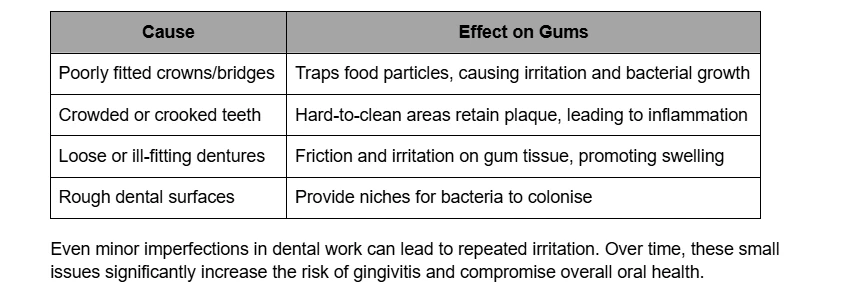
Dental restorations are designed to restore function and aesthetics, but when they don’t fit correctly, they can become a breeding ground for bacteria. Similarly, misaligned or crowded teeth, especially around dental implant Birmingham, create areas that are difficult to clean, allowing plaque to accumulate and inflame the gums, increasing gingivitis risk.
Here’s a clear overview:
Signs Your Dental Work Might Be Causing Gum Problems
It’s important to monitor your oral health and recognise early signs that indicate your dental restorations may be contributing to gum disease:
- Persistent bleeding around crowns, bridges, or dentures
- Red or swollen gums near specific restorations
- Pain or discomfort when chewing or brushing
- Frequent food trapping between teeth or under dental work
- Bad breath or unpleasant taste despite good hygiene
Early detection and intervention are key. If these symptoms occur, consult your dentist promptly to prevent more severe complications.
Prevention Tips: Protecting Your Gums
Preventing gingivitis caused by poorly fitted dental work or misaligned teeth requires a combination of professional care and diligent home hygiene.
Practical steps include:
- Regular dental check-ups: Ensure restorations fit correctly and identify potential trouble spots early.
- Professional cleanings: Dentists can remove plaque and tartar that are difficult to reach at home.
- Correct oral hygiene: Brush twice daily with a soft-bristled toothbrush, paying close attention to areas around restorations.
- Flossing and interdental cleaning: Use floss, interdental brushes, or water flossers to clean hard-to-reach areas.
- Rinse with antimicrobial mouthwash: Alcohol-free options reduce bacterial build-up.
- Healthy lifestyle choices: Avoid smoking, which can exacerbate gum inflammation, and maintain a nutrient-rich diet to support oral health.
By adopting these practices, patients can protect their gums and prevent gingivitis, even in the presence of complex dental work.

The Role of Professional Dental Care
Even with excellent home care, professional oversight is essential. Dentists can detect subtle issues that may not be noticeable to patients, such as minor misalignments, gaps under restorations, or early gum inflammation.
Professional interventions may include:
- Adjustment or replacement of ill-fitting crowns, bridges, or dentures
- Precision cleaning around implants and dental work
- Gum assessment for early signs of gingivitis or periodontitis
- Advanced tools like digital scans to ensure optimal dental fit
For patients who have undergone treatments like Dental Implant Birmingham, personalised maintenance plans are crucial. Regular monitoring ensures restorations remain functional, comfortable, and safe for the gums, preventing gingivitis Birmingham and other oral health concerns.
When to Seek Immediate Help
Recognising warning signs early can prevent minor issues from escalating into serious problems. Seek prompt dental care if you notice:
- Severe or increasing pain beyond initial discomfort
- Persistent bleeding or pus formation around dental work
- Bad taste or foul odour in the mouth
- Loosening or movement of implants, crowns or bridges
Early intervention safeguards not only your gum health but also the longevity of your dental restorations. Addressing problems at the first sign of irritation reduces the risk of implant or restoration failure.
Long-Term Care for Healthy Gums
Maintaining gum health is an ongoing commitment, especially for individuals with dental restorations. Long-term habits are just as important as initial preventive measures.
Key practices include:
- Attend regular dental check-ups every six months
- Replace old or damaged restorations promptly
- Avoid hard, sticky, or chewy foods that can damage dental work
- Maintain consistent brushing and flossing, including around restorations
- Consider using a night guard if you grind your teeth
These strategies prevent plaque accumulation, reduce gum irritation, and promote a healthy oral environment for lasting results.

Emotional and Functional Benefits
Healthy gums and properly fitting dental work impact more than oral health—they affect confidence, comfort, and quality of life.
Patients who follow preventive measures experience:
- Reduced gum sensitivity and bleeding
- Enhanced comfort while eating or speaking
- Increased confidence in their smile
- Long-term durability of dental restorations
Investing in preventive care ensures that your dental work remains effective and that your gums stay healthy, allowing you to enjoy the functional and aesthetic benefits of your smile.
Conclusion
Poorly fitted dental work and misaligned teeth are preventable contributors to gingivitis. With timely adjustments, consistent oral hygiene, and professional oversight, patients can protect their gums, prevent inflammation, and maintain a strong, confident smile.For expert care, precision, and personalised solutions to safeguard your oral health, trust Smilo Dental Implant Birmingham. Their professional approach ensures that both dental restorations and gum health are optimised, giving patients a durable, healthy, and beautiful smile for years to come.


























Sign in to leave a comment.