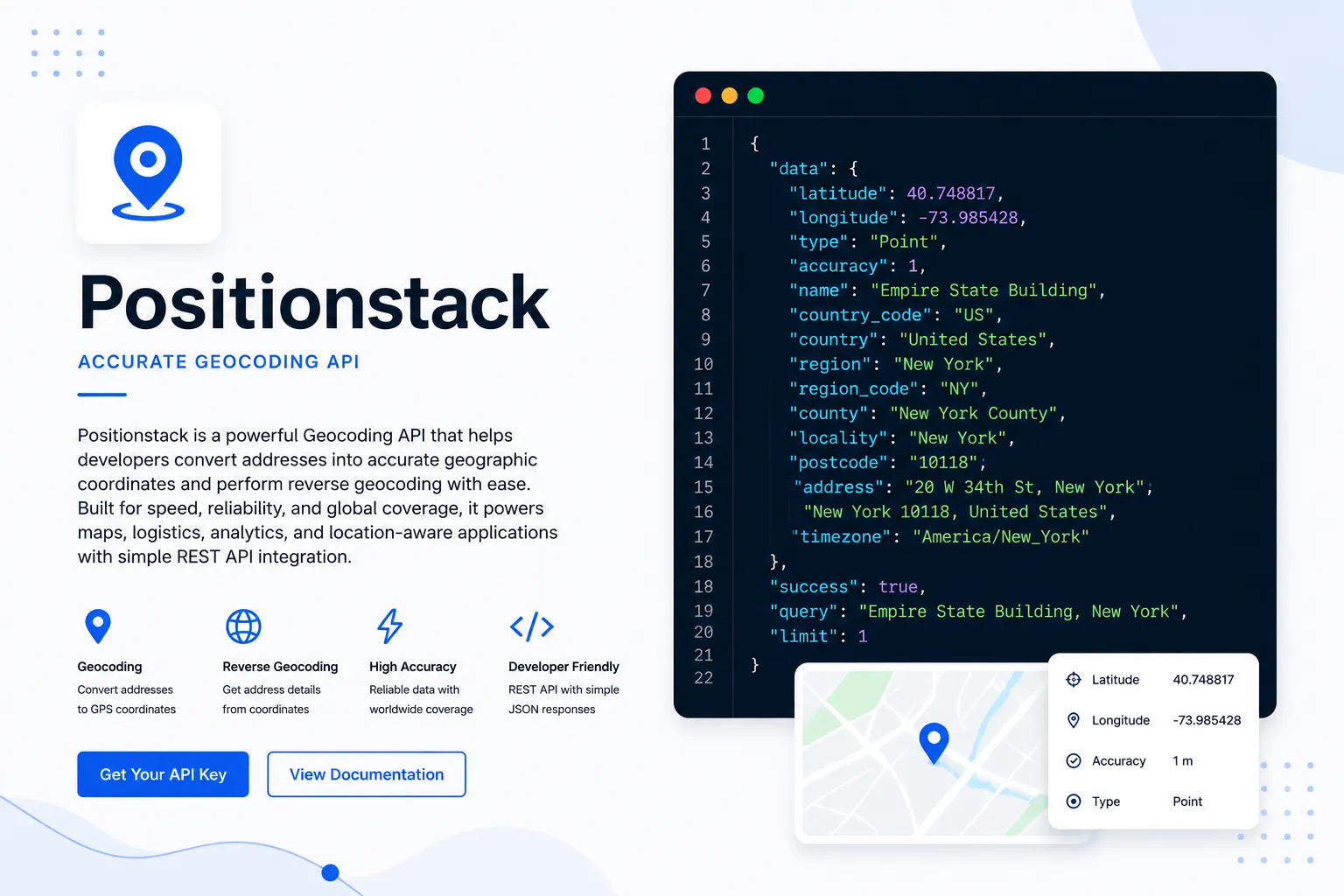

Google Maps' geocoding API is the default choice for a lot of teams simply because it's the name everyone already knows, but for high-volume use cases, the per-request cost adds up fast, which is exactly why so many developers start searching for a geocoding api cheaper than google maps once their address volume grows past prototype scale.
In the positionstack vs google maps geocoding api comparison, accuracy is close for most common address formats, but Positionstack's pricing tiers are built around flat monthly request allowances rather than pure pay-per-call billing, which makes cost far more predictable for delivery apps and real estate platforms processing thousands of addresses a day.
Positionstack also covers global address formats with both forward and reverse geocoding in the same plan, so a logistics tool geocoding delivery addresses and a real estate platform reverse-geocoding property coordinates back into readable addresses can run on the same API key and the same predictable bill.
If your product is still early-stage, it's worth stress-testing accuracy specifically for the regions your users are actually in, geocoding quality can vary noticeably outside North America and Western Europe depending on the provider's underlying map data.
Reverse Geocoding and Batch Geocoding, Without the Google Maps Bill
Turning GPS coordinates back into a readable address, reverse geocoding, is a small feature on paper but a real cost driver in practice, especially for delivery and ride-hailing style apps that need to convert a location ping into an address dozens of times per user session. Any serious reverse geocoding api pricing comparison has to account for that call volume, not just a single-lookup demo scenario.
Batch geocoding adds a second dimension to the cost question. A real estate platform importing thousands of property records, or a marketing team geocoding an entire customer list at once, needs a batch geocoding api subscription that handles bulk requests efficiently rather than forcing thousands of individual API calls one at a time.
Positionstack supports both forward and reverse geocoding, plus batch requests, under the same tiered pricing structure, so a delivery app doing real-time reverse geocoding and a data team running a one-time bulk import aren't stuck evaluating two completely different products.
For anything customer-facing, response time matters as much as accuracy: a reverse-geocoding call inside a live delivery-tracking screen needs to return in milliseconds, not seconds, to feel responsive to the end user.
Handle single lookups and bulk imports through one geocoding API and one predictable bill.
Start Geocoding with Positionstack → https://apilayer.com/products/positionstack/
























Sign in to leave a comment.