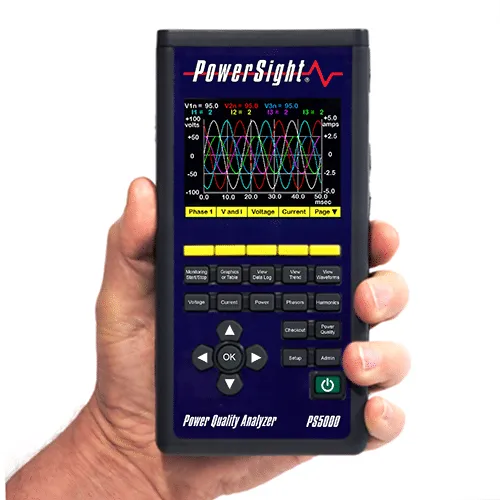

Every electrical system tells a story in its waveforms, and power analyzers are the instruments that let engineers, electricians, and facility teams actually read that story instead of guessing at it. From a routine energy audit to troubleshooting a nuisance breaker trip that's been plaguing a facility for months, the right analyzer turns an invisible problem into a clear, data-backed answer.
As electrical systems get more complex more variable frequency drives, more nonlinear loads, more renewable energy tied into the grid understanding exactly what these instruments measure, and how power quality analyzers differ from basic metering, has become essential knowledge for anyone responsible for keeping power systems reliable. This guide breaks down what these tools do, what they reveal, and where they fit into a well-run electrical program.
What Does a Power Analyzer Actually Measure?
A power analyzer captures the core electrical parameters that determine how a system is actually performing, not just what it's rated to do on paper.
| Parameter | What It Tells You |
| Voltage & Current (RMS) | Whether the system is operating within normal tolerance |
| Power (kW, kVA, kVAR) | Real, apparent, and reactive power flow through the system |
| Power Factor | How efficiently power is being used versus wasted as reactive load |
| Energy (kWh) | Total consumption over a monitoring period, useful for billing verification and audits |
| Frequency | Stability of the AC waveform, typically expected to stay tight around 60 Hz in North America |
| Harmonics & THD | Waveform distortion caused by nonlinear loads like VFDs and switching power supplies |
Power Analyzers vs. Power Quality Analyzers: What's the Difference?
The terms are often used interchangeably, but there's a meaningful distinction in what each tool is built to prioritize.
- Power analyzers are generally built around accurate measurement of power, energy, and load the core numbers needed for energy studies, demand analysis, and equipment commissioning.
- Power quality analyzers add a deeper layer of disturbance detection on top of that: voltage sags and swells, transients, harmonic distortion, and frequency deviations, along with event logging that timestamps exactly when and how severely a disturbance occurred.
In practice, a capable modern analyzer typically covers both roles at once, which is why the two terms overlap so often in the field.
Key Power Quality Issues a Good Analyzer Will Catch
Understanding what these disturbances actually look like helps explain why measurement matters so much:
- Voltage sags: a momentary drop in RMS voltage, typically 10–90% of nominal, often caused by motor starts or utility switching events
- Voltage swells: the opposite disturbance, a temporary rise above nominal voltage that can accelerate insulation wear and shorten motor life.
- Harmonics: waveform distortion measured as Total Harmonic Distortion (THD); elevated 5th and 7th harmonics typically point to variable frequency drives, while elevated 3rd harmonics often trace back to single-phase switching power supplies.
- Transients: brief voltage spikes or surges that can damage sensitive electronic equipment
- Frequency deviations: shifts away from the stable 60 Hz baseline that healthy systems should maintain
Where IEEE 519 Fits In
IEEE 519 is the primary North American standard for harmonic control, and it's a frequent reference point in facility power quality studies. It sets clear limits for both voltage and current distortion at the Point of Common Coupling, the point where a facility's electrical system connects to the utility. A voltage THD above roughly 5% at that point is generally considered a threshold worth investigating further, and a power analyzer with harmonic analysis capability is what makes that kind of compliance check possible in the field rather than in theory.
Also Read: Power Quality Analyzer Rental: When Renting Makes More Sense Than Buying
Common Applications for Power Analyzers
Different teams reach for these instruments for very different reasons, but they tend to fall into a few consistent categories.
| Application | What the Analyzer Is Used For |
| Energy audits | Quantifying actual consumption and identifying inefficiency |
| Power quality troubleshooting | Diagnosing nuisance trips, equipment failures, or flickering lights |
| Equipment commissioning | Verifying new equipment operates within expected parameters |
| Utility rebate & incentive programs | Documenting baseline and post-improvement energy data |
| Demand studies | Understanding peak load timing and sizing for capacity planning |
| Compliance verification | Confirming harmonic levels and power quality meet IEEE 519 or similar standards |
Why Safety Ratings Matter When Choosing an Analyzer
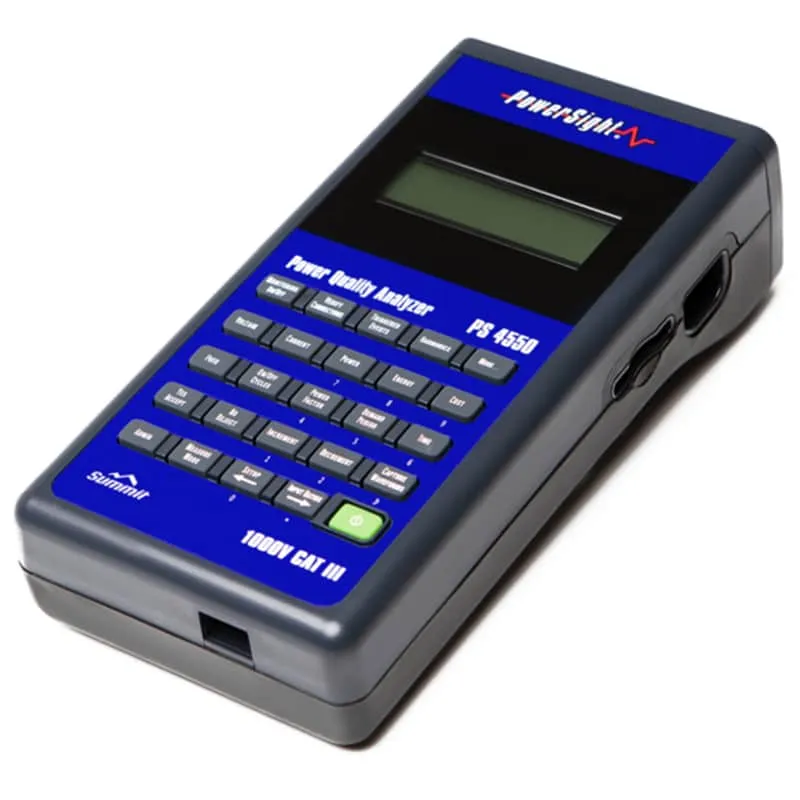
Because these instruments connect directly into live electrical systems, safety category (CAT) ratings aren't a minor spec; they determine what environments the instrument can safely be used in. CAT III and CAT IV ratings, referring to the transient overvoltage protection level of the instrument, indicate suitability for distribution-level and service-entrance work, respectively, where transient energy from switching events is highest. Choosing an analyzer rated appropriately for the environment it will actually be used in is a foundational safety decision, not an afterthought.
Frequently Asked Questions
What's the difference between a power analyzer and a power quality analyzer?
Power analyzers focus primarily on accurate measurement of power, energy, and load parameters. Power quality analyzers add deeper disturbance detection sags, swells, transients, and harmonics with event logging to pinpoint exactly when issues occurred. Many modern instruments capably handle both roles.
What is THD, and why does it matter?
Total Harmonic Distortion (THD) measures how far a voltage or current waveform deviates from a pure sine wave, expressed as a percentage. High THD, often caused by variable frequency drives or switching power supplies, can lead to overheating, equipment malfunction, and reduced system efficiency.
How do I know if I need a power analyzer or a power quality analyzer for my project?
If your goal is measuring consumption, verifying equipment performance, or supporting an energy audit, a power analyzer covers the core need. If you're troubleshooting nuisance trips, flickering, or equipment damage with no obvious cause, a power quality analyzer's disturbance detection and event logging will typically get to the root cause faster.
What does IEEE 519 compliance actually require?
IEEE 519 sets recommended limits for voltage and current harmonic distortion at the point where a facility connects to the utility grid. Meeting it typically requires measuring THD with a capable power quality analyzer and comparing results against the standard's defined thresholds for the relevant voltage class.
Written by the PowerSight Team.
PowerSight designs power analyzers, power quality analyzers, and complete monitoring systems built for accuracy, safety, and ease of use in the field. Our team works directly with electrical engineers, energy auditors, and facility teams to help match the right instrument to the job, backed by industry-leading CAT III and CAT IV safety ratings and hands-on technical support from real specialists, not automated call trees.
























Sign in to leave a comment.