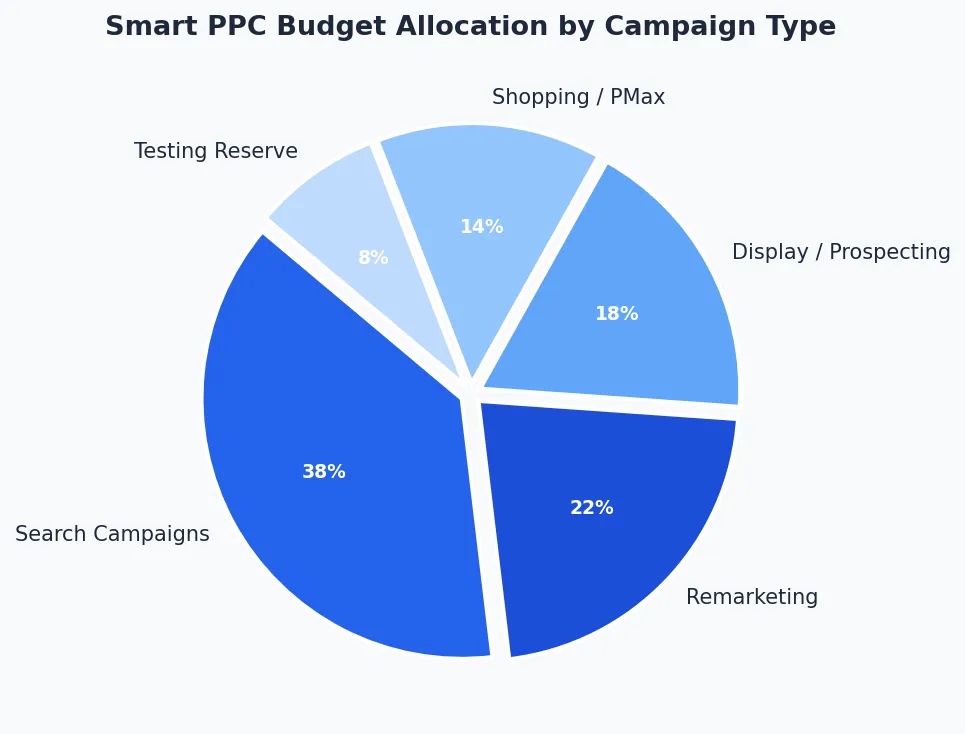

Most businesses don't lose money on PPC because they spend too little. They lose it because nobody revisits how that spend is divided once the campaigns are live. A budget that made sense in January often stops making sense by the third quarter, and almost nobody notices until the numbers look off.
In 2026, with more automated bidding strategies pulling levers in the background, budget planning has become less about picking a number and more about deciding where that number should actually go. Getting this right is one of the highest-leverage things an advertiser can do, and it has nothing to do with creative or keywords.
This guide breaks down how to plan and adjust PPC budgets with intention, instead of carrying last year's numbers forward out of habit.
Why Budget Planning Deserves More Attention in 2026
Platforms increasingly use machine learning to decide who sees your ads and when. These systems work best with consistent, sufficient budget feeding them data. A budget that's spread too thin across too many campaigns starves every one of them of the volume needed to optimize properly.
That means the old approach of setting a budget once a year and adjusting only when something breaks no longer holds up. Budgets now need to flex with performance signals, seasonality, and platform changes throughout the year.
Start With a Clear Picture of Current Allocation
Before changing anything, map out exactly where every dollar is going right now. List each campaign, its monthly spend, and its primary goal. It's common to find campaigns still running on autopilot for products that are no longer a priority, or budget caps left over from a promotion that ended months ago. This audit step alone often reveals money that can be redirected immediately.
Match Budget to Funnel Stage, Not Just Channel
Many accounts split budget by platform — search versus social versus display — without considering where each campaign sits in the customer journey. A prospecting campaign aimed at cold audiences needs a different budget logic than a remarketing campaign targeting people who already visited the site. Mixing these together in one undifferentiated pool makes it harder to tell which spend is actually driving revenue and which is just building awareness.
Separate budgets by intent first, then by channel.
Avoid Spreading Budget Too Thin
It's tempting to test five campaigns at once with a modest budget split evenly across all of them. In practice, this usually means none of them gather enough data to optimize well. A smaller number of well-funded campaigns will almost always outperform a wide spread of underfunded ones. If testing is the goal, sequence the tests instead of running them all simultaneously.
Build in a Reserve for Seasonal Shifts
Search volume and competition shift throughout the year, and a fixed monthly budget doesn't account for that. Set aside a portion of the annual budget as a flexible reserve that can be deployed during high-demand periods or pulled back during predictably slow months. Businesses that hold rigid monthly budgets often miss the periods when increased spend would have generated the best return.
Use Impression Share Data to Find Underfunded Campaigns
Impression share metrics show how much potential reach a campaign is missing due to budget limits, not just rank or quality issues. Campaigns that are budget-capped and losing a meaningful share of available impressions are often the best candidates for additional spend, assuming their conversion performance already justifies it. This is a more reliable signal for reallocation than gut instinct alone.
Reassess Cost Per Acquisition Targets Regularly
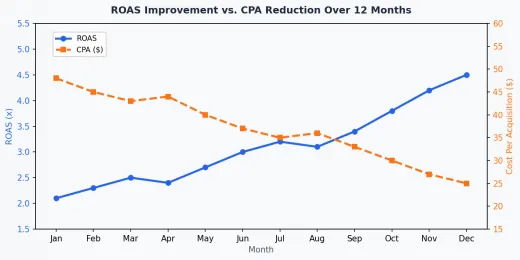
A target that was realistic when the account launched may no longer reflect current market conditions, competitor activity, or business margins. Revisit acquisition cost targets at least quarterly, and adjust budget allocation toward campaigns that consistently beat that target. Campaigns that miss it repeatedly deserve a smaller share of spend, or a structural fix before more money goes toward them.
Account for Lead Quality, Not Just Lead Volume
A campaign that generates a high volume of cheap leads isn't necessarily the best place to put more budget if those leads rarely convert into actual customers. Tie budget decisions back to downstream data — like close rates or customer lifetime value — whenever that information is available. Without it, budget planning becomes a guessing game based on surface-level numbers that don't reflect real business impact.
Plan for Platform Changes, Not Just Market Changes
Ad platforms update bidding algorithms, targeting options, and campaign types frequently, and these changes can shift performance independent of anything happening in the market. Build a habit of reviewing official platform updates alongside performance data, so budget shifts aren't mistaken for market trends when they're really a reaction to a platform change.
Making Adjustments Without Disrupting Performance
Large, sudden budget changes can disrupt automated bidding systems that rely on stable signals to optimize. Where possible, make incremental adjustments rather than dramatic overnight shifts, especially for campaigns using automated bid strategies that need time to relearn. Gradual reallocation tends to protect performance better than reactive, large-scale changes.
How Often Budget Plans Should Be Reviewed
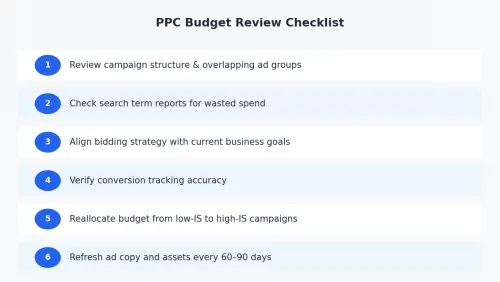
A full budget review every quarter is a reasonable baseline for most active accounts. Businesses with seasonal demand, frequent promotions, or fast-changing competition should review monthly. Any time cost per acquisition shifts noticeably, or a new competitor enters the space, it's worth revisiting allocation outside the regular schedule.
The Real Goal of PPC Budget Planning
This isn't about spending more. It's about making sure every dollar already being spent is working as hard as it can. A disciplined, data-informed approach to budget allocation tends to outperform static plans carried over from year to year, even when total spend stays the same.
Businesses that don't have the bandwidth to manage this process closely often rely on a PPC management service to handle ongoing budget strategy, bid management, and performance reviews. Whether handled in-house or with outside support, the underlying discipline is the same: plan deliberately, review often, and let the data drive the next move.
About the Author
The author writes about paid media strategy, with a focus on how budget structure and allocation decisions shape long-term account performance. Their work draws on practical experience managing ad spend across a variety of industries and platforms.




























Sign in to leave a comment.