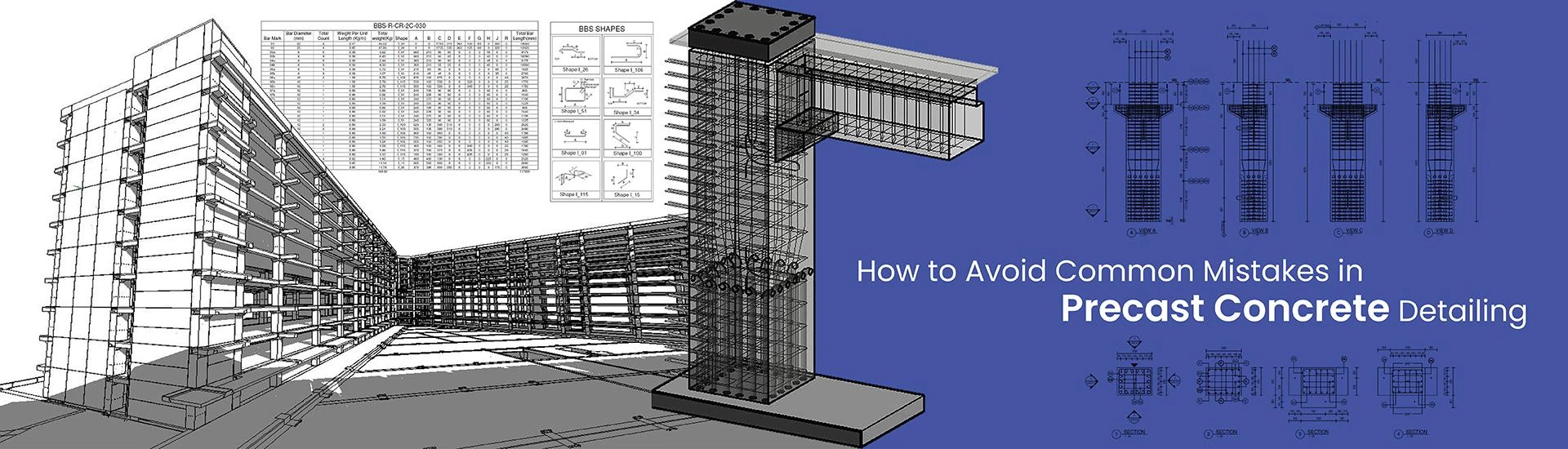

Error-free precast concrete detailing ensures precise fabrication and component assembly. This leads to efficient construction, mitigated rework and reliable and safe structures.
Precast concrete has revolutionized modern construction, offering enhanced durability, cost efficiency and faster project timelines. It is used in diverse applications, from bridges to high-rise buildings, showcasing its versatility and strength. However, its benefits hinge on the accuracy and precision of precast concrete detailing, which plays a critical role in ensuring structural integrity and project success.
Mistakes in precast concrete detailing give rise to a host of precast concrete design challenges, including misalignments during installation, delays, and cost overruns. Inaccurate dimensions and connections generate structural issues, leading to safety problems and reworks. Moreover, these ambiguities can impede coordination between disciplines, which can cause miscommunication and delays.
Adopting precast detailing best practices minimizes errors during production and assembly, reducing delays and cost overruns while improving safety. This article aims to highlight the most common errors in precast concrete detailing and provide practical solutions to avoid them, ensuring successful project execution and structural excellence.
Understanding precast concrete detailing
Precast concrete detailing involves the creation of comprehensive design drawings and specifications for precast concrete elements, ensuring seamless production, transport and assembly.
This includes generating detailed shop drawings, defining reinforcement layouts, connecting details, and accounting for tolerances. It also involves coordinating design intent between architects, engineers and fabricators to ensure accuracy.
Precise detailing influences project timelines, costs, and safety. Proper precast concrete detailing minimizes on-site adjustments, reduces material waste, and ensures structural reliability, ultimately leading to more efficient project delivery.
Four common precast concrete detailing errors and their consequences
Precast concrete detailing errors lead to project delays, compromised structural integrity and safety hazards. Common errors include inaccurate dimensions, missing reinforcement members and inefficient connection designs. These errors cause difficulties for on-site personnel during structural erection processes, leading to structural cracking and deflections and catastrophic failures.
1. Dimensional Inaccuracies
Dimensional inaccuracies in precast concrete detailing lead to misaligned members, which can make installation challenging and require costly onsite changes or replacement of members. This causes project delays and greater building costs.
Causes: Misinterpreted design drawings and inadequate communication between stakeholders
Misinterpreting design drawings or inaccurate coordination between architects, engineers, and precasters leads to costly dimensional errors. Unclear 2D deliverables, missing data, and an absence of communication lead to greater inaccuracies.
Impact: Results in misaligned joints, increased material waste, and potential structural instability
When precast members don’t align together as planned due to dimensional issues, the outcomes can impact projects negatively. Misaligned joints can weaken connections, leading to greater structural instability. Moreover, resolving these problems results in material waste and rework for fabricators, impacting project schedules and budgets.
2. Improper reinforcement placement
Inaccurate reinforcement placement compromises the structural integrity of precast concrete members, which leads to cracking or failure under loads. Insufficient reinforcement that does not meet design specifications can affect the performance and durability of precast concrete.
Causes: Overlooking specifications or tolerances during detailing can result in incorrect reinforcement layouts.
This is a result of condensed timelines, miscommunication, and insufficient reviews.
Impact: Weakens the load-bearing capacity of precast elements, increasing the risk of structural failure
It weakens reinforcement placement of the precast load bearing capacity, which makes it prone to bending, cracking, and stress failures. This leads to a breach in structural integrity, which can cause collapses and repairs for onsite personnel.
3. Neglecting Connection Details
Neglecting connection details results in unstable and weak joints between precast elements, which compromise the building’s structural integrity. Inadequate connections lead to misalignment, which creates stress concentrations. This provokes failure and safety risks.
Causes: Insufficient focus on joint and anchoring design due to inadequate planning or rushed timelines
Insufficient focus on joint and anchoring design is a result of tight deadlines, which leads to rushed planning. Inadequate communication between design teams and fabricators often results in simplified connection details.
Impact: Poorly detailed connections compromise structural stability and lead to difficulties during on-site assembly
It impacts the structural stability of precast elements, which causes misalignment, inaccurate load distribution, and stress failures. During on-site assembly, on-site personnel may struggle to achieve an accurate fit and alignment, which leads to reworks, delays, and greater labor costs.
4. Ignoring tolerance requirements
Ignoring tolerance needs results in the fabrication of precast elements that do not align during assembly, which causes gaps and misalignments. These ambiguities may cause structural weaknesses and challenges in realizing the final design.
Causes: Misunderstanding manufacturing and site constraints or failing to account for production variances
Misunderstanding fabrication and site limitations is a result of design teams overlooking production capabilities, site constraints and material variations. Inadequate communication and condensed timelines elevate these issues, which leads to design issues and project delays.
Impact: Assembly conflicts arise, leading to delays, increased rework, and reduced structural performance
Assembly issues arise when precast members do not align and fit as required. This leads to reworks, delays, and higher costs. Misalignment reduces structural integrity, creating breaking points that can compromise performance and structural safety.
How to avoid errors in precast design with best practices in precast detailing
Preventing errors in precast design requires utilizing best practices like precise measurements, transparent communication, and thorough reviews of tolerances. Ensuring accurate alignment between design, manufacturing and on-site personnel reduces ambiguities. Consistent detailing and Quality Control (QC) reduces mistakes and improve structural integrity.
Implement advanced BIM tools
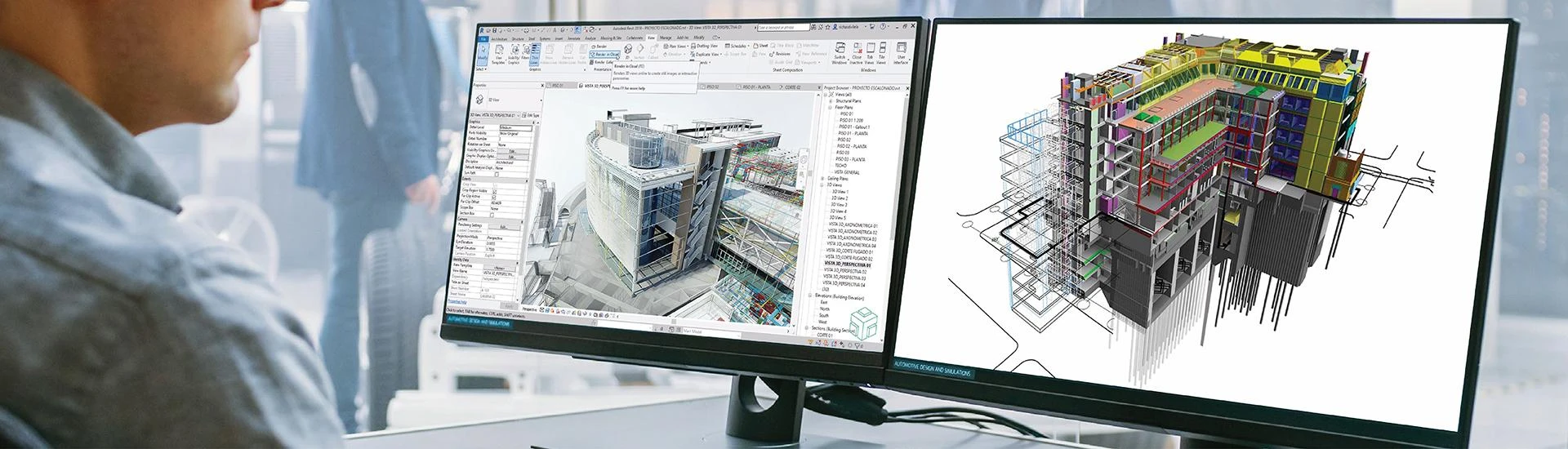
Advanced BIM tools like Revit, Tekla Structures, Navisworks, and BIM360 support precast concrete detailers with 3D modeling, interference detection, and collaboration. Revit, for instance, is used for BIM and generating comprehensive models of precast members, while Tekla Structures specializes in structural detailing. These tools are used to improve efficiency, identify errors, and streamline workflows. Optimizing Revit workflows for cast-in-place and precast concrete structures can further enhance these processes by focusing on best practices and avoiding common pitfalls.
Deploy standardized design practices
Standardizing design leads to greater consistency in detailing, improves communication between participants and prevents the presence of errors. Adhering to guidelines reduces variability and makes the production process seamless.
Hold regular coordination meetings
Regular coordination meetings between design, manufacturing, and construction stakeholders facilitate clear communication, address issues, and ensures accurate alignment. This leads to minimal errors and improvements in project efficiency and quality.
Conducting comprehensive quality checks
In-depth quality checks for the overall detailing process ensures adherence to specifications, standards, and tolerances. Flagging errors in the preconstruction stage and ensuring that precast members meet aesthetic and structural requirements leads to sustainable construction.
Wrapping it up
Addressing errors in precast concrete detailing is crucial for the success of modern construction projects. By adopting advanced tools, standardizing practices, fostering collaboration, and ensuring quality checks, teams can significantly reduce errors and save time and costs.





























Sign in to leave a comment.