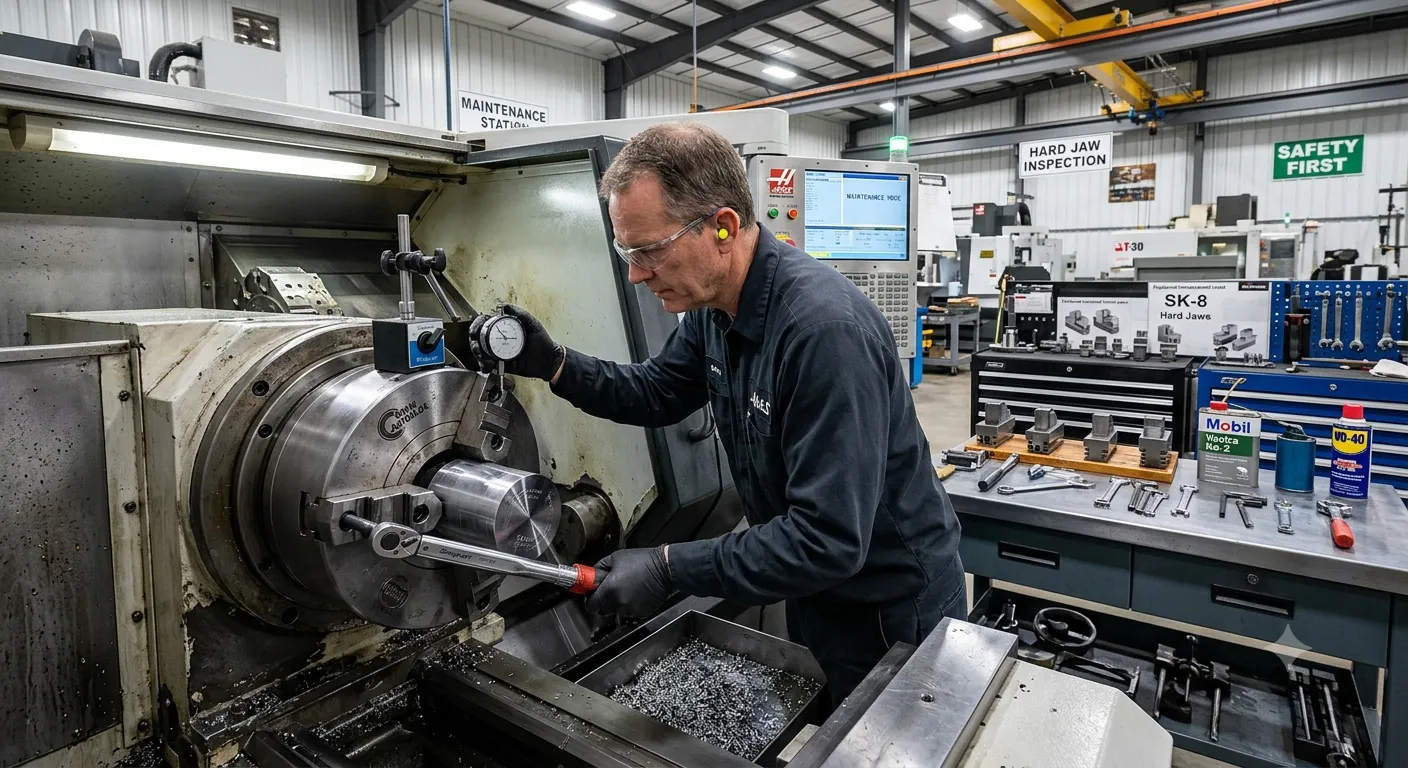

In modern machining, precision is everything. A small mistake in workholding can lead to damaged parts, poor surface finishes, and expensive downtime. This is why Special Round Jaws have become an important solution for machine shops that work with cylindrical, thin-walled, and complex-shaped parts.
Standard chuck jaws often struggle to grip round parts securely. They create uneven pressure, which can cause slipping or part deformation. Many machinists try to solve these problems with custom shims or temporary fixtures, but these solutions take time and often deliver inconsistent results.
Special round jaws are designed to provide better contact, stronger grip, and more accurate machining. They help improve productivity, reduce scrap, and make setup easier.
Why Standard Jaws Fail Complex Parts
The Cost of Part Slippage in High-Speed Machining
Part slippage is one of the most common problems in machining. When a workpiece moves during cutting, it can ruin dimensions, damage tools, and even create safety risks.
In high-speed machining environments, even a small movement can lead to:
- Poor surface finish
- Out-of-tolerance parts
- Broken cutting tools
- Increased machine downtime
- Higher production costs
A single damaged part can cost hundreds or even thousands of dollars, especially in aerospace and medical manufacturing.
Common Fail Points with Round and Organic Shapes
Standard jaws are designed for general-purpose clamping. However, they struggle when holding:
- Thin-walled tubes
- Precision shafts
- Cylindrical components
- Irregular organic shapes
The limited contact area creates pressure points that can deform the part or allow it to slip during machining.
Instead of relying on makeshift jigs and custom shims, many shops are switching to special round jaws that are specifically designed for these applications.
Engineering the Geometry of Round Jaws
Radius Matching and Surface Contact
The biggest advantage of round jaws is their ability to match the outside diameter of a workpiece.
When the jaw radius closely matches the part radius, the clamping force spreads evenly across a larger surface area.
This provides several benefits:
- Better grip
- Reduced pressure points
- Improved concentricity
- Less part distortion
Point Contact vs. Surface Contact
Standard jaws often create what engineers call point contact.
Point contact means only a small section of the jaw touches the part. This concentrates all the clamping force into a tiny area.
Special round jaws create surface contact, where a larger portion of the jaw touches the workpiece.
Surface contact:
- Distributes force evenly
- Prevents material crushing
- Improves holding power
- Reduces vibration
Why a 1% Radius Mismatch Matters
Even a small difference between the jaw radius and the workpiece diameter can create problems.
A mismatch of only 1% can lead to:
- Uneven pressure
- Out-of-round parts
- Distortion of thin materials
- Poor machining accuracy
This is especially important when machining aluminum tubes, stainless-steel shafts, and aerospace components.
Material Selection for Grip and Durability
Different materials are available depending on the application.
Hardened Steel Round Jaws
Hardened steel jaws are ideal for:
- High-production environments
- Heavy-duty machining
- Steel and alloy components
- Long production runs
These jaws offer excellent wear resistance and maintain their gripping accuracy over time.
Aluminum and Brass Jaws
Some parts require a softer gripping surface.
Aluminum and brass jaws are commonly used for:
- Polished components
- Soft metals
- Finished surfaces
- Decorative parts
These materials help prevent scratches and surface damage.
Hard-Facing Coatings
Many manufacturers apply special coatings to improve jaw life.
Popular coatings include:
- Tungsten carbide
- Nitriding
- Chrome plating
These coatings reduce wear and improve durability in demanding applications.
Functional Advantages in the Machine Shop
Eliminating Part Distortion
Thin-walled parts are particularly sensitive to clamping pressure.
Aerospace manufacturers often machine lightweight tubes and precision components that can easily deform during clamping.
Using precision-radius jaws allows the load to spread evenly around the part, significantly reducing distortion.
Many shops report:
- Better dimensional accuracy
- Reduced rework
- Improved consistency
Round Jaws vs. V-Blocks
V-blocks are another common solution for holding round stock.
However, they have limitations:
| Feature | V-Blocks | Special Round Jaws |
|---|---|---|
| Surface Contact | Low | High |
| Setup Time | Longer | Faster |
| Stability | Moderate | Excellent |
| Repeatability | Limited | High |
Special round jaws provide superior stability and are much easier to use in production environments.
Reduced Scrap Rates
Machine shops that switch to precision-radius jaws often experience:
- Lower scrap rates
- Better repeatability
- Improved surface finishes
- Higher customer satisfaction
Even a small reduction in scrap can save thousands of dollars annually.
Speeding Up Setup Times
Replacing Custom Soft Jaws
Custom soft jaws work well, but they require additional machining and setup time.
Standard round jaw sets can often replace custom solutions and provide:
- Faster changeovers
- Lower setup costs
- Greater flexibility
Cutting Cycle Times by 15–20%
Repeatable setups are one of the biggest productivity advantages of round jaws.
When operators can quickly install and center a workpiece, production efficiency improves dramatically.
Many manufacturers report cycle time reductions of approximately 15% to 20%.
Expert Tip: Verify Centering Quickly
A dial indicator is one of the easiest tools for checking jaw setup.
Simply:
- Mount the workpiece.
- Rotate the chuck slowly.
- Measure the runout.
- Adjust if necessary.
This process only takes a few seconds and ensures excellent accuracy.
Choosing the Right Jaw for the Job
Sizing for Different Diameters
Choosing the proper jaw radius is critical.
For small-bore parts:
- Use jaws with a tighter arc.
- Ensure full surface contact.
For larger diameters:
- Select jaws with a wider radius.
- Increase the contact area.
When to Use Wrap-Around Jaws
Wrap-around jaws provide additional support and are ideal for:
- Thin tubes
- Long shafts
- Delicate components
- High-speed operations
They offer maximum stability and minimize vibration.
Balancing Jaw Size and Chuck Capacity
Oversized jaws can reduce chuck performance.
Undersized jaws may not provide enough grip.
Always select jaws that match both:
- Part diameter
- Chuck specifications
Proper sizing improves both safety and machining accuracy.
Customizing the Grip Pattern
Serrated Jaws for Roughing Operations
Heavy-duty roughing applications often require extra holding power.
Serrated round jaws provide:
- Better grip
- Reduced slippage
- Improved cutting stability
They are commonly used for steel forgings and castings.
Smooth Finishes for Polished Parts
Finished surfaces require gentle handling.
Smooth jaws are ideal for:
- Mirror-polished shafts
- Decorative components
- Precision medical parts
They help prevent scratches and ring marks.
Cooling Channels for High-Heat Applications
Some high-production environments generate significant heat.
Modern jaw designs can include cooling channels that:
- Reduce thermal expansion
- Improve consistency
- Extend jaw life
This is especially useful in long machining cycles.
Common Mistakes in Round Jaw Application
Over-Tightening and Surface Damage
Too much clamping force can permanently damage a part.
Every material has a "crush point."
Excessive force can cause:
- Dents
- Distortion
- Surface marks
- Dimensional errors
Using a torque wrench helps maintain consistent clamping pressure.
Avoiding Ring Marks on Polished Shafts
Ring marks are common when gripping finished parts.
To avoid this problem:
- Use soft jaw materials.
- Apply proper torque.
- Increase surface contact.
- Reduce unnecessary pressure.
Misalignment and Runout Issues
Non-concentric jaw seating can create major machining problems.
Symptoms include:
- Poor surface finish
- Dimensional errors
- Excessive vibration
Checking Total Indicator Reading (TIR)
Always measure TIR before starting production.
A low TIR value ensures:
- Better concentricity
- Improved accuracy
- Reduced scrap
Quick Fixes for Jaw Wobble
If wobble occurs:
- Clean the jaw seating surfaces.
- Inspect for wear.
- Check mounting screws.
- Verify jaw alignment.
Regular maintenance can solve most runout issues.
Optimizing Your Workholding Workflow
To get the maximum benefit from special round jaws, create a simple workflow:
Build a Jaw Library
Keep a collection of jaws for common diameters.
This reduces setup time and improves consistency.
Schedule Regular Maintenance
Create a maintenance schedule for:
- Cleaning
- Inspection
- Regrinding
- Lubrication
Proper maintenance extends jaw life and improves performance.
Invest in Digital Measuring Tools
Digital gauges make it easy to:
- Verify jaw radius
- Measure wear
- Ensure accuracy
These tools help maintain precision over long production runs.
Conclusion
Precision workholding plays a major role in machining quality and productivity. Standard jaws often struggle with cylindrical and delicate parts, leading to slippage, distortion, and increased scrap.
Special Round Jaws provide a better solution by improving surface contact, distributing clamping force evenly, and reducing setup time. They deliver greater accuracy, better repeatability, and longer tool life.
Whether you are machining aerospace tubes, precision shafts, or delicate finished components, investing in the right round jaws can dramatically improve your workflow and reduce production costs. In today's competitive manufacturing environment, precision gripping is not just an advantage—it's a necessity.
Frequently Asked Questions
What are the benefits of using special round jaws in machining?
Special round jaws provide better contact and grip for cylindrical and complex-shaped parts, which helps to reduce distortion and increase machining accuracy. They distribute clamping force evenly, minimizing pressure points that can lead to part deformation and ensuring better surface finishes.
How do standard chuck jaws fail with complex parts?
Standard chuck jaws often create point contact, which concentrates clamping force in small areas, leading to slippage and distortion of thin-walled or irregular shapes. This can result in poor surface finishes, out-of-tolerance parts, and increased scrap rates during machining.
Why is a 1% radius mismatch significant when using round jaws?
A 1% mismatch between the jaw radius and the workpiece diameter can cause uneven pressure, resulting in out-of-round parts, distortion, and poor machining accuracy, especially with sensitive materials like aluminum and stainless steel. This emphasizes the importance of selecting the correct jaw for specific applications.
What materials are best for special round jaws?
Hardened steel jaws are ideal for heavy-duty machining and high-production environments due to their wear resistance. For delicate components, softer materials like aluminum and brass are used to prevent surface damage, while hard-facing coatings can enhance durability in demanding applications.
How can I reduce setup times when using round jaws?
Using standard round jaw sets can significantly cut down on setup times compared to custom soft jaws, as they often require less machining and quicker changeovers. Many manufacturers report cycle time reductions of around 15% to 20% when employing precision-radius jaws.
What common mistakes should I avoid when applying round jaws?
Common mistakes include over-tightening, which can cause surface damage and distortion, and misalignment, leading to poor machining results. It's crucial to use proper torque and regularly check the total indicator reading (TIR) for ensuring concentricity and accuracy.
How do I choose the right jaw for different part diameters?
For small-bore parts, select jaws with a tighter arc to ensure full surface contact, whereas for larger diameters, jaws with a wider radius are recommended to increase the contact area. Proper sizing is essential for both safety and machining accuracy.
What is the advantage of using serrated jaws for roughing operations?
Serrated round jaws provide better grip and reduced slippage, making them ideal for heavy-duty roughing applications. They enhance cutting stability, which is particularly beneficial when machining steel forgings and castings.
























Sign in to leave a comment.