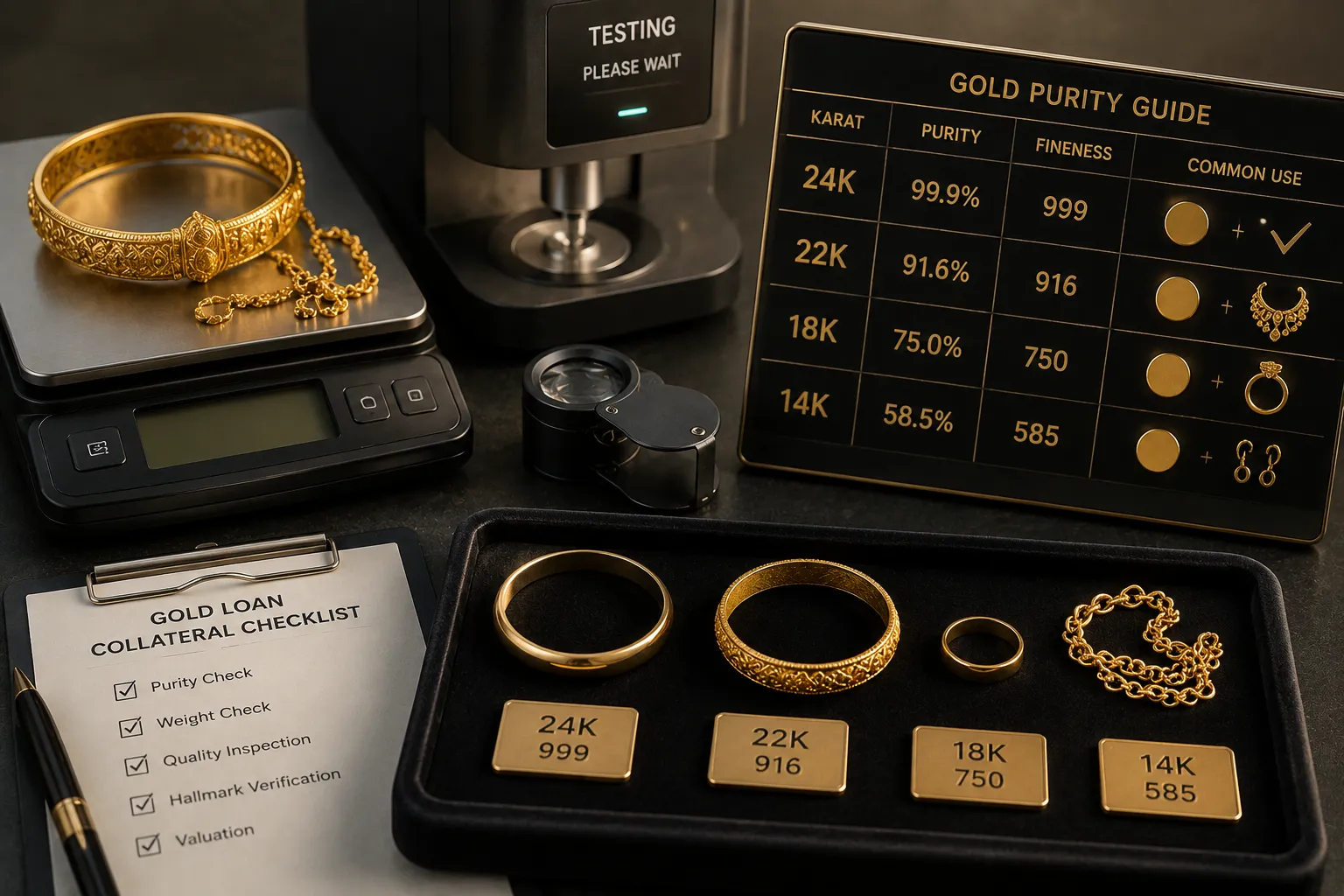

When your gold gets valued for a loan, the purity grade stamped or tested is doing more work in determining your loan amount than most borrowers realise, and understanding the actual grading helps you know what to expect before you're at the counter.
24 karat is pure gold, 99.9% or higher purity, though it's rarely used for jewellery since pure gold is too soft for durable pieces. Investment-grade coins and bars are more commonly 24K, while jewellery almost universally uses a lower karat blended with other metals for strength and durability.
22 karat, roughly 91.6% pure gold, is the most common purity for traditional Indian jewellery. This is what most gold loan lenders expect to see when valuing typical jewellery pieces, and checking the current gold rate for 22K specifically, not just the generic headline rate, gives you a more accurate expectation of what your piece is actually worth as collateral.
18 karat, around 75% pure gold, is increasingly common in more contemporary or Western-style jewellery designs, valued proportionally lower per gram than 22K for the same weight, given the lower actual gold content, even though the piece might look similarly substantial.
BIS hallmarking is the certification system that verifies purity claims in India, and a hallmarked piece gives both you and the lender a verified starting point for valuation, rather than relying purely on visual assessment or your own claim about the piece's purity.
Lenders typically conduct their own purity testing regardless of existing hallmarks or invoices, since valuation for a loan needs to be the lender's own verified assessment, not simply accepted on your word or an older certificate, which is standard practice and not a sign of distrust specific to you.
Mixed-purity items, jewellery with gemstones, enamel work, or other non-gold elements, get valued based on the gold content specifically, with non-gold elements typically excluded or valued separately, sometimes not counted toward the loan collateral value at all.
Understanding your jewellery's actual purity before you go in gives you a much more realistic expectation of your likely loan amount than assuming your jewellery's full weight will be valued at the headline market rate regardless of its actual gold content. And if a gold loan doesn't end up being the right fit for your amount or timeline, it's worth comparing that against a personal loan for the same need before committing either way.


























Sign in to leave a comment.