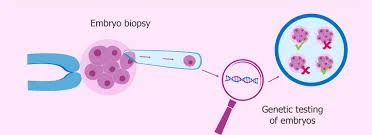
Preimplantation Genetic Testing (PGT) is a laboratory technique used during IVF to check embryos for genetic problems before they are placed in the uterus. It helps doctors choose the healthiest embryos, lower the risk of inherited diseases, and increase the chances of a successful pregnancy. For many couples, PGT offers clarity, confidence, and better success rates during their fertility journey.
What Is PGT?
PGT involves testing a few blood cells from an embryo. These cells are carefully removed through a biopsy and tested for genetic conditions. The embryo remains in the development stage, and doctors will check the sample.
Types of Preimplantation Genetic Testing
1. PGT-A (Aneuploidy Screening)
PGT-A checks for missing or extra chromosomes. This includes conditions like
- Down syndrome (Trisomy 21)
- Edwards syndrome
- Turner syndrome
Purpose:
To choose chromosomally normal embryos. This increases the chances of implantation and a healthy pregnancy.
2. PGT-M (Monogenic / Single-Gene Disorders)
PGT-M is for couples who carry or have a family history of genetic diseases caused by a single gene mutation. Some examples include:
- Cystic fibrosis
- Thalassemia
- Sickle cell disease
- Huntington's disease
- BRCA mutations
Purpose:
To stop the passing of known hereditary diseases to the child.
3. PGT-SR (Structural Rearrangements)
PGT-SR tests embryos for chromosome structural problems. This includes:
- Translocations
- Inversions
- Large deletions or duplications
Purpose:
To reduce miscarriages and improve live birth rates in couples with chromosomal rearrangements.
Who Should Consider PGT?
PGT is recommended for:
Women aged 35 and older.
Couples with a history of recurrent miscarriages.
Couples who have experienced multiple failed IVF cycles.
Individuals with known genetic conditions.
Carriers of chromosomal rearrangements.
Couples with a family history of inherited disorders.
Same-sex couples using donor gametes who want the healthiest embryo.
Benefits of Preimplantation Genetic Testing
Higher IVF Success Rates
Reduced Risk of Miscarriage
Prevention of Inherited Diseases
Better Family Planning
Limitations of PGT:
Even though PGT is extremely helpful, it does have limitations:
It does not guarantee a 100% successful pregnancy.
It may sometimes return inconclusive or mosaic results (embryos with mixed normal and abnormal cells).
It adds cost to the IVF process.
Very rarely, embryos may show false positives or false negatives.
PGT cannot detect all genetic problems—only the ones tested for.
Success Rates With PGT
PGT-A can significantly improve IVF success rates, especially for women over 35. With genetically normal embryos, the implantation rate can go up to 60-70% per transfer depending on age. However, for younger women the benefit will be smaller, as they produce healthier eggs.
Conclusion
Preimplantation genetic testing is one of the most powerful tools in modern fertility. It helps doctors to choose the healthiest embryo free from any genetic disorder and improve the chance of a successful pregnancy. Whether you are dealing with an age-related fertility problem or any other, PGT provides a clearer path towards a healthy baby.

























Sign in to leave a comment.