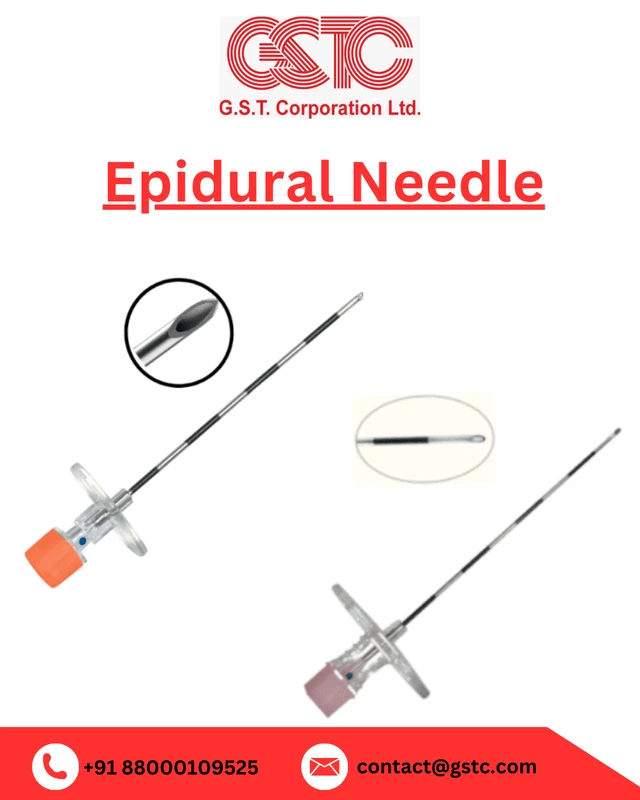

The epidural needle is a vital tool in important medical procedures where pain relief is needed. It especially helps doctors deliver pain medicine safely and accurately during epidural anaesthesia. This epidural anaesthesia needle will reach into the area of the spinal cord without hurting it, making it highly effective for pain relief in labour, surgery, and other pain management therapies.
What is an epidural needle?
Epidural needle is a special medical device used by a doctor to safely enter the space called the epidural space close to the spinal cord. The doctor then inserts a thin, flexible plastic tube called an epidural catheter into that space.
Once the catheter is positioned, medications for pain relief or anaesthesia can be administered by doctors right near the spinal nerves. This serves to block pain signals before they reach the brain, confirming effective and controlled pain management.
Why Do People Use It?
An epidural needle is used because it helps with pain control safely without putting the patient fully to sleep.
- During childbirth
It makes labour less painful while allowing the mother to remain awake.
2. During surgery
It numbs the lower part of the body so that the patient doesn't feel pain.
3. Following surgery
It can give continuous pain relief to help with recovery.
How the Epidural Procedure Works
The following is a simplified description of how physicians use the epidural needle
- After cleaning the skin, the doctor gently inserted the epidural needle into the epidural space and administered the medicine to numb the area.
2. They slowly insert the epidural needle through the skin and soft tissues.
3. Using a syringe, they feel for something called “loss of resistance”. This means the needle has reached the epidural space. This method follows a principle known as Dogliotti’s principle.
4. Once in place, a small plastic catheter is inserted through the needle. The needle is then locked, leaving the catheter in place.
Key Features of an Epidural Needle
1. Curved Tuohy Tip
The slightly curved tip helps guide the catheter smoothly into the epidural space.
Reduces the risk of accidental dural puncture.
2. Depth Markings
Clear centimetre markings enable the anaesthesiologist to follow the depth of insertion.
Helps ensure correct needle placement.
3. Transparent Needle Hub
A clear hub allows for immediate detection of CSF or blood flashback.
Improves both safety and accuracy of insertion.
4. Ergonomic Grip & Control
The needle hub is designed for comfortable, stable gripping.
Enables fine manipulation in tender procedures.
Benefits of Using an Epidural Needle
1. Effective Pain Relief
Delivers anaesthesia directly to the target area, offering powerful pain relief in that area.
2. Reduced Drug Requirements
Patients don’t need as much anaesthesia, which makes the procedure safer.
3. Faster Recovery
Allows the patient to be mobile sooner after surgery.
4. Safer in High-Risk Patients
Useful in patients in whom general anaesthesia might not be well-tolerated.
5. Continuous Pain Management
For long-term relief from pain, a catheter can be used.
Conclusion
GST Corporation Ltd. has built its reputation over many years by putting quality, trust, and people first. Whether it’s manufacturing surgical tools, reliable implants, or certified disposables, the company makes sure its products meet high standards and reach hospitals and health workers worldwide.























Sign in to leave a comment.