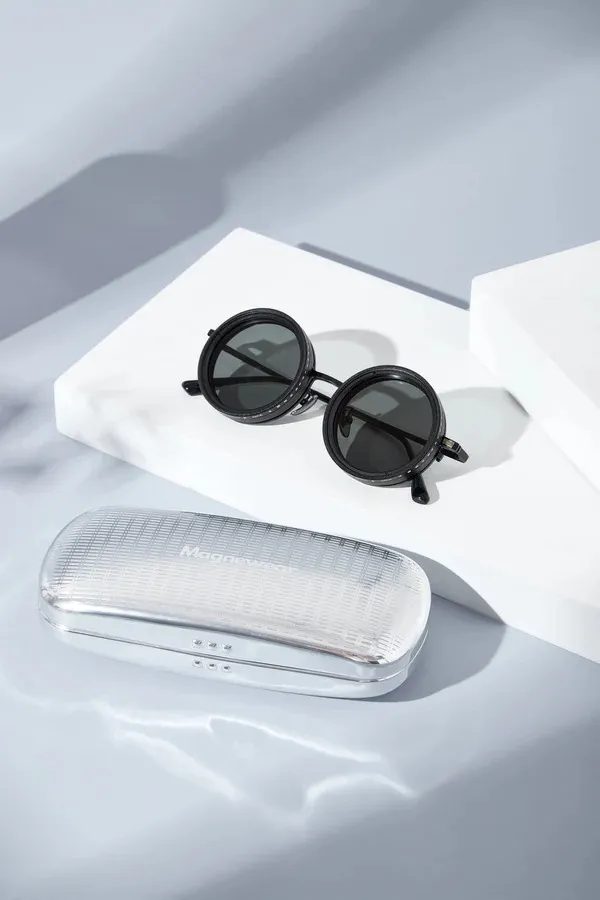

Clear vision is essential for many everyday activities, from reading a menu to checking a message or finding your way along a busy street. For people who rely on prescription eyewear, keeping their glasses comfortable and practical throughout the day is a priority. But when the lighting changes, ordinary glasses may not always feel like enough.
A sunny walk, an outdoor lunch, or a drive on a bright afternoon can create a need for tinted lenses. Carrying a separate pair of prescription sunglasses is one solution, but it means keeping track of another frame and making room for it in your bag.
Magnetic eyewear offers another possibility. Certain frames are designed to connect with a matching front attachment, allowing wearers to add tinted lenses without replacing their regular glasses. This approach can make changing between indoor and outdoor use simpler, provided the frame and attachment are compatible.
Before choosing this type of eyewear, it helps to understand how the magnetic connection works, what advantages it may offer, and which details deserve careful attention. Comfort, lens protection, prescription compatibility, and build quality all matter just as much as convenience.
What Makes Magnetic Eyewear Different?
Traditional prescription glasses with magnetic frames are built around lenses made to correct a person's vision. Sunglasses may use tinted lenses to reduce visible brightness, while prescription sunglasses combine vision correction with suitable sun protection.
Magnetic eyewear can bring these functions together through a main prescription frame and a matching removable attachment. Small magnets help connect the additional component to the front of the frame. Depending on the design, the attachment may contain tinted lenses intended for outdoor use.
Imagine a notebook with a removable cover. The notebook remains the same, but the cover can be added or removed when needed. Magnetic eyewear follows a similar idea: the main glasses stay in place while an extra component changes how they can be used.
Not every frame uses the same design. The location of the magnets, the shape of the lenses, and the size of the bridge can vary between models. For that reason, a magnetic attachment should be chosen for the specific frame it is designed to fit.
One point is worth remembering: magnets do not improve eyesight or change a prescription. Their job is simply to connect the components. The prescription lenses continue to provide the vision correction.
How the Magnetic Connection Works
The process is usually designed to be straightforward. You wear your regular prescription glasses as usual. When you need an additional tinted layer, you position the matching attachment in front of the frame and allow the magnets to connect.
The attachment should sit evenly and remain secure during ordinary movement. When you no longer need it, you can remove it and store it safely.
Consider someone who spends the morning working indoors, steps outside to run errands, and later returns to an office. A removable tinted attachment may make it easier to adapt without carrying another complete pair of prescription sunglasses.
However, the quality of the connection matters. If the attachment shifts when you turn your head or leaves uneven gaps around the frame, it may not fit correctly. A convenient system should be easy to handle without feeling loose or awkward.
Before purchasing, check whether the attachment is made for your exact frame model. Similar-looking glasses are not necessarily compatible.
Everyday Benefits for Prescription Wearers
A More Convenient Way to Manage Brightness
One of the main attractions of magnetic eyewear is the ability to add a tinted layer when the surrounding light becomes uncomfortable.
For example, you might leave a shopping centre and walk into a sunny car park. Instead of taking off your prescription glasses and searching for another pair, you can attach the matching tinted component.
This can be useful for people who regularly move between indoor and outdoor environments. The benefit may seem small at first, but avoiding repeated changes can make a busy routine feel simpler.
The attachment does not automatically respond to sunlight. You decide when to add or remove it, which can be helpful if you prefer direct control over when you wear tinted lenses.
Less Need to Carry a Second Complete Pair
A separate pair of prescription sunglasses includes another frame and lenses, and it may need its own protective case. A removable attachment can sometimes take up less space.
That can be useful when travelling, commuting, or carrying a small bag. Instead of packing another complete pair, you may only need to bring the matching front piece.
The space saved depends on the product. Some attachments are slim, while others are larger or come with a substantial case. Check the measurements and storage arrangements before assuming that a particular model will be compact.
Even a small attachment needs protection. Leaving it loose in a pocket with keys or other hard objects can scratch the lenses.
A Familiar Fit Throughout the Day
People who depend on prescription glasses may dislike switching between frames because each pair can sit differently on the face. A magnetic system lets them keep the main frame in place while adding a compatible component.
This can make the transition between clear and tinted use more familiar. Still, the attachment adds weight, and some designs may feel different once connected.
If you wear glasses for many hours, test the complete setup rather than judging the main frame on its own. The combined weight should feel manageable around your nose and ears.
More Options for Personal Style
Eyewear is practical, but it also contributes to personal style. Some people prefer slim frames, while others like bold shapes or classic designs.
Magnetic systems may offer matching tinted components that maintain a coordinated appearance. The available styles depend on the manufacturer and frame range.
When choosing, consider how the attachment looks from the front and side. It should fit neatly rather than appearing noticeably misaligned. More importantly, it should feel comfortable enough for regular use.
Potential Value Across Different Situations
For someone who frequently needs both clear prescription lenses and outdoor tint, a compatible magnetic system may offer useful flexibility. It can reduce the need to switch between complete frames for certain everyday activities.
However, it is not automatically cheaper than buying separate glasses. The price depends on the prescription lenses, frame materials, included attachments, and available accessories.
Compare the complete cost of each option. Check whether a replacement attachment can be purchased separately and whether the product includes a warranty. These details help you judge long-term value rather than focusing only on the initial price.
Understanding Lens Protection
A tinted attachment can reduce visible brightness, but that does not automatically mean it provides adequate protection from ultraviolet radiation.
Visible light is what allows you to see colours and objects. Ultraviolet radiation, often called UV, is invisible to the human eye. The darkness of a lens does not reliably indicate how much UV radiation it blocks.
When selecting tinted eyewear, look for clear information stating that the lenses provide 100% UVA and UVB protection or UV400 protection. Make sure the claim applies to the removable component you will use outdoors.
If the product description does not clearly explain its UV protection, ask the seller or manufacturer for confirmation. Avoid assuming that a dark appearance means a lens is safer.
What Is the Difference Between Tint and Polarization?
Tint reduces the amount of visible light passing through a lens. Polarization is designed to reduce certain types of reflected glare, such as light bouncing off water or wet roads.
These features serve different purposes. A lens may be tinted without being polarized, and a polarized lens is not automatically guaranteed to provide suitable UV protection.
Polarized lenses may help people who spend time near water or in other environments with strong reflected light. However, they can make some digital screens harder to see at certain angles.
Think about the conditions you encounter most often. If glare is a frequent problem, polarization may be worth considering alongside verified UV protection.
How to Choose the Right Magnetic Frame
Confirm That Your Prescription Is Supported
Prescription requirements vary. Some lenses are straightforward to fit, while others may require particular frame dimensions or lens designs.
If you already own prescription glasses, check whether the magnetic attachment is specifically made for that frame. If you are buying a new set, confirm that the main frame can accommodate your prescription.
An optician can help determine whether the frame is suitable, especially if your prescription is complex or you have particular visual requirements.
Look at the Shape and Alignment
The attachment should follow the shape of the main frame closely. If it is too wide, too narrow, or shaped differently, it may sit unevenly or leave gaps.
Check the bridge area and the outer edges. The lenses should align properly, and the attachment should not obstruct your normal field of view.
A product photograph may not reveal every fitting issue, so try the glasses in person when possible. If you are ordering online, review the frame measurements and return policy.
Evaluate Comfort and Weight
The combined frame and attachment should feel balanced. Extra weight can cause glasses to slide down or press against the nose, particularly during long periods of use.
Pay attention to how the frame rests behind your ears and across the bridge of your nose. Small pressure points may become irritating after several hours.
If you plan to wear the glasses throughout the day, comfort should be a deciding factor rather than an afterthought.
Check the Magnetic Connection
The attachment should connect securely without needing excessive pressure. Try looking down, turning your head, and moving naturally to see whether it stays in place.
A loose attachment can become distracting, while a connection that is too difficult to remove may make frequent changes frustrating.
Ask whether the magnets or attachment components can be repaired or replaced. Knowing the available support options can help you avoid unnecessary costs later.
Consider Frame Materials
Frames may be made from metal, plastic, or combinations of materials. Each option has different characteristics, including weight, flexibility, and appearance.
There is no single material that is best for everyone. What matters is whether the frame feels comfortable and is constructed well enough for regular use.
Inspect the hinges, frame edges, and connection points. The magnetic system is only one part of the product, so overall construction deserves attention too.
Where Adjustable Tint Options Fit In
Some shoppers also investigate adjustable shade glasses when looking for ways to manage changing brightness. The term can describe different designs, so it is important to establish how a particular product actually changes its tint.
Photochromic lenses respond to certain light conditions and darken or lighten over time. Manual systems let the wearer select a setting, while removable magnetic attachments work by adding or removing a separate tinted component.
These approaches are not interchangeable. A magnetic attachment does not necessarily change darkness on its own, and an automatic lens does not require the wearer to add another piece.
Think about how you prefer to manage light. If you want the lenses to respond automatically, investigate photochromic technology. If you prefer to decide when to add tint, a removable attachment may be more suitable.
Check the product specifications carefully, particularly if you need prescription correction or specific UV protection. Brands such as Magnewear may be included in your research, but assess each product based on its actual features and fit rather than the brand name alone.
Are Magnetic Frames Suitable for Driving?
Magnetic eyewear may be useful for daytime driving if the tinted lenses provide suitable protection and maintain clear visibility. However, the quality and purpose of the lens matter more than the attachment method.
Check whether the lenses are intended for driving and whether their tint is suitable for the conditions. Very dark lenses can reduce visibility, making them inappropriate for night-time driving or poorly lit environments.
A removable attachment also needs to remain secure and correctly aligned. If it moves or interferes with your vision, do not use it while driving.
If driving is a major part of your routine, consider discussing your options with an optician. Follow local requirements and the manufacturer's guidance for the specific eyewear.
Common Mistakes to Avoid
Assuming all magnetic attachments are universal: Frame shapes and connection points differ, so confirm compatibility before purchasing.
Choosing tint by appearance alone: A dark lens does not automatically provide adequate UV protection.
Ignoring the combined weight: The attachment may change how the glasses sit on your face, so test the full setup.
Forgetting about storage: Removable components can be scratched or damaged if carried loosely.
Overlooking your prescription needs: Make sure the main frame can accommodate your lenses and provides a suitable fit.
Using dark tint in low light: Tinted lenses can reduce visibility. Remove unsuitable dark attachments when conditions become dim.
How to Care for Magnetic Eyewear
Good maintenance can help keep the lenses clear and the attachment working properly.
Use a clean microfiber cloth and an eyewear-safe cleaning solution. Avoid wiping dusty lenses with rough clothing or paper towels, as these may scratch the surface.
Store the tinted component in a protective case whenever it is not connected to the frame. Keep it away from keys, coins, and other objects that might damage the lenses.
Handle the attachment by its edges instead of pressing your fingers against the lens surfaces. If the connection becomes loose or the frame shows signs of damage, stop using the affected component until it has been checked.
Follow the manufacturer's cleaning instructions, especially if the lenses have special coatings. Avoid forcing the attachment into position; it should align naturally with its matching frame.
Conclusion
Magnetic eyewear offers prescription wearers a practical way to add a tinted layer without switching to an entirely different pair of glasses. It may be particularly useful for people who move between indoor settings and bright outdoor environments throughout the day.
The best choice depends on more than the magnets. Prescription compatibility, comfort, lens alignment, UV protection, durability, and replacement options all deserve attention.
Before purchasing, consider your everyday routine and decide whether a removable attachment genuinely suits your needs. Compare the product specifications, check how the complete setup feels, and ask an optician for guidance if you are uncertain about prescription or lens requirements.
Convenience matters, but good eyewear should also provide comfortable vision and appropriate protection. Choosing carefully can help you find a design that fits naturally into your day.



















Sign in to leave a comment.