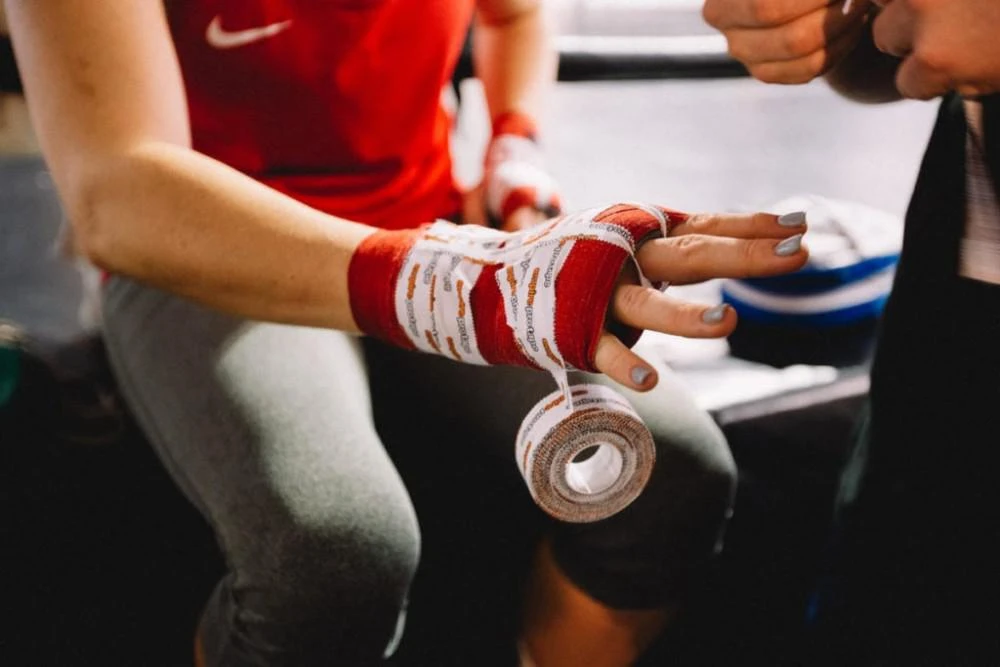

Hand and wrist injuries are common among athletes and make 25% of all sports-related injuries. Many sports activities involve contact with hands and fingers putting athletes at a high risk of sustaining injuries. Luckily, most of these injuries heal when properly managed and do not put the athlete at risk of permanent disability.
Read on for details of the most common hand and wrist injuries and how to manage them.
Sprains
A sprain damages the tissue connecting a bone to another, otherwise known as a ligament. The common sprains that occur to athletes are;
Thumb Sprain
A thumb sprain mainly occurs when an athlete falls on the palm. The strong force exerted during the fall bends the thumb backward, overstretching the ulnar collateral ligament inside the knuckle joint.
Thumb sprains are classified according to the degree of injury to the ligament. In this regard, a sprain may either be grade 1,2, or 3.
Grade 1 Sprain - A grade 1 sprain can be described as a mild stretching of the ligaments without any tear.
Grade 2 Sprain - A grade 2 sprain is moderate stretching of the ligaments resulting in partial tear and loss of function.
Grade 3 Sprain - A grade 3 sprain is severe and involves complete tearing of the ligament.
Thumb sprains are common with athletes who play football, baseball, basketball, and skiers. Symptoms of thumb sprains include bruises, tenderness, and swelling at the base of the thumb or near the palm.
You can treat mild thumb strains at home by icing, elevating the thumb, or compressing using a bandage. For moderate sprains, your doctor may immobilize the thumb using a splint or dressing, but for severe sprains, a robotic orthopedic surgery might be necessary.
Wrist Sprains
A wrist sprain occurs when an athlete slips and lands on the hand while bending the wrist backward. When this happens, it can stretch the ligaments connecting the wrist and hand bones too far, resulting in a tear or complete break of ligaments.
Apart from falls, a wrist sprain may occur when an athlete is struck when playing basketball, baseball, gymnastics, skiing, diving, or skating. There are three grades of wrist sprains depending on severity;
Grade 1 Sprain - A grade 1 wrist pain is mild and is often accompanied by pain without ligament tear.
Grade 2 Sprain - A grade 2 wrist sprain is moderate and is accompanied by a slight ligament tear. The joint may feel loose, and there may be a loss of function.
Grade 3 Sprain - A grade 3 wrist sprain is severe and is accompanied by complete tearing of the ligament and loss of function.
Symptoms of wrist sprains include pain, swelling, tenderness, bruising, loss of motion, and weakness. You can treat Grade 1 and 2 sprains at home by icing, compressing, or taking pain medications. If the sprain does not improve, your doctor may apply a cast or a splint on the wrist to promote healing. Grade 3 sprains are severe and may require robotic orthopedic surgery.
Injuries To The Bone
Injuries to the bone may either be fractures or dislocations involving the wrist or the hand.
Hand Fractures
A hand fracture may involve breaking the metacarpals or phalanges and is commonly caused by falls, twists, crushes, or direct contact during sports.
The most common symptoms of hand sprains include; bruising, swelling, tenderness, deformities, or difficulty in finger movement. Treatment for hand fractures can either be non-surgical through closed reduction or applying a cast, brace, or sprint. In severe cases, surgery might be necessary.
Wrist Fractures
A wrist fracture is a broken wrist in medical terms. Fractures involving the radius (Distal radius fractures) are the most common form of wrist fractures in athletes and occur when the athlete slips and falls on the outstretched hand.
Wrist fractures can be described as non-displaced when the bones do not move out of place or displaced when the bones move out of place. Symptoms include pain and swelling and difficulty in moving the hand or wrist.
A non-displaced fracture can be treated by reduction or setting, which involves cutting back the bone into the right place using a cast or splint. On the other hand, displaced fractures may require surgery.
Dislocation of the Proximal interphalangeal ((PIP) Joint
PIP joint dislocation is a common injury to the joint above the knuckle and can either be a fracture or a dislocation. When an athlete slips and lands on a fist, the fingers may be forced backward or downwards, leading to fractures. It can be corrected using a finger traction kit or a splint or by flexing the PIP joint.
Mild injuries involving the hand and wrist can be treated using home remedies. However, if the symptoms persist, it would help if you contacted your doctor because some may be severe, requiring surgical care.




























Sign in to leave a comment.