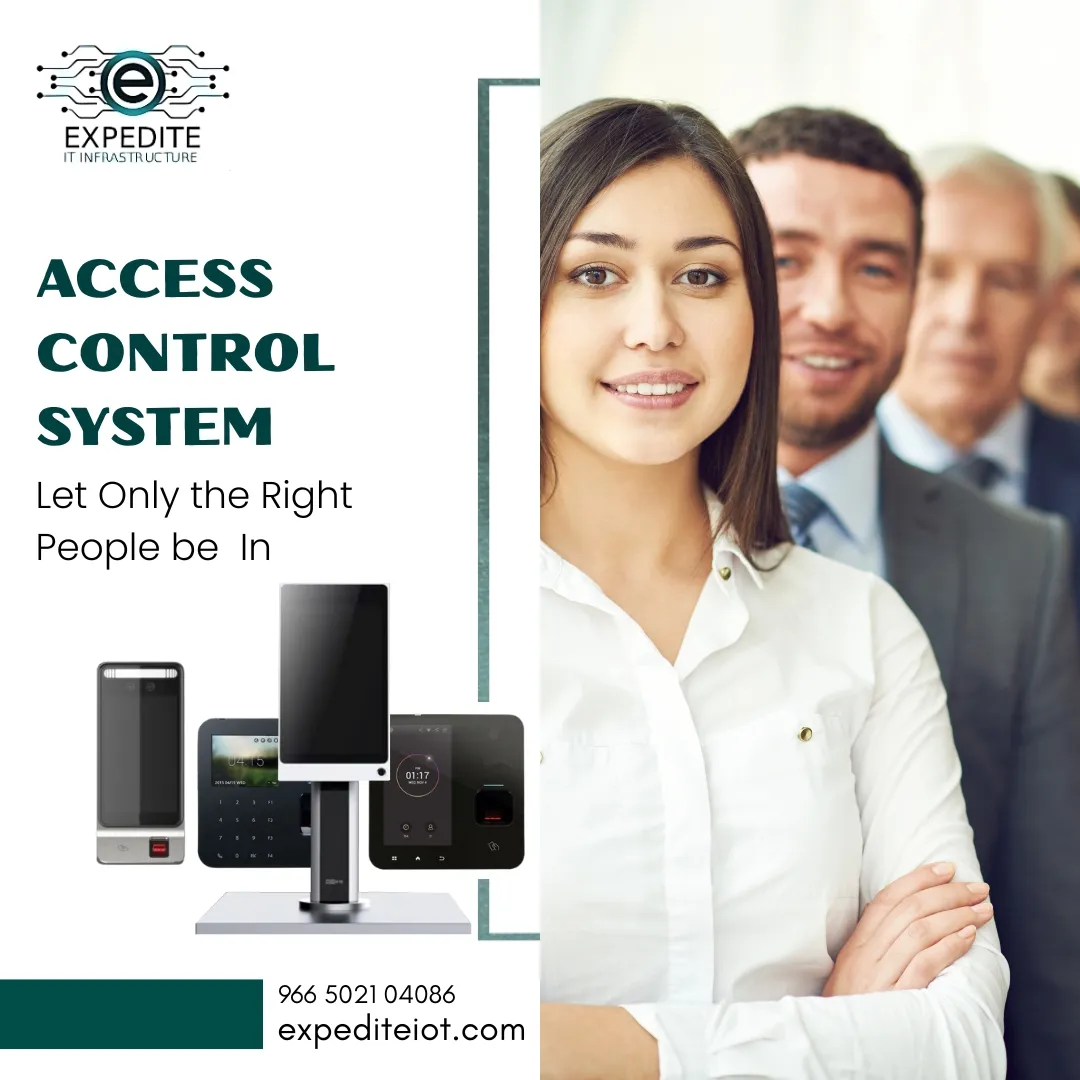

Selecting the right partner among Saudi Arabia's growing field of security technology vendors is one of the most consequential decisions a facility owner, security director, or operations manager will make this year, because the quality of an Access Control System deployment determines everything from regulatory compliance and insurance standing to the physical safety of staff and the protection of high-value assets. As the Kingdom's Vision 2030 transformation drives unprecedented investment across government, healthcare, industrial, financial, and giga-project sectors, the market has filled with vendors offering everything from basic card-reader installations to fully integrated enterprise security ecosystems - and the gap between a professional provider and a low-cost reseller is measured in compliance failures, system downtime, and unsupported hardware long after the warranty period ends. Expedite IoT has established itself among the Kingdom's most trusted security technology partners. Explore our access control system solutions for Saudi Arabia, Qatar, and Oman and discover what separates a professional, regionally accountable provider from a vendor who simply ships hardware and disappears.
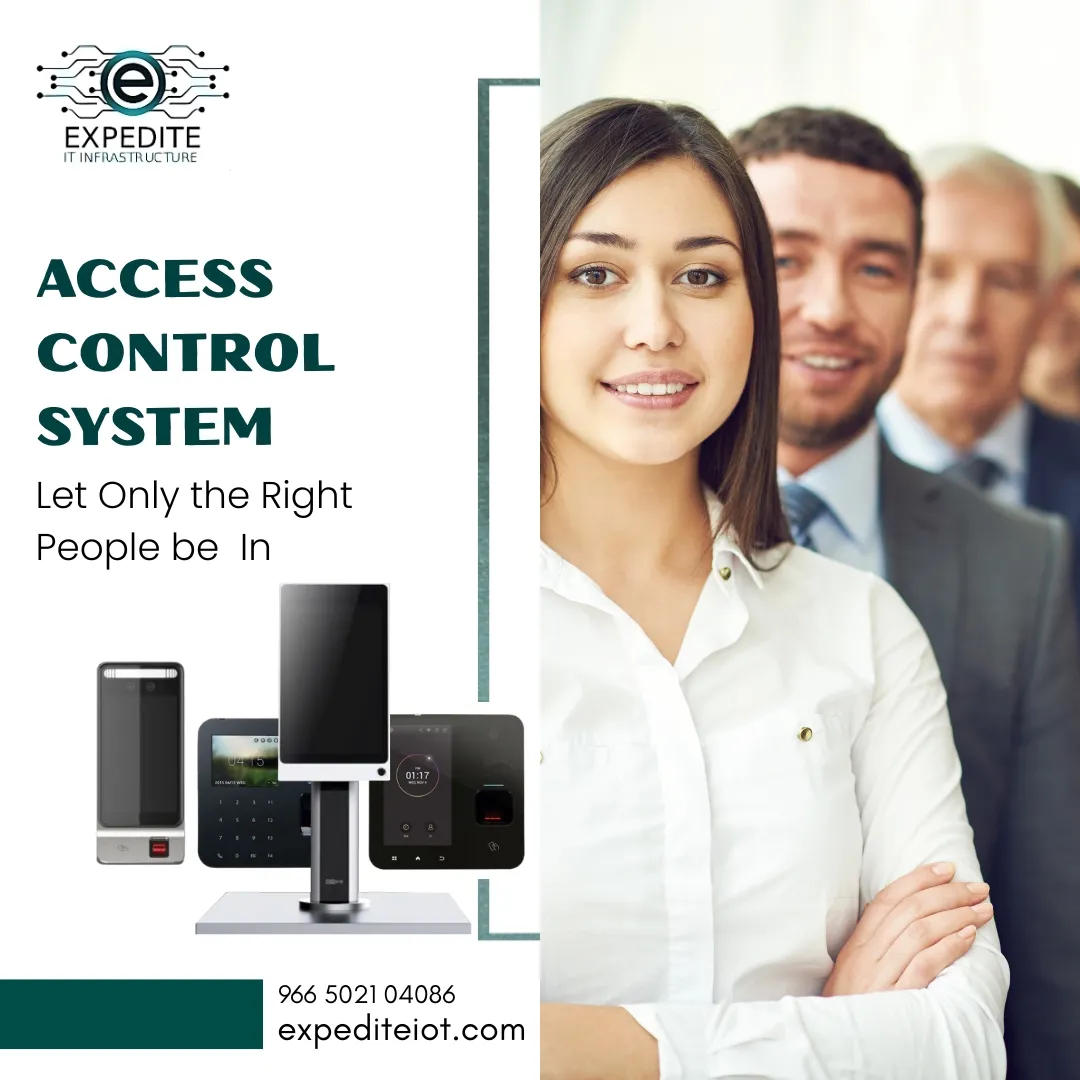
What Separates a Professional Access Control Provider from a Reseller
The Saudi Arabian security technology market has expanded rapidly alongside Vision 2030 infrastructure investment, and that growth has attracted a wide spectrum of vendors - from genuine systems integrators with regional engineering teams to import-and-resell operators with no local support capability whatsoever. A professional provider is distinguished first by certification and partnership depth: authorised reseller and integration partner status with established hardware manufacturers such as HID Global, Suprema, ZKTeco, Honeywell, and Bosch Security Systems signals that the provider has passed manufacturer-level technical training, has access to genuine warranty support, and is contractually accountable for installation quality.
Equally critical is the provider's understanding of Saudi Arabia's specific regulatory architecture. The National Cybersecurity Authority's (NCA) Essential Cybersecurity Controls, the Ministry of Interior's facility protection guidelines, the Saudi Standards, Metrology and Quality Organisation's (SASO) physical security standards, and the Personal Data Protection Law (PDPL) administered by the Saudi Data and Artificial Intelligence Authority (SDAIA) collectively shape how access control systems must be configured, how biometric data must be governed, and how audit logs must be structured for regulatory inspection. A provider without demonstrable experience navigating these frameworks risks delivering a system that functions technically but fails the compliance review that matters most to the client's operating licence.
Expedite IoT's Core Platform: Technology That Defines Professional-Grade Security
Biometric Access Control System for Uncompromising Identity Verification
At the foundation of Expedite IoT's offering is a Biometric Access Control System that eliminates the fundamental vulnerability of card and PIN-based credentials - the ability to share, lose, or duplicate them. Fingerprint recognition, facial recognition, iris scanning, and palm-vein authentication are all supported, with reader selection guided by the operational environment and the sensitivity of the protected zone. Across Saudi Aramco contractor management programmes, NEOM smart city infrastructure, government ministry buildings, and private hospital campuses throughout the Kingdom, biometric verification provides certainty that the individual presenting a credential is unequivocally the authorised person. All biometric templates are encrypted at AES-256 standard at the point of capture and stored within Expedite IoT's GCC-hosted infrastructure or the client's secured local server, fully aligned with PDPL governance requirements and NCA data protection controls.
Security Access Control System for Enterprise-Scale Zone Governance
Expedite IoT's Security Access Control System delivers granular, zone-based permission management across facilities of any scale - from a single-building corporate office to a multi-site enterprise with dozens of locations distributed across the Kingdom. Permissions are configured at the individual or group level, scheduled by time-of-day and day-of-week, and revoked instantly upon employee departure or contractor engagement closure. Real-time occupancy dashboards give security managers an accurate, live picture of how many authorised individuals occupy each zone at any given moment, supporting Saudi Civil Defence mustering compliance and enabling rapid evacuation accountability across large commercial, industrial, and institutional sites.
Door Access Control System Engineered for Every Facility Type
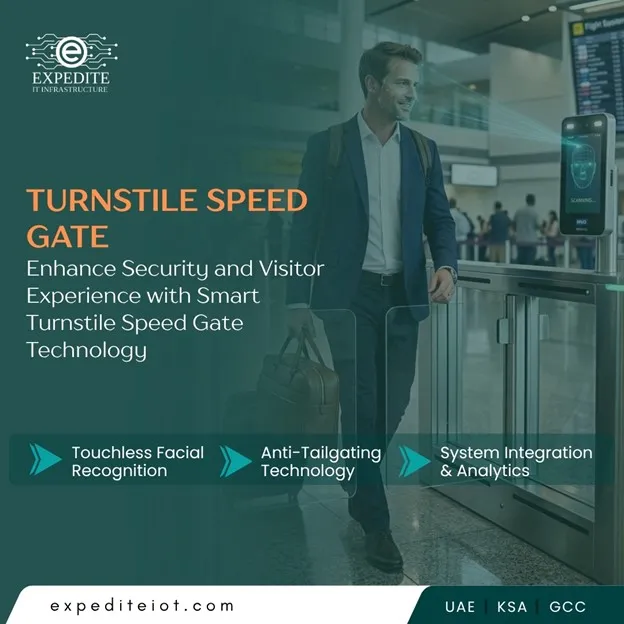
Whether the requirement is a handful of office doors or a multi-building campus with hundreds of controlled openings, Expedite IoT's Door Access Control System scales without compromise. Electric strikes, magnetic locks, motorised deadbolts, turnstiles, and vehicle barrier integrations are all supported, with fail-safe and fail-secure configurations selected according to Saudi Civil Defence Directorate fire safety requirements and the specific risk profile of each protected zone. The system manages lift access control, car park barriers, and pedestrian speed gates from a single unified management console, ensuring that facility security teams operate from one coherent operational picture rather than juggling multiple disconnected subsystems supplied by different vendors over time.
Field-Proven Access Control Device Hardware for Saudi Conditions
Every entry point in an Expedite IoT deployment is served by an Access Control Device - available in card reader, biometric terminal, QR code scanner, and multi-technology combination formats - engineered to withstand Saudi Arabia's extreme heat, dust, and humidity conditions across industrial, coastal, and inland desert environments alike. Outdoor-rated units carry IP65 or IP67 ingress protection ratings as standard, and every device incorporates tamper detection, anti-passback enforcement, and optional dual-authentication configurations that trigger immediate security alerts in response to physical attacks on reader hardware or attempted zone-hop violations. This hardware reliability is precisely what separates a professional, field-proven deployment from a budget installation that fails within its first Saudi summer.
Access Control Solutions: The Full-Service Difference
What distinguishes Expedite IoT's Access Control Solutions from a hardware-only vendor relationship is the depth of integration, support, and lifecycle management delivered as a complete service rather than a one-time installation. Native integration with video surveillance platforms including Milestone XProtect, Genetec Security Center, and Avigilon Unity means every access event is automatically associated with corresponding CCTV footage, eliminating the manual archive searching that delays incident investigation. HR and ERP system connectivity with platforms such as SAP SuccessFactors, Oracle HCM, and Microsoft Dynamics 365 ensures that employee onboarding automatically provisions access credentials while offboarding triggers immediate, simultaneous revocation across every controlled point in the facility.
A professional provider's value is equally measured in what happens after commissioning. Expedite IoT's open-architecture platform supports API connectivity with legacy systems including Lenel OnGuard, HID Global VertX, and Software House C-CURE 9000, protecting a client's existing technology investment during migration rather than forcing a costly rip-and-replace approach. The compliance reporting suite generates audit-ready logs in PDF, Excel, and CSV formats covering individual access histories, zone occupancy trends, failed access attempts, and after-hours entry events - documentation that satisfies NCA, Ministry of Interior, and SASO inspection requirements without requiring the client's internal team to manually compile data ahead of a regulatory review.
Evaluating Access Control System Providers: A Due-Diligence Framework
Facility owners and security directors assessing competing providers should apply a structured evaluation framework rather than selecting on price alone. Manufacturer partnership credentials, regional engineering and support team presence, demonstrable project references within Saudi Arabia's specific regulatory sectors, service level agreement terms for hardware fault response, and the provider's data governance approach to biometric information under PDPL should all factor into the procurement decision. A provider unable to produce documented references from comparable Saudi deployments, or unwilling to commit to defined on-site response timeframes, represents a higher long-term risk regardless of the attractiveness of their initial quotation.
Equally important is post-deployment support continuity. Security technology requires ongoing firmware updates, periodic biometric reader calibration, and ready access to replacement hardware when components fail - none of which an offshore reseller without a Saudi-based service infrastructure can reliably deliver. Expedite IoT maintains dedicated technical support teams within the Kingdom, ensuring that hardware faults receive rapid on-site response and that software updates addressing newly identified security vulnerabilities are deployed promptly across every client environment, rather than left unpatched for months while a support ticket awaits an overseas response team.
Access Control System KSA: A Platform Configured for the Kingdom
Deploying an effective Access Control System KSA requires more than translating an international product into Arabic - it demands a platform architecturally configured for Saudi Arabia's specific regulatory environment, cultural workplace context, and operational conditions. Expedite IoT's system ships with a full Arabic-language management interface, Hijri calendar integration for scheduling and audit reporting, and pre-built compliance templates aligned to NCA Essential Cybersecurity Controls, Ministry of Interior facility protection guidelines, and Saudi Aramco contractor management security standards. For organisations operating within economic cities including King Abdullah Economic City (KAEC), Qiddiya, and the Red Sea Project, the platform's integration capability with smart city command infrastructure enables centralised access governance across multi-tenant developments without requiring separate management consoles per operator.
Redundant connectivity configurations ensure that access decisions continue to execute locally at each reader even during network outages, with all events queued and automatically synchronised to the central platform once connectivity is restored - a critical resilience feature for remote industrial sites, NEOM construction zones, and large petrochemical facilities where network infrastructure can be intermittent during active development phases. Expedite IoT's Saudi Arabia access control system deployment and engineering team manages every stage of project delivery, from initial security zoning assessment through hardware installation, software configuration, staff training, and post-commissioning support, with formal project delivery timelines agreed at contract signature.
Access Control System Riyadh: Trusted by the Capital's Most Demanding Institutions
As Saudi Arabia's administrative and financial capital, Riyadh concentrates the Kingdom's highest density of government ministries, financial institutions, multinational corporate headquarters, and technology parks - environments where the consequences of an access governance failure are measured in regulatory penalty, reputational damage, and in the most serious cases, direct physical risk. Expedite IoT's Access Control System Riyadh deployments serve King Abdullah Financial District (KAFD) tower complexes, ministry facilities, technology park tenants, and the expanding King Salman Energy Park (SPARK) industrial ecosystem. The platform's cloud-hosted management console allows Riyadh-based security operations centres to monitor and administer access events across an entire corporate estate from a single screen, with role-based delegation enabling individual site managers to administer their own facilities while corporate security directors retain consolidated oversight across the full portfolio. Contact Expedite IoT through our Riyadh access control system solutions and consultation page to schedule a facility assessment with our Saudi-based engineering team.
Conclusion
Saudi Arabia's facility security demands a provider who delivers more than hardware - and Expedite IoT answers that need with a complete Access Control System built on identity-verified Biometric Access Control System technology, granular Security Access Control System zone governance, and dependable Door Access Control System coverage at every entry point.
Every Access Control Device is field-proven for the Kingdom's climate, and our Advanced Access Control System architecture integrates seamlessly with surveillance and HR platforms through tailored Access Control Solutions.
Whether you need a compliant Access Control System KSA deployment or capital-city support from our Access Control System Riyadh team, Expedite IoT brings regional expertise you can rely on.
Contact Expedite IoT today to schedule a site assessment with a provider built for the long term.
Frequently Asked Questions
FAQ 1: How do I verify that an Access Control System provider in Saudi Arabia is genuinely professional rather than a reseller?
A professional Access Control System provider should hold documented authorised partnership or integration certification with established hardware manufacturers, maintain a Saudi-based engineering and support team capable of on-site response, and be able to produce verifiable project references from comparable facility types within the Kingdom. Ask prospective providers for evidence of NCA, Ministry of Interior, or SASO compliance experience relevant to your sector, request defined service level agreement terms for hardware fault response, and confirm whether software updates and biometric calibration services are included in the ongoing support agreement rather than billed separately on an ad hoc basis.
FAQ 2: What PDPL compliance obligations apply to a Biometric Access Control System deployment in Saudi Arabia?
Any Biometric Access Control System processing fingerprint, facial, or other biometric data in Saudi Arabia falls under the Personal Data Protection Law (PDPL) administered by SDAIA, which requires explicit consent capture, encrypted storage at rest and in transit, defined data retention schedules, and the ability to fulfil data subject access and deletion requests. Expedite IoT's platform encrypts biometric templates at AES-256 standard at the point of capture, stores data within GCC data residency boundaries, and includes a built-in governance module that manages consent records and retention schedules automatically, providing organisations with audit-ready PDPL compliance documentation.
FAQ 3: Can a Door Access Control System from one provider be integrated with security infrastructure from a previous vendor?
In most cases, yes. Expedite IoT's Door Access Control System is built on an open-architecture platform that supports API connectivity with widely deployed legacy systems including Lenel OnGuard, HID Global VertX, and Software House C-CURE 9000, allowing organisations to integrate new biometric readers, video surveillance, or reporting capability with existing infrastructure rather than undertaking a complete rip-and-replace project. A professional provider will conduct a technical compatibility assessment during the proposal phase to confirm integration feasibility and identify any legacy hardware that may require replacement to achieve full platform functionality.
FAQ 4: What ongoing support should be included in Access Control Solutions after installation is complete?
Professional Access Control Solutions should include a defined service level agreement covering on-site hardware fault response timeframes, scheduled firmware and software updates to address emerging security vulnerabilities, periodic biometric reader calibration to maintain recognition accuracy, and access to a Saudi-based technical support team rather than an offshore call centre. Organisations should also confirm whether the provider offers proactive system health monitoring that flags failing hardware before it causes an access control outage, as reactive-only support models typically result in longer facility security gaps when components fail unexpectedly.
FAQ 5: How long does a typical Access Control System KSA deployment take from contract signature to go-live?
A standard single-facility Access Control System KSA deployment, covering site security assessment, hardware installation, software configuration, integration testing, and staff training, is typically completed within two to four weeks depending on facility size and the complexity of required integrations with existing WMS, ERP, or video surveillance platforms. Larger multi-site or giga-project deployments are delivered against formal project timelines established at contract signature, with phased rollout schedules agreed in advance to align with the client's operational readiness and any wider construction or facility commissioning programme.























Sign in to leave a comment.