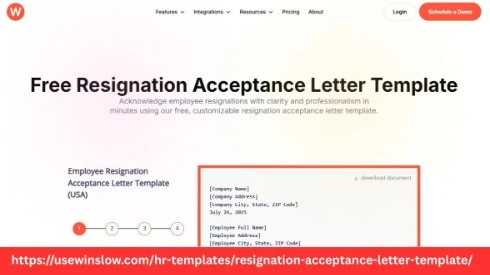

When an employee decides to move on from a company, it is important for the HR department or employer to respond formally and respectfully. A resignation acceptance letter is the official way to acknowledge an employee’s resignation and confirm their departure details. Using a resignation acceptance letter template makes this process faster, more professional, and ensures that nothing important is left out. For HR teams, managers, and small businesses, having a clear and structured document can reduce confusion and maintain professionalism throughout the transition.
A resignation acceptance letter template helps provide clarity on the last working date, transition of responsibilities, and sometimes appreciation for the employee’s contribution. It also ensures a consistent communication style across the company. Whether you are part of a large organization or a small business, creating and sending a proper acceptance letter shows respect for the employee’s decision while protecting the organization’s processes.
Why a resignation acceptance letter matters
When an employee resigns, it is not just a formality to accept their resignation verbally. A resignation acceptance letter serves as a written record. This document can be used by both the employer and the employee for future reference, particularly for HR records, clear communication of the final date, and avoiding misunderstandings.
For HR teams, a resignation acceptance letter is also an opportunity to confirm details about handovers, pending dues, or exit processes. Without such a letter, there may be confusion about when the employee’s resignation takes effect or what their responsibilities are before leaving. A resignation acceptance letter template can simplify the task of drafting these communications by providing a ready-to-use format.
Key elements in resignation acceptance letters
While the format may vary, most resignation acceptance letters include a few important elements. These ensure that the communication is professional, complete, and leaves no room for misunderstanding. Common components are:
- Date of writing the letter
- Employee’s name and position
- Acknowledgment of resignation
- Last working date confirmation
- Any mention of handover or transition tasks
- Expression of appreciation, if suitable
- Signature or name of the HR manager or employer
By using resignation acceptance letter templates, HR teams can make sure these elements are always included without needing to start from scratch.
Benefits of using a resignation acceptance letter template
Resignation acceptance letter templates are not just about saving time. They also bring structure and consistency to an important HR process. Some advantages include:
- Professionalism – The letter reflects the company’s commitment to handling employee exits with respect.
- Clarity – Confirms last working dates and responsibilities, avoiding future disputes.
- Efficiency – A ready-to-use resignation acceptance letter template reduces the time spent drafting.
- Consistency – Ensures all employees receive a uniform and fair communication process.
For HR teams managing several resignations, especially in growing companies, using template resignation acceptance letters can make the process smoother and more organized.
Tips to create resignation acceptance letters
Creating resignation acceptance letters does not have to be complicated. By following simple guidelines, HR professionals can ensure the message remains polite, respectful, and complete. A resignation acceptance letter template can be customized depending on the tone or requirements of the company.
- Keep it formal but kind – Even if the employee is leaving, the tone should remain professional and respectful.
- Acknowledge their contribution – A short line of appreciation helps maintain good relations.
- Confirm the last working date – This is the most crucial detail in the letter.
- Be clear about transition tasks – If handovers are necessary, include them briefly.
- Close on a positive note – Wishing success to the employee helps maintain goodwill.
Example of a simple resignation acceptance letter
Here is an example structure that can be adapted from a resignation acceptance letter template:
Dear [Employee Name],
We acknowledge receipt of your resignation dated [Date]. Your resignation has been accepted, and your last working day will be [Last Working Day]. Please ensure a smooth transition of responsibilities to your team before this date.
We would like to take this opportunity to thank you for your contributions to the company and wish you success in your future endeavors.
Sincerely,
[Manager or HR Name]
This example shows how easy it is to create resignation acceptance letters using a basic template.
Why HR teams prefer templates
For HR teams working across platforms like Slack, Teams, Gmail, and Outlook, templates are highly convenient. Having a pre-drafted resignation acceptance letter template saved in the system allows quick customization and faster communication. It also reduces errors and ensures that important details like the last working date are never missed.
Companies that manage multiple resignations throughout the year often rely on resignation acceptance letter templates to standardize communication. This consistency also helps employees feel that the exit process is handled fairly and professionally.
Winslow and efficient HR processes
Using tools and structured templates can make HR workflows smoother. Winslow supports HR teams by offering solutions that enhance communication, streamline tasks, and bring consistency to processes. When teams integrate structured templates like resignation acceptance letters into their system, it creates efficiency and reduces stress during employee exits. Winslow emphasizes professionalism and clarity in HR communication, which matches the purpose of using templates for resignation acceptance.
Customizing resignation acceptance letter templates
While templates provide a basic format, companies can customize them according to their culture and tone. For example, some companies may prefer to keep the message short and strictly professional, while others may add a more personal touch with appreciation and best wishes. HR managers should adapt the resignation acceptance letter templates so they reflect the company’s values.
Customizing does not mean overcomplicating. A good balance is keeping the letter straightforward while ensuring it aligns with organizational culture. Using a template as a starting point allows HR teams to focus on personalizing small details rather than creating an entire document from scratch.
Common mistakes to avoid
When drafting resignation acceptance letters, a few mistakes can create confusion or appear unprofessional. Avoid:
- Leaving out the last working date
- Using an overly casual tone
- Forgetting to acknowledge the resignation formally
- Adding unnecessary details unrelated to the exit
Templates help avoid these errors by providing a clear structure that can be adapted.
Conclusion
Handling resignations professionally is an essential HR responsibility. A resignation acceptance letter ensures that both the employer and the employee have clarity about the resignation process, particularly regarding the last working date and responsibilities. Using a resignation acceptance letter template saves time, maintains consistency, and adds professionalism to HR communication.
For HR teams, small businesses, and companies that value clear communication, templates are an effective solution. Winslow encourages HR departments to make use of structured tools that improve efficiency, and resignation acceptance letter templates are a simple but powerful way to manage employee exits with respect and professionalism.
























Sign in to leave a comment.