

A university data center faces a genuinely unusual challenge: it needs to be open enough to support research collaboration and academic freedom, yet secure enough to protect student records, research data, and institutional systems from a threat landscape that increasingly targets higher education specifically. Robust Data Center Security designed around that dual requirement is essential, and UAE universities reviewing data center perimeter security solutions for higher education are finding that generic corporate security models rarely translate cleanly to a campus environment.
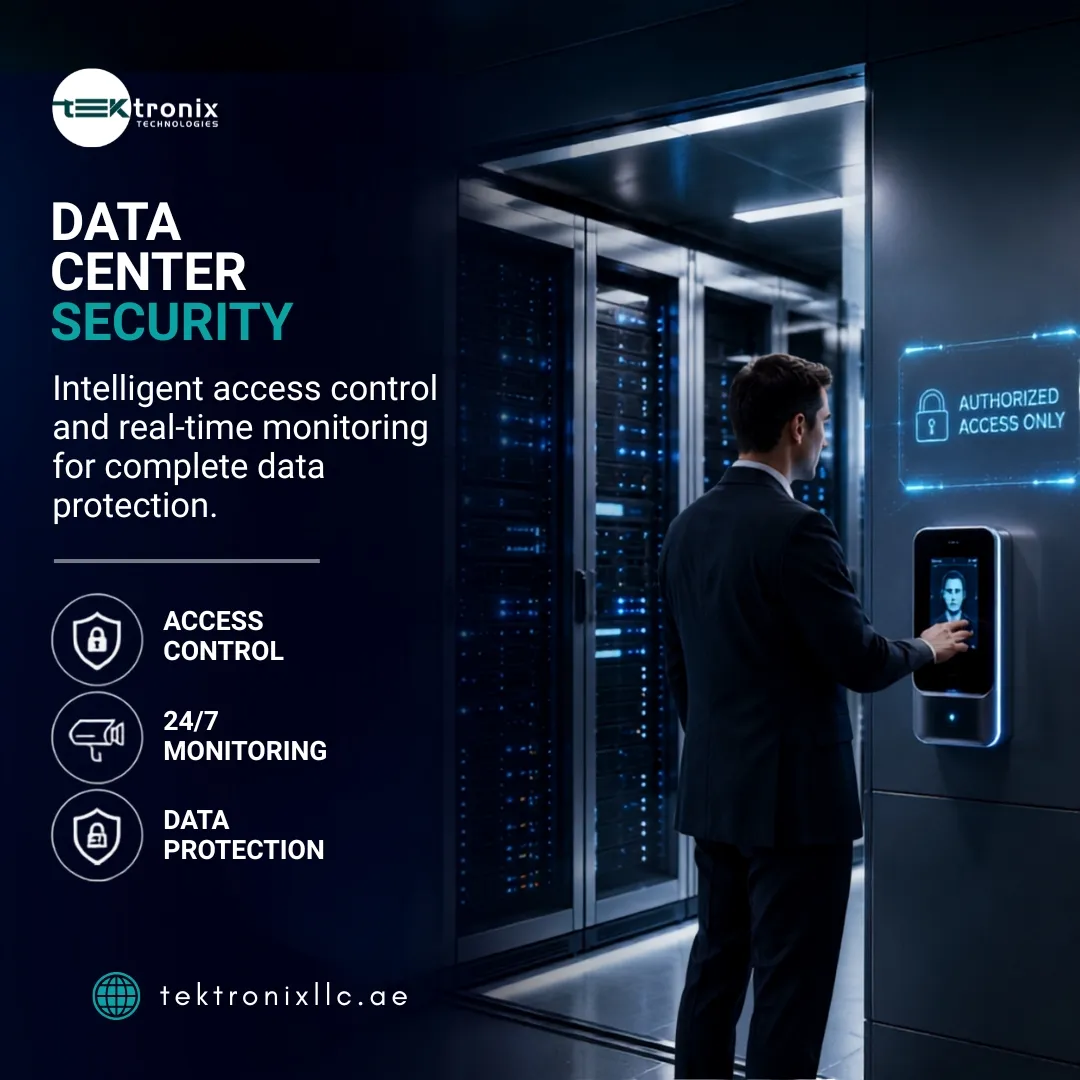
Higher education institutions across the UAE increasingly rely on centralised data infrastructure supporting everything from student information systems and learning management platforms to specialised research computing environments, often across multiple faculties with distinct and sometimes competing access requirements. That complexity, combined with the sector's growing attractiveness as a cyberattack target globally, makes university data center security a genuinely distinct discipline rather than a smaller-scale copy of corporate practice.
Why University Data Centers Face a Distinct Risk Profile
Universities globally have become an increasingly attractive target for cyberattacks, holding valuable research data, large volumes of personal information across student and staff populations, and often less mature security postures than the commercial sector, historically driven by budget constraints and academic cultures that traditionally prioritised open collaboration over restrictive access control.
At the same time, university data centers typically serve an unusually diverse set of internal stakeholders — administrative staff needing access to student records, faculty running research computing workloads, and IT teams managing everything from email infrastructure to specialised laboratory equipment — each with different risk profiles and access requirements that a single, undifferentiated security policy struggles to serve well.
Physical Security for Campus Data Centers
Data Center Access Control for Multi-Department IT Environments
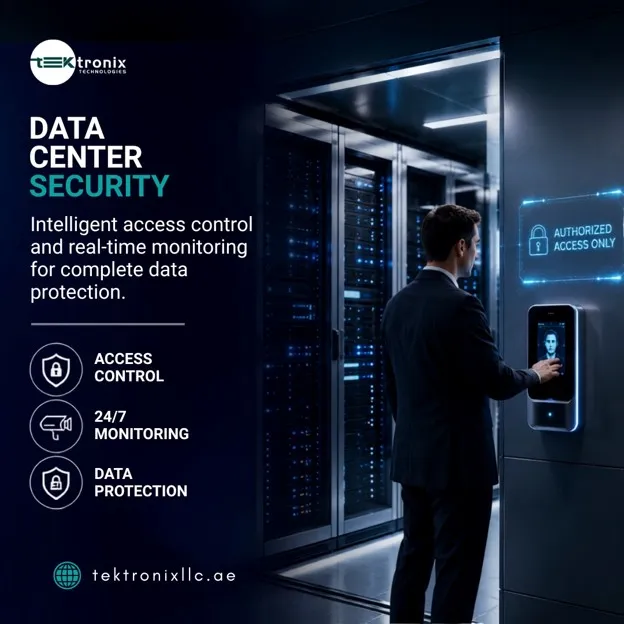
University Data Center Access Control needs to accommodate multiple distinct user groups — central IT staff, departmental technical administrators, and occasionally faculty researchers needing physical access to specialised equipment — each requiring different permission tiers rather than a single blanket access policy suited to a typical corporate environment.
Data Center Surveillance Across Academic and Research Facilities
Comprehensive Data Center Surveillance covering both central data center facilities and any distributed departmental server rooms gives university IT security teams complete visibility across what is often a more physically dispersed infrastructure footprint than a typical single-site corporate deployment.
Data Center Intrusion Detection for Distributed Campus Infrastructure
Because university IT infrastructure frequently spans multiple buildings across a large campus, Data Center Intrusion Detection needs to cover not just a single central facility but any satellite server rooms supporting individual faculties or research centres, each representing a potential access point into the broader institutional network.
Protecting Research and Student Data at the Network Layer
Cybersecurity for Data Center Environments Hosting Academic Networks
Robust Cybersecurity for Data Center environments supporting academic networks needs to account for the relatively open network culture common in higher education, where student devices, research collaboration tools, and public-facing academic resources all require network access without compromising the security of more sensitive administrative and research systems.
Data Center Encryption for Research and Student Records
Applying Data Center Encryption to both student administrative records and sensitive research data protects two distinct categories of information that carry different but equally serious consequences if exposed — personal privacy violations on one hand and compromised research integrity or intellectual property on the other.
Data Center Firewalls Segmenting Student, Faculty, and Research Networks
Effective Data Center Firewalls segment student, faculty, and research networks from core administrative systems, ensuring that a compromised student device or a vulnerability in an open research collaboration tool can't provide a pathway into the university's central student records or financial systems.
Data Center Threat Detection Across a High-Target Academic Environment
Given the elevated targeting universities face globally, Data Center Threat Detection correlating network anomalies with physical access events helps university security teams identify coordinated attacks against research data or administrative systems earlier than either signal would reveal in isolation.
Balancing Open Academic Access with Genuine Security
The central tension in university data center security is preserving the open collaboration culture academic environments depend on while still protecting sensitive systems from a genuinely elevated threat landscape. Overly restrictive security measures can hamper legitimate research collaboration and frustrate faculty and students alike, while insufficient controls leave valuable research data and personal records exposed.
The most successful approach typically segments the network thoughtfully, applying lighter-touch controls to genuinely public-facing academic resources while reserving stricter access control and monitoring for systems handling student records, financial data, or particularly sensitive research, rather than applying uniform restriction across an environment with genuinely varied risk levels.
Data Center Security UAE: Higher Education Considerations
Universities specifying Data Center Security UAE-wide need to navigate both general information security standards and higher-education-specific regulatory oversight, since institutional accreditation bodies increasingly expect documented IT security governance as part of ongoing institutional quality assurance.
Data Center Security Dubai — KHDA and University Compliance Considerations
Universities pursuing Data Center Security Dubai deployments typically need to align infrastructure security documentation with KHDA institutional oversight requirements, alongside UAE PDPL obligations covering the substantial volume of personal data a university naturally accumulates across its student population.
Data Center Security Abu Dhabi — CAA-Accredited Institution Requirements
Institutions pursuing Data Center Security Abu Dhabi deployments accredited through the Commission for Academic Accreditation (CAA) increasingly document IT security infrastructure as part of broader institutional quality assurance reviews, reflecting growing recognition that data security is now a core institutional governance matter rather than a purely technical IT concern.
Budget-Conscious Security Without Cutting Corners
Universities frequently operate under tighter capital budgets than comparable-sized commercial enterprises, which can create pressure to defer security infrastructure investment in favour of more visible academic priorities. The most effective approach for budget-conscious institutions is typically phased implementation, prioritising the highest-risk systems — student records, financial data, and sensitive research — for the strongest controls first, while building out broader coverage over subsequent budget cycles rather than attempting a single, unaffordable comprehensive rollout.
Shared infrastructure models, where multiple departments contribute to a centralised, properly secured data center rather than maintaining separate, individually under-resourced server rooms, often deliver stronger security at lower overall cost than a fragmented departmental approach, since consolidated infrastructure benefits from economies of scale in both hardware and ongoing monitoring.
Standards and Regulatory Alignment
University data center security programmes are typically benchmarked against ISO 27001 for information security management, with UAE PDPL shaping how student and staff personal data is stored, encrypted, and retained. Institutions supporting government-funded or defence-adjacent research may additionally need to align with NESA/SIA information assurance requirements, while KHDA and CAA institutional oversight increasingly expects documented security governance as part of ongoing accreditation review.
Why UAE Universities Choose Tektronix for Data Center Security
Tektronix LLC designs data center security programmes for universities and higher education institutions across the UAE, deploying access control, surveillance, and intrusion detection infrastructure from Genetec, Milestone, HID Global, and Honeywell configured around the specific access complexity and budget realities of academic environments. Every engagement includes a network segmentation assessment distinguishing genuinely public-facing academic resources from sensitive administrative and research systems, along with phased implementation planning suited to institutional budget cycles.
Universities planning a data center security upgrade can review Tektronix's data center perimeter security solutions to understand deployment approaches suited to the distinct access and budget realities of higher education.
Conclusion
University IT infrastructure carries a genuinely distinct risk profile, balancing open academic collaboration against an elevated threat landscape targeting higher education specifically, and comprehensive Data Center Security designed around that reality matters more than a generic corporate approach. Multi-tier Data Center Access Control, campus-wide Data Center Surveillance, and distributed Data Center Intrusion Detection address the physical security complexity of a dispersed academic environment. On the network side, Cybersecurity for Data Center practices suited to open academic networks, properly segmented Data Center Encryption and Data Center Firewalls, and correlated Data Center Threat Detection protect both student records and valuable research data. As Data Center Security UAE expectations rise for higher education — including Data Center Security Dubai KHDA-aligned institutions and Data Center Security Abu Dhabi CAA-accredited universities — institutions that invest thoughtfully, even within real budget constraints, protect both their academic mission and their institutional reputation.
FAQs
1. Why are universities considered attractive targets for cyberattacks?
Universities typically hold valuable research data, large volumes of personal information, and historically less mature security infrastructure than comparable commercial organisations, making them an appealing target relative to the effort required to breach them.
2. How can a university balance open academic collaboration with strong data center security?
Thoughtful network segmentation typically works best, applying lighter security to genuinely public academic resources while reserving stricter access control and monitoring for student records, financial systems, and sensitive research data.
3. What's the most cost-effective way for a budget-constrained university to improve data center security?
Phased implementation prioritising the highest-risk systems first, combined with consolidating fragmented departmental server rooms into a shared, properly secured central facility, typically delivers stronger security at lower overall cost than piecemeal departmental spending.
4. Do accreditation bodies like KHDA or CAA specifically require data center security documentation?
Institutional oversight bodies increasingly expect documented IT security governance as part of broader quality assurance review, reflecting growing recognition that data protection is now a core institutional governance matter rather than a purely technical concern.
5. How should a university handle security for satellite server rooms in individual faculty buildings?
Satellite facilities should ideally meet the same access control and surveillance standards as the central data center, or alternatively be consolidated into shared central infrastructure where maintaining consistent security across multiple smaller sites proves impractical.
For more information contact us on:
Tektronix Technology Systems Dubai-Head Office
+971 50 814 4086

























Sign in to leave a comment.