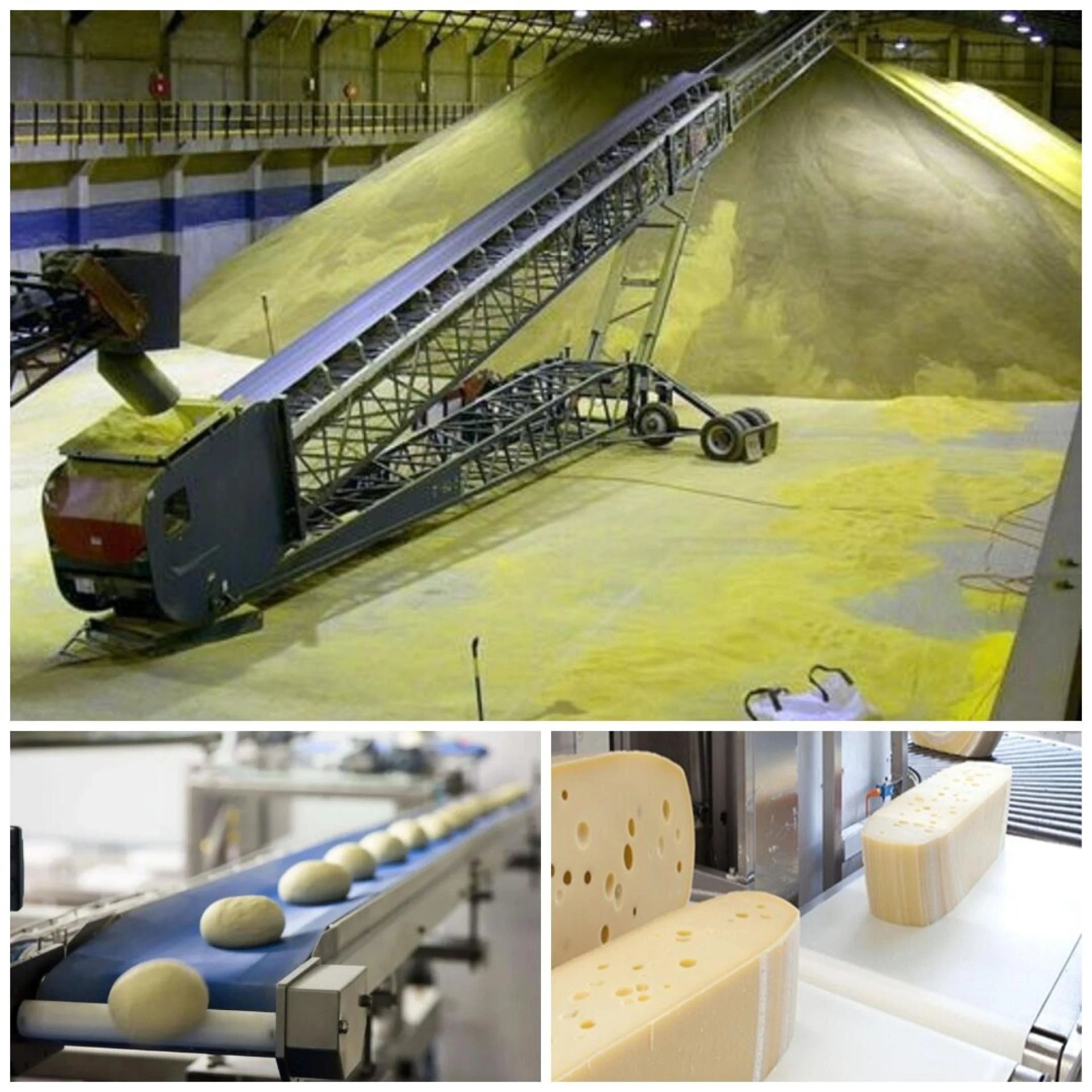

How different materials behave when loaded onto a PU belt, and how the belt should behave in different situations. The materials, including dry powders, may slide; sticky materials may adhere; and sharp materials may scratch the surface. This is why we need to select the appropriate belt properties, including grip, flexibility, and durability, to be capable of operating smoothly.
The reason is that PU conveyor belts are designed to work with a diverse variety of materials. They provide them with an effective grip on the surface to avoid slipping, adaptability to move easily around the pulleys, and wear and tear because of abrasive objects. They are also hygienic and easily cleanable, so they can be used in the food and pharmaceutical industries. In practice, they are used to work with the dough in the bakeries, stabilise the boxes in the packaging department, withstand the chemicals in the vegetable world, and support mixed loads in logistics.
All in all, these belts are strong, flexible, and low-maintenance. The selection of the correct belt depending on materials, load, and conditions is a great way to achieve high performance, minimise damage, and increase efficiency in the long term.
Material Effects on Belt Performance
All kinds of materials react differently to the belt surface. Some typical examples are given here:
- Dry and Powdery Materials
- Small, light, and easy to carry; however, when the floor is too smooth, it can slip.
- Need belts with an appropriate grip or a rough surface
- Sticky or Wet Materials
- Stick to the belt surface and reduce efficiency
- Require non-stick and easy-to-clean belt surfaces
- Sharp or Abrasive Materials
- Can damage the belt over time
- Need wear resistance and strong construction
- Lightweight Products
- May shift during movement
- Belts should have a good grip and smooth movement
- Heavy Loads
- Put pressure on the belt structure
- Need high tensile strength and durability
Key Performance Factors
To know the performance of conveyor belts among various materials, we should consider several factors:
- Surface Grip
- Determines how well materials stay in place during movement
- Prevents materials from slipping, especially on inclined belts
- Flexibility
- Helps the belt move around pulleys
- Useful in systems with frequent direction changes
- Resistance to Wear and Tear
- Needed when working with abrasive materials over long periods
- Reduces maintenance costs
- Hygiene and Cleanability
- This is the main priority for the food and pharmaceutical sectors
- Removes dirt or bacteria and prevents piling
- Temperature Resistance
- Some materials may be hot or cold
- The belt should withstand temperature variations
Real-Use Examples
PU Conveyor Belts can be used in the following situations
- In a bakery:
- Soft dough requires a non-stick surface
- Smooth handling ensures minimal shape distortion
- In packaging units:
- Boxes must move in a stable manner
- Belt strength ensures no sagging
- In chemical plants:
- Oils or chemicals are commonly present
- The belt should resist corrosion and degradation
- In logistics:
- Mixed loads are transported
- Multi-purpose belts handle various weights and shapes
Advantages Of Material Types
The reason these belts work well with various materials is as follows:
- High flexibility enables easy operation in complex systems
- High abrasion resistance prolongs belt life
- Low maintenance minimises downtime
- Suitable for both dry and wet conditions
- Overall performance in all industries
Overall, PU conveyor belts give a superior mix of strength and flexibility, making them a preferred choice in many industries.
Choosing the Right Belt for Your Material
The choice of the right belt is dependent on:
The main material used.
- Temperature (change in temperature)
- Moisture (change in moisture)
- Load capacity requirements
- Conveyor system speed and design.
A wrong choice can lead to:
- Frequent belt damage
- Product loss/ contamination.
- High operation expenditures.
It should therefore be well evaluated before installation.
Conclusion
Certain materials need special approaches when it comes to handling, and the conveyor belt needs to be able to handle them in an efficient manner. The industries would be able to make improved decisions and better their operations by understanding the manner in which materials interact with the belt surfaces. The right belt brings about seamless movements, less maintenance, and the quality of products is maintained throughout the processes.
Dynamic Industrials, a company under the name Arrowcon, is a company in North India that produces PU Conveyor Belts. Their belts are wear and tear resistant, flexible, etc., for industrial use.

















Sign in to leave a comment.