
Material handling is vital in the production process in most industries. The belt problems in many industries are that they are not able to withstand the heat, moisture, or heavy loads. It happens to be so in the industries that have baking, metal processing, or drying of products as their specialties. Such situations may not be effectively covered by a regular belt. This brings us to a critical question, which is, what kind of conveyor belt will be effective in the management of such unfavorable industrial conditions?
Wire mesh belts will be effective in addressing this query. This particular belt is made out of wires interconnected or rods. This belt is also effective in dealing with heat and moisture because it is able to pass through the belt during the production process. This is the cause of the popularity of wire mesh conveyor belts in industries like bakery ovens, dryers, cooling lines, and wash lines.
Kinds of Wire Mesh Conveyor Belts
Conveyor belts are of different types according to industrial uses. To satisfy this requirement, most manufacturers have come up with various designs of wire mesh conveyor belts.
1. Balanced Weave Belts
- These belts contain individual pieces of wire, each twisted together to provide stability.
- They allow a uniform weight to be dispersed evenly throughout the entire belt area.
- Example: A bakery oven uses this belt, so trays move smoothly without tipping.
2. Flat Wire Belts
- It consists of flat metal stripes, which create a very light but also very strong belt.
- They are most commonly seen in applications where products need to be transported on stable support
- Example: In food process applications, where packaged foods must be moved on flat wire belts without bending or shifting out of position.
3. Spiral Belts
- These belts use wire links in the shape of spirals.
- Known for smooth, flexible motion.
- Example: In freezing tunnels, spiral belts move food products slowly for uniform cooling.
4. Rod Reinforced Belts
- Designed with reinforcement rods.
- Make them suitable for use in rugged industrial applications.
- Example: Rods are frequently used to transport metal parts through heat treatment.
5. Composite Mesh Belts
- Combine multiple weaving patterns for enhanced durability.
- Used in specialized production environments.
- Example: Electronics manufacturing lines use composite mesh belts for transporting items during soldering.
The different types of belts give manufacturers more flexibility to choose the required belts according to the specific requirements of their production technique.
Why Choose Wire Mesh Conveyor Belts?
Most industries prefer wire mesh because these belts work reliably, even in tough conditions. Here’s why they’re everywhere in manufacturing:
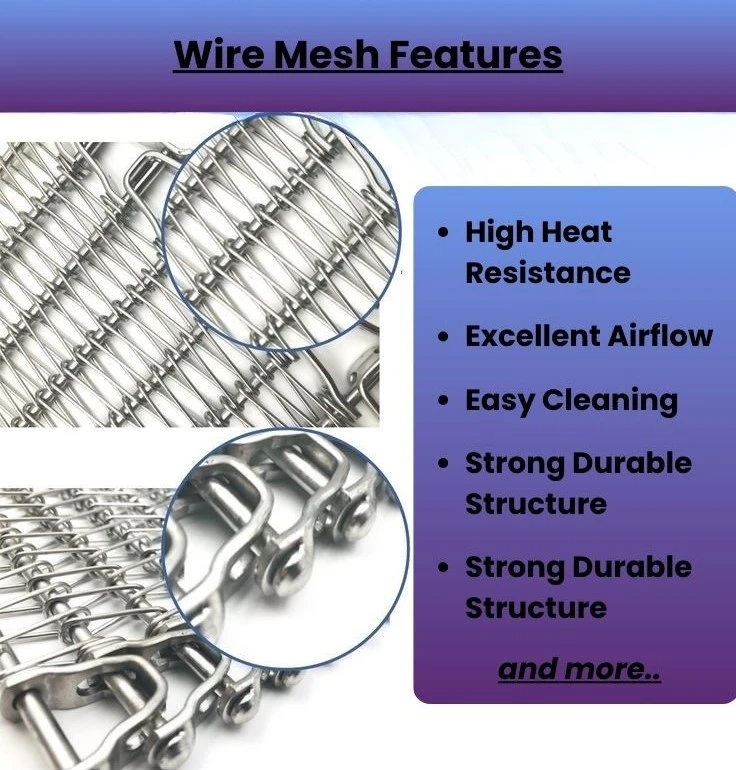
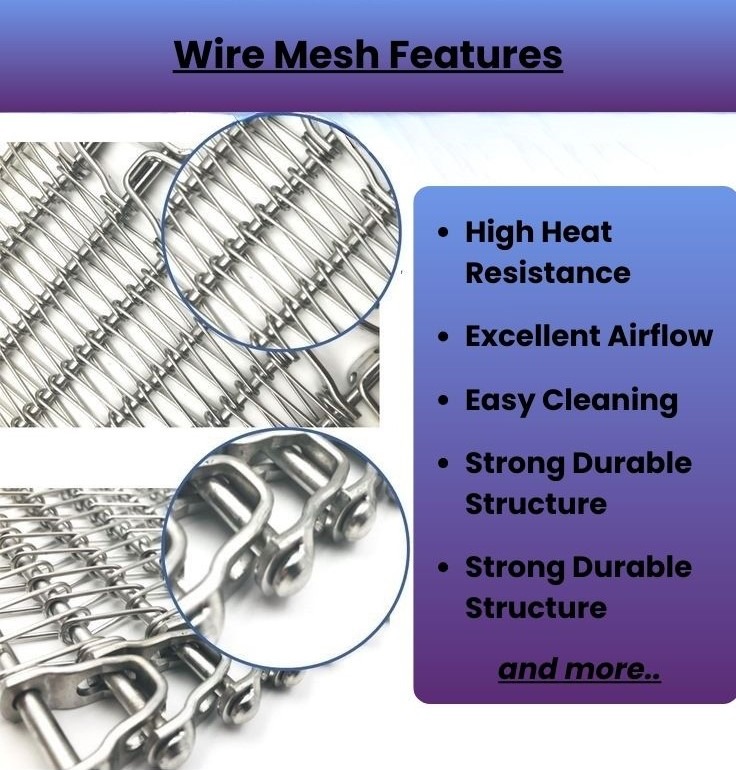
1. Accept High Heat Range
- Since the body is metal, these belts can handle extreme temperatures.
- Example: You won't have to worry about the belt melting or failing if your baking oven is running constantly.
2. Excellent Airflow
- The open mesh structure allows air circulation.
- Example: On cooling lines, this means products get chilled faster
3. Less Cleaning Required
- Liquids flow right through the mesh, making cleaning straightforward.
- Example: Food processing lines can wash products directly on the belt.
4. Strong Built Quality For Decades
- They hold up for years, even when heavy parts roll across.
- Example: Heavy metal parts can move without causing belt deformation.
5. Agile for Different Tasks
- The woven structure allows smooth movement around rollers.
- Example: This equipment holds up for years. The belt won’t deform or sag under pressure.
6. Low Maintenance
- These belts have high wear and tear quality.
- Example: Production keeps going with fewer interruptions.
7. Consistent Product Movement
- Even surface spacing ensures uniform transport.
- Example: Glass items moving through a heating chamber stay evenly spaced.
8. Effective Across Industries
- These belts can perform in the food, metal, glass, and electronics industries.
- Example: The same belt design might be used to bake in one factory and treat metal in another.
9. Long Life Span
- Strong materials allow the belt to run for years.
- Example: A production line that runs continuously would require fewer belt replacements.
10. Cost Savings Over Time
- A durable belt will require fewer replacements.
- Example: A factory would save money by replacing the belt less often.
Because of these advantages, wire mesh belts are used by many different industries to provide reliable production and consistent quality in products.
Why Wire Mesh Conveyor Belts Are Chosen by Industries
Manufacturers often choose this conveyor type due to its excellent functionality in harsh industrial environments where standard conveyors do not operate effectively. The open design allows these belts to be used in processes where products must be heated, cooled, washed, or dried. In addition, a strong metal frame offers the ability to carry heavy product loads without becoming deformed.
The other reason why companies select these conveyor types is high operational reliability. When a manufacturing process runs for an extended period of time (24 hours), the durability of the equipment is of utmost importance. Wire mesh conveyor belts can maintain high flow rates and minimise downtime due to broken belts and overheating issues.
Conclusion
Wire mesh conveyor belts are essential to the modern industry due to their efficient production. They are permeable, tough, metal-framed, and tolerant to heat and heavy weight, which makes them indispensable in all industries such as baking, drying, and metal treatment. Dynamic Industrials, under the brand name Arrowcon, based in North India, is a local manufacturing firm that provides trusted conveyor solutions to various industries.
These wire-mesh conveyor belts are designed in such a way that they are long-lasting and reliable in harsh conditions. Dynamic Industrials concentrates on the supply of industrial-grade products that assist manufacturers in staying efficient, minimizing downtime, and ensuring a seamless flow of materials in different production processes.























Sign in to leave a comment.