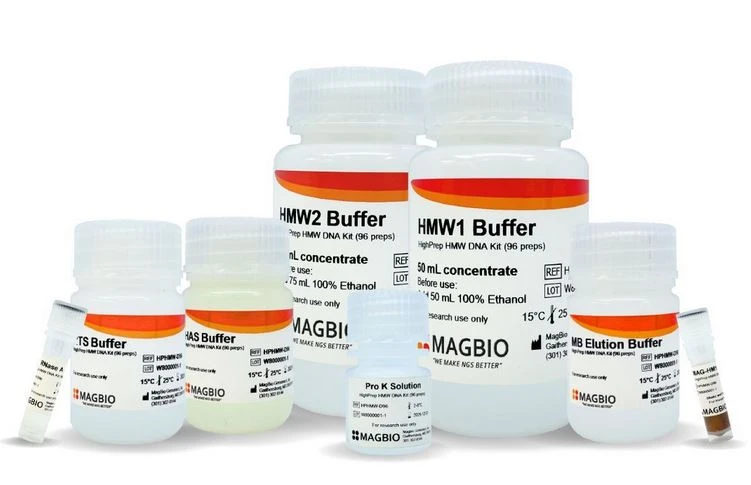

Key Takeaways:-
● Preserving DNA integrity is crucial for high-quality long-read sequencing and structural genomic applications.
● Using a consistent High Molecular Weight DNA Isolation protocol reduces fragmentation and ensures reliable sequencing performance.
● Gentle lysis, careful purification, and avoiding freeze-thaw cycles all contribute to DNA quality.
● An effective Ampure XP Alternative protects large DNA fragments during clean-up and purification.
● Routine QC checks validate DNA quality and help identify issues early in the isolation workflow.
● FAQs
In modern genomics and long-read sequencing applications, the integrity of high molecular weight (HMW) DNA is more important than ever. Technologies such as Oxford Nanopore and PacBio rely heavily on the quality of extracted DNA to produce accurate and long reads. The success of these workflows depends not just on extracting DNA, but on maintaining its structural integrity throughout the process.
Compromised DNA can lead to poor sequencing outcomes, fragmented data, and a loss of valuable biological information. This makes implementing quality control strategies a top priority for researchers involved in High Molecular Weight DNA Isolation. From the moment the sample is collected until it reaches the sequencing platform, every step must be monitored and optimized to preserve DNA quality.
Why Integrity Matters in HMW DNA
High molecular weight DNA consists of long, intact strands of genomic material, often exceeding hundreds of kilobases in size. These large fragments are essential for applications requiring structural variant detection, genome assembly, and epigenetic analysis. Even minimal degradation or shearing can significantly impact the utility of the sample. Unlike short-read sequencing, where fragment size may not drastically alter results, long-read platforms demand exceptionally intact DNA.
Thus, maintaining integrity is just as crucial as the yield in DNA Isolation. Labs that overlook this may obtain DNA that appears sufficient in concentration but fails to deliver expected performance in sequencing runs.
Start with High-Quality Samples
The integrity of HMW DNA starts with the sample itself. Degraded, old, or improperly stored tissues and cells will inherently yield low-quality DNA. It is essential to begin with fresh, well-preserved samples and to avoid repeated freeze-thaw cycles. Gentle handling during tissue homogenization or cell lysis is another crucial step. Harsh mechanical disruption methods should be avoided in favor of enzymatic or mild chemical lysis techniques that prevent early DNA shearing.
This upfront attention to sample quality directly impacts the downstream success of DNA Isolation. When used in combination with a reliable Ampure XP Alternative, these approaches can produce DNA with the integrity required for long-read sequencing.
Use Gentle Lysis Techniques
Cell lysis is a delicate process that can either preserve or destroy DNA integrity. Vigorous vortexing or mechanical agitation can shear DNA into smaller fragments. To avoid this, employ lysis buffers and enzymes designed for HMW DNA recovery. Proteinase K digestion at controlled temperatures, followed by gentle mixing, allows for effective lysis without physical stress. Avoid pipetting the lysate too many times, as repetitive pipetting can also break large DNA fragments.
A well-optimized lysis protocol ensures that long DNA strands remain intact, enhancing the quality of High Molecular Weight DNA Isolation. This step is further strengthened when followed by purification using an Ampure XP, which can selectively retain large DNA molecules.
Optimize the Extraction Protocol
Choosing the right extraction protocol is essential when isolating HMW DNA. Traditional column-based methods often fall short due to their limited capacity to bind and elute long DNA fragments. Magnetic bead-based purification has become the preferred method due to its gentle handling and scalability. When used correctly, magnetic beads can bind large DNA fragments efficiently while minimizing shearing. It is important to follow the manufacturer's instructions closely, especially regarding bead-to-sample ratios, buffer composition, and mixing methods. This not only improves yield but also ensures high integrity of the isolated DNA. Pairing this with a proven Ampure XP enables labs to recover large DNA fragments with minimal loss or breakage, further improving overall results.
Prevent Shearing During Purification
Even after successful lysis and extraction, DNA integrity can still be compromised during the purification step. One of the most common causes of post-extraction damage is over-mixing or harsh pipetting. It is advisable to use wide-bore pipette tips and reduce mixing steps to the absolute minimum. Also, avoid vortexing at all costs. Letting magnetic beads settle gently and using a low-speed magnetic stand can go a long way in preserving DNA integrity.
When using an Ampure XP Alternative, the careful control of bead dynamics and washing conditions plays a significant role in protecting HMW DNA from shear forces. This meticulous care ensures that the benefits gained from earlier steps in the DNA Isolation process are not undone.
Check DNA Quality with the Right Tools
To verify the success of your isolation and purification protocols, quality control checks must be implemented. Standard spectrophotometric methods like NanoDrop can provide information about purity, but they don't tell the whole story. For HMW DNA, it’s vital to assess fragment length using pulsed-field gel electrophoresis (PFGE), TapeStation, or Femto Pulse systems. These platforms offer a more comprehensive view of DNA integrity by displaying the actual size distribution of your DNA fragments. A smear or degraded banding pattern indicates sample damage.
On the other hand, a sharp, high-molecular-weight band confirms the success of your DNA Isolation protocol. Consistent results can also be achieved with kits that combine extraction and cleanup in one process, especially when using an Ampure XP that supports long fragment retention.
Avoid Repeated Freeze-Thaw Cycles
Storage is another crucial factor in maintaining DNA integrity. While -20°C or -80°C freezers are commonly used for DNA storage, repeated freeze-thaw cycles can break long DNA strands. To prevent this, aliquot your samples into smaller volumes so that only the required amount is thawed each time.
Additionally, use low-binding tubes to reduce sample loss due to adherence to plastic surfaces. Adding protective buffers designed to stabilize DNA during storage can also be beneficial. These precautions are particularly important when preparing samples for sequencing or other sensitive downstream applications. They ensure that your DNA Isolation yields remain intact over time and compatible with bead-based clean-up methods such as an Ampure XP Alternative.
Implement Consistent Quality Control Across Batches
Consistency is crucial when handling multiple samples for large-scale projects. Variations in protocol execution can result in different levels of DNA integrity between batches. To minimize this, standard operating procedures (SOPs) should be developed and followed rigorously. Training laboratory personnel to follow the same protocols and use the same materials helps reduce variability. Using the same lot numbers for kits and reagents also contributes to consistency.
When standardizing your High Molecular Weight DNA Isolation process, it’s helpful to incorporate quality checks at multiple points and use validated tools that consistently deliver reliable performance. This ensures each batch of DNA meets the same integrity standards, supporting accurate and reproducible downstream analysis.
Keep Contaminants in Check
Contamination can severely affect the performance of HMW DNA, especially in sequencing. Protein, RNA, phenol, and salt residues interfere with enzymatic reactions, reducing sequencing efficiency and fidelity. While A260/A280 and A260/A230 ratios from spectrophotometers give a general sense of purity, they don’t provide insight into specific contaminants. It’s important to use DNA clean-up kits that are specifically designed to remove these impurities without compromising fragment length.
Bead-based purification systems excel in this regard, which can be adjusted to retain large fragments while eliminating small molecules and contaminants. Ensuring purity is an inseparable part of maintaining integrity during DNA Isolation, and failure to do so can negate even the best extraction practices.
FAQs
Why is high integrity important for HMW DNA?
High integrity allows long-read sequencers to produce accurate, long reads essential for genome assembly and structural variant detection.
How can I avoid shearing during DNA isolation?
Avoid vortexing, use wide-bore pipette tips, and minimize mixing. Gentle handling throughout High Molecular Weight DNA Isolation prevents breakage.
What’s the benefit of using an Ampure XP Alternative?
An Ampure XP Alternative helps retain large DNA fragments while removing contaminants and minimizing sample loss during clean-up.
What tools are best for assessing DNA integrity?
PFGE, TapeStation, or Femto Pulse are ideal for checking size distribution in High Molecular Weight DNA Isolation workflows.
Ensuring the high integrity of isolated HMW DNA is not a single step but a coordinated effort spanning the entire workflow. Get high-integrity DNA every time with trusted tools from MagBio Genomics. Explore our kits designed for precision and performance today. For expert guidance, call (301) 302-0144 now.
































Sign in to leave a comment.