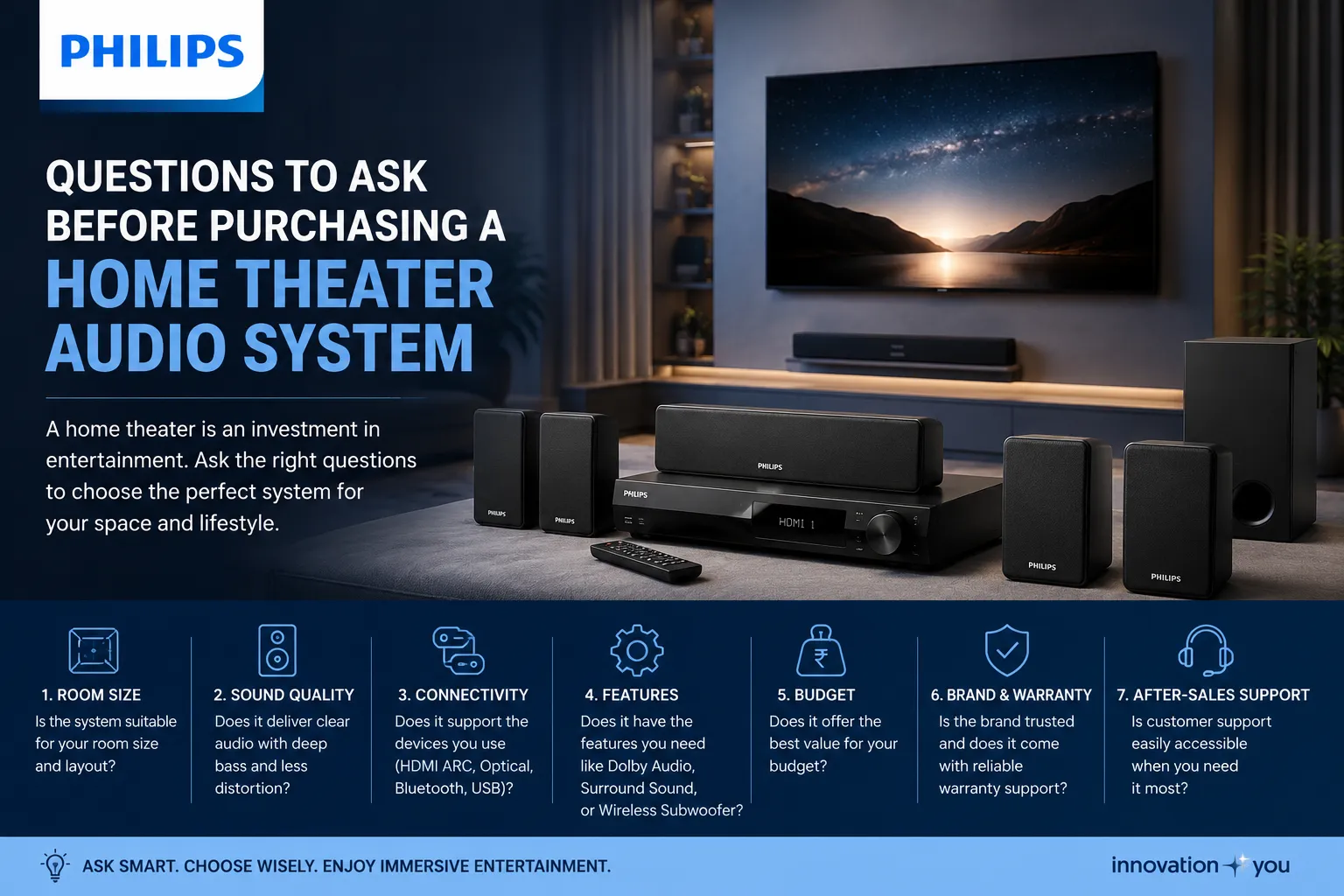

This sounds like an obvious question, but most people skip it entirely and jump straight to browsing products. The answer shapes every single purchasing decision that follows. A system built primarily for cinematic movie nights has different requirements than one designed mainly for music listening, casual sports viewing, or gaming sessions.
Be honest with yourself about how the system will actually be used on a typical Tuesday evening, not just during ideal weekend conditions. If movies are the core use case, surround sound and dialogue clarity should drive your decisions. If music matters equally, stereo imaging and tonal balance become priorities worth protecting. Defining the primary purpose first saves you from buying a system optimized for something you rarely do.
How Large Is the Room Where the System Will Live?
Room size is arguably the single most important variable in any audio purchasing decision, and it's one that product pages and YouTube reviews consistently gloss over. A speaker system that sounds extraordinary in a large dedicated media room will sound boomy and overwhelming in a small apartment living area. The reverse is equally true — a compact setup will feel underwhelming in a spacious open-plan home.
Measure the room before you shop, not after. Note the ceiling height, the approximate distance from your seating position to the front wall, and any architectural features that might affect speaker placement. These numbers will immediately narrow your options in useful ways and prevent the frustrating experience of returning a system because it simply doesn't fit the space it was purchased for.
Do You Want a Soundbar or a Full Speaker System?
This is the fundamental fork in the road, and it's worth spending real time here rather than defaulting to whatever seems most popular. A full speaker system delivers a level of surround precision and dynamic range that no soundbar can fully replicate, but it requires more space, more wiring, and more setup investment. A soundbar trades some of that performance for simplicity, tidiness, and ease of installation.
A quality soundbar for TV is a genuinely excellent solution for many households, particularly those with limited space or a preference for minimal visible hardware. The best modern soundbars support spatial audio formats and include dedicated subwoofers that handle bass surprisingly well. The question isn't which option is objectively better but which one fits your room, your lifestyle, and your tolerance for complexity.
What Audio Formats Does the System Support?
Audio formats matter more than most first-time buyers realize, and asking this question before purchasing can prevent significant disappointment down the line. Dolby Atmos, DTS:X, and Dolby TrueHD are the formats that streaming services, Blu-ray discs, and gaming platforms increasingly use to deliver premium audio experiences. A system that doesn't support these formats will decode them in a reduced form or not at all.
Check not only what the speakers support but what your AV receiver or soundbar's processor is capable of handling. The two components need to be compatible for the full format experience to come through. If you're investing in a quality system with the intention of enjoying premium content, confirming format compatibility upfront is a non-negotiable step in the process.
How Much Are You Willing to Spend Beyond the Speakers?
The sticker price of a speaker system is never the complete cost of ownership. Cables, speaker stands, wall mounts, an AV receiver, acoustic panels, and installation labor all add up quickly and catch first-time buyers off guard with surprising regularity. Budgeting only for the speakers themselves is one of the most common and avoidable mistakes in this category.
A reasonable guideline is to budget an additional twenty to thirty percent beyond the cost of your core speaker system for accessories and supporting equipment. If you're looking at best party speakers that double as part of your home theater ecosystem, factor in what connectivity options and additional hardware those require as well. A complete, honest budget upfront prevents the frustrating experience of having great speakers sitting in a room with an underpowered receiver that can't do them justice.
Is the System Easy to Integrate With Your Existing Devices?
Modern households run a complex web of devices. Streaming sticks, gaming consoles, Blu-ray players, smart TVs, and mobile phones all need to connect to your audio system cleanly and reliably. Before purchasing, inventory every device you plan to connect and verify that the system you're considering can accommodate all of them without requiring a separate switching device or complicated workarounds.
HDMI ARC and eARC connectivity, optical inputs, Bluetooth pairing, and app-based control are all features worth checking specifically against your current device lineup. A system that integrates smoothly with everything you already own will get used far more consistently than one that requires a technical ritual every time you want to switch inputs.
Will This System Work for Private and Social Listening?
Home theater audio serves two very different social contexts, and the best systems handle both gracefully. Private listening, especially late-night viewing when others in the household are asleep, requires either excellent low-volume performance or a quality personal audio option. Social listening, when guests are over and energy is high, demands clean output at higher volumes and broad room coverage.
Noise-cancelling headphones are worth including in your overall audio budget if private late-night listening is a regular reality in your home. They allow one person to experience full cinematic audio without waking anyone else, and the best modern pairs deliver a genuinely impressive spatial audio experience through dedicated headphone processing. Thinking about both contexts before you buy ensures your system serves your actual daily life rather than just one idealized version of it.
How Future-Proof Is This Purchase?
Technology moves quickly in the consumer audio space, and a system purchased today should be able to accommodate the changes coming in the next five to seven years. Asking about future-proofing isn't about chasing the latest specs but about ensuring your investment doesn't become obsolete the moment a new format or connectivity standard arrives.
Look for receivers with firmware update support, speakers from brands with consistent product ecosystems, and systems that leave room for expansion. Here are the key future-proofing questions to ask before any purchase:
- Does the receiver support the latest HDMI standards for passthrough?
- Can additional speakers be added to expand the configuration later?
- Is the brand known for long-term firmware and software support?
- Does the system support wireless audio standards that are gaining traction currently?
- Can a Bluetooth party speaker or additional wireless zone be added without replacing core components?
What Does the After-Sales Support Look Like?
This question gets asked far too rarely, and it matters enormously when something goes wrong at nine in the evening during a movie night. Warranty length, availability of local service centers, the quality of customer support channels, and the brand's reputation for honoring claims are all worth researching before you hand over your money.
Read owner reviews specifically for mentions of the support experience rather than just the product itself. A slightly less impressive system from a brand with outstanding customer support will often deliver a better long-term ownership experience than a technically superior product backed by frustrating after-sales service. The purchase is only the beginning of the relationship.





























Sign in to leave a comment.