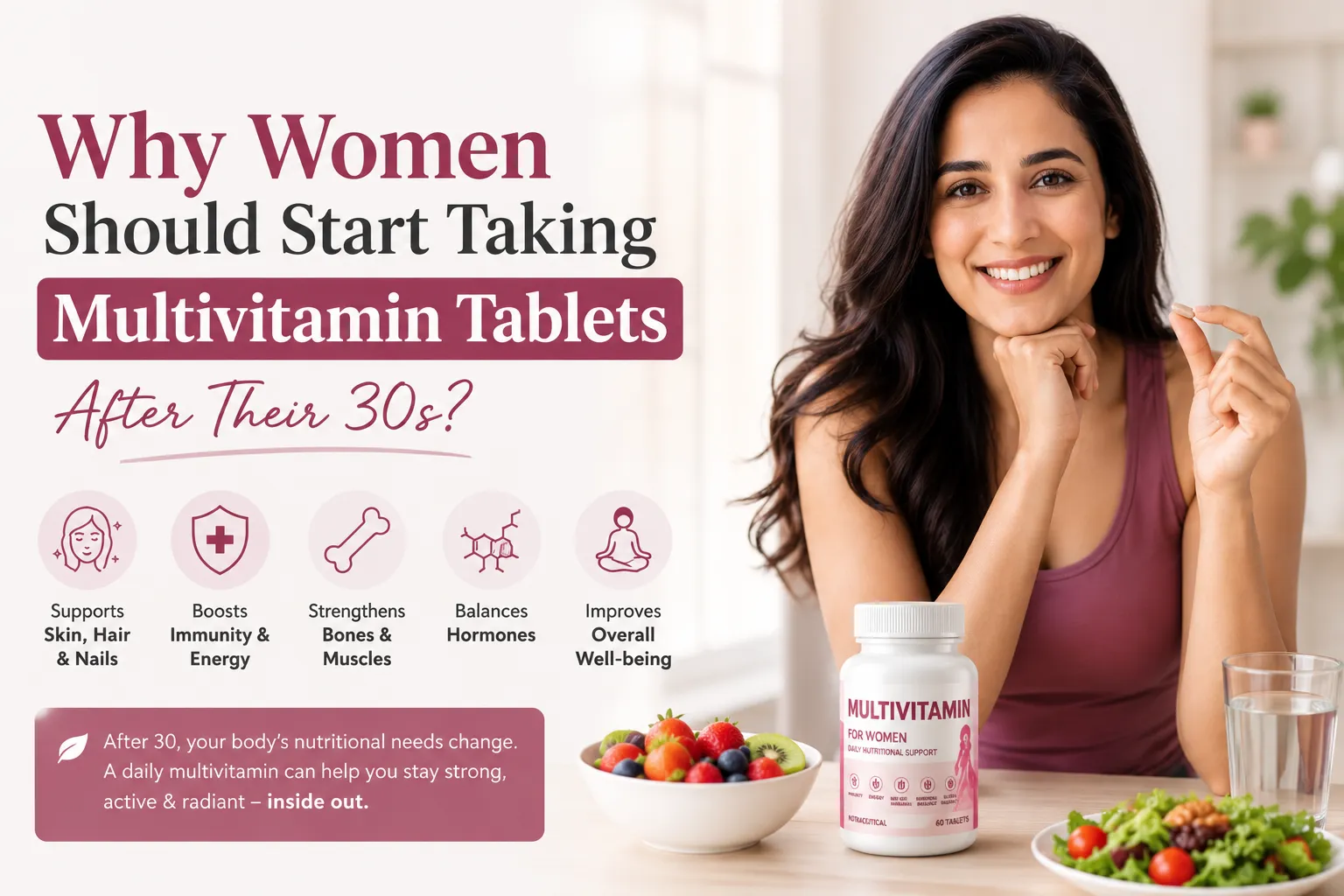

Your 30s look fine on the outside. Energy seems manageable, health feels stable, and the idea of a daily supplement routine can feel premature. But underneath that surface, a significant nutritional shift is already underway. Bone density begins declining. Hormonal fluctuations become more pronounced. The body's ability to absorb certain nutrients from food starts to reduce. What worked nutritionally in your 20s simply does not meet the demands your body has in its 30s and beyond.
This is not about fear — it is about being ahead of the curve. Women who build strong nutritional habits in their 30s carry those benefits forward into their 40s, 50s, and beyond. The chronic conditions that show up later in life — osteoporosis, hormonal imbalance, cardiovascular disease, fatigue — do not appear overnight. They develop slowly, often during years when nutrition was not being taken seriously. Starting early is the single most effective thing a woman can do to protect her long-term health.
Hormonal Changes Begin Earlier Than Most Women Expect
Perimenopause does not begin at 50. For many women, the first hormonal shifts start in the mid to late 30s — subtle changes in cycle length, mood, sleep quality, and energy that are easy to dismiss as stress or lifestyle. Estrogen and progesterone fluctuations during this period affect everything from bone turnover to brain chemistry to skin elasticity. The body's nutritional requirements shift in response, and diet alone often cannot keep up.
B vitamins — particularly B6 and B12 — play a direct role in hormonal regulation and neurotransmitter production. Iron levels fluctuate with changing menstrual patterns. Vitamin D becomes increasingly important for hormonal signaling. A well-formulated multivitamin tablet for women addresses these shifting needs in a single daily dose, filling gaps that even a careful diet is likely to leave. Waiting until symptoms become obvious means years of nutritional shortfall have already accumulated.
Bone Density Loss Starts in Your 30s
Most women associate osteoporosis with old age. The reality is that peak bone mass is typically reached by the late 20s, and the slow process of bone loss begins shortly after. By the time a woman reaches her mid-30s, bone resorption — the breakdown of bone tissue — begins to slightly outpace bone formation. This gap widens with age, particularly after menopause when estrogen drops sharply. Building and maintaining bone health in the 30s is the most effective window for long-term skeletal protection.
Calcium and vitamin D are the well-known players in bone health, but magnesium is equally critical and far less discussed. Magnesium activates vitamin D, regulates calcium transport into bone tissue, and supports the structural integrity of the bone matrix itself. A multivitamin with zinc and magnesium covers multiple bone-supportive pathways simultaneously — zinc supports bone-forming cells called osteoblasts, magnesium ensures calcium is being utilized properly, and together they create a stronger foundation than calcium supplementation alone ever could.
Energy Levels and Iron Metabolism
Persistent fatigue is one of the most common complaints among women in their 30s. It is often brushed aside as the natural consequence of a busy life — work, relationships, children, household responsibilities all stack up. But fatigue that sleep does not fix frequently has a nutritional explanation. Iron deficiency is disproportionately common in women of reproductive age, and even mild deficiency produces significant drops in energy, concentration, and physical stamina without triggering obvious symptoms of anemia.
B12 deficiency is another underdiagnosed contributor to fatigue in this age group, particularly among women who eat less red meat or follow plant-forward diets. B12 is essential for red blood cell production and neurological function, and its absorption from food declines with age due to reduced stomach acid production. A comprehensive multivitamin that includes iron, B12, and folate addresses the most common nutritional drivers of fatigue in women in their 30s — not as a temporary fix but as ongoing nutritional maintenance.
Skin, Hair, and Collagen Production
Collagen production peaks in the mid-20s and declines at roughly one percent per year after that. By the time a woman reaches her 30s, the effects are beginning to show — fine lines appear, skin loses some of its plumpness, hair may thin slightly, and nail strength decreases. These are not vanity concerns — they reflect deeper connective tissue changes happening throughout the body, including in joints, gut lining, and blood vessels.
Vitamin C is essential for collagen synthesis, acting as a cofactor for the enzymes that build collagen fibers. Biotin supports keratin production for hair and nails. Zinc regulates skin cell turnover and wound healing. Taken alongside the best collagen supplement in India — one that provides hydrolyzed collagen peptides for optimal absorption — a multivitamin creates a comprehensive approach to preserving structural integrity from the inside out. Topical skincare addresses surface concerns, but the real work of collagen maintenance happens at the cellular level through nutrition.
Brain Health and Cognitive Function
Women in their 30s frequently report brain fog, difficulty concentrating, and memory lapses that feel out of character. Hormonal fluctuations play a role, but nutritional deficiencies in B vitamins, omega-3 fatty acids, magnesium, and iron all independently affect cognitive performance. The brain is the most metabolically demanding organ in the body, consuming a disproportionate share of total energy and nutrients. When intake falls short, cognitive symptoms are often among the first to appear.
Magnesium in particular has a well-documented role in learning and memory through its regulation of NMDA receptors — the neurological structures involved in synaptic plasticity. B vitamins support the methylation pathways that influence mood, focus, and mental clarity. Consistent multivitamin use over months provides the brain with the steady nutritional environment it needs to function at full capacity. Cognitive health in your 50s and 60s is being shaped by the nutritional decisions you make in your 30s and 40s.
Immune Function and Antioxidant Protection
The immune system requires a wide range of micronutrients to function effectively. Vitamin C, vitamin D, zinc, selenium, and B vitamins all play distinct and interconnected roles in immune defense. Women in their 30s managing high stress loads are particularly vulnerable to immune suppression — cortisol actively inhibits immune function, and chronic stress means chronic immune compromise. Filling micronutrient gaps is one of the most practical ways to support immune resilience.
Antioxidant nutrients — vitamin C, vitamin E, selenium, and zinc — protect cells from oxidative damage that accumulates with age. Oxidative stress is a major driver of accelerated aging, chronic disease risk, and inflammation. A multivitamin that covers the antioxidant spectrum provides daily cellular protection that diet alone rarely delivers consistently. Over years and decades, that protection adds up in ways that matter significantly for disease prevention and healthy aging.
How to Choose the Right Multivitamin?
Not all multivitamins are built to the same standard. Many products include nutrients at doses too low to produce any measurable effect, use poorly absorbed forms, or pack in artificial colors and fillers that add no value. Reading labels carefully matters. Look for products that specify the form of each nutrient — magnesium glycinate rather than magnesium oxide, methylcobalamin rather than cyanocobalamin for B12, and vitamin D3 rather than D2.
Women in their 30s should also look for formulations that are specifically designed around female physiology — with appropriate iron levels, folate rather than folic acid for better genetic compatibility, and without excessive vitamin A, which can be harmful at high doses. Buying from established, GMP-certified manufacturers ensures that label claims reflect actual content. Quality supplementation is a long-term investment, and cutting corners on the product undermines the entire purpose of taking it.
Final Thoughts
The 30s are not a time to wait and see. They are the most important decade for laying the nutritional groundwork that determines how the body performs in the decades that follow. Hormonal shifts, bone changes, cognitive demands, immune function, and skin health are all active concerns during this period — and all respond meaningfully to proper nutritional support. A high-quality multivitamin is not a replacement for a good diet. It is the reliable safety net that catches what diet misses, consistently, every single day.




























Sign in to leave a comment.