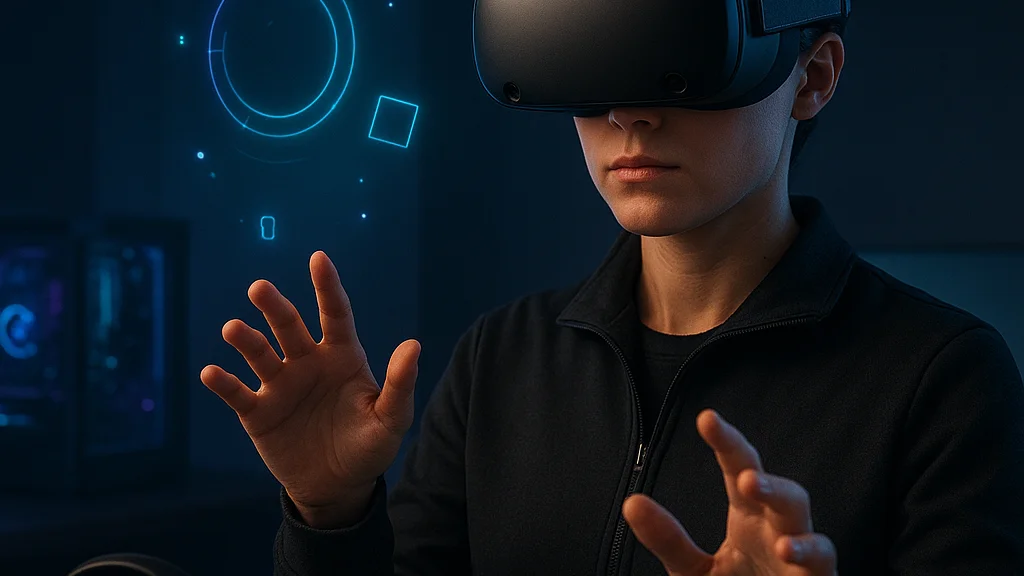

A few years ago, virtual reality gaming had the social reputation of a treadmill in February: exciting in theory, slightly dusty in practice, and always one firmware update away from a mood swing. Yet by mid-2026, VR is no longer surviving on novelty alone. It has become a durable corner of gaming because the hardware is better, the software is less fiddly, and the use cases have widened beyond the old promise of “put this on and wave at polygons.” That promise was never enough. Presence is.
The change is visible in the products. Standalone headsets now deliver sharper displays, more stable inside-out tracking, better passthrough mixed reality, and increasingly competent hand tracking. PC VR remains the benchmark for visual fidelity, but it is no longer the only serious route into the medium. The current market also looks less like a science fair and more like a proper consumer category, with major players such as Meta, Sony, Apple, Valve and HTC shaping different ends of the price and performance spectrum. According to coverage from TechTimes and MSN, buyers in 2026 are choosing among mature categories rather than gambling on prototypes. Progress, at last, has put on shoes.
That matters because gaming hardware does not need to replace the television or the mouse to be important. It only needs to create experiences that flat screens cannot reproduce cleanly. A rhythm game that turns your lounge room into a kinetic obstacle course, a cockpit sim that makes your stomach negotiate with your brain, or a horror title that weaponises spatial audio—these are not small upgrades. They are format shifts. Readers who want a broader companion overview can compare this analysis with this WriteUpCafe guide to VR gaming’s future and these expert tips on choosing the right headset. The short version is simple: VR gaming has a future because it finally has reasons, not just ambitions. A rare and lovely software patch for reality.
VR does not need to become the default way everyone plays. It only needs to remain the best way to play certain kinds of games.
How VR gaming got past the awkward adolescence
Consumer VR’s modern arc usually starts with the 2012 Oculus Kickstarter, but the more useful starting point is 2016—the year retail headsets such as Oculus Rift and HTC Vive tried to turn enthusiasm into a market. Those first-wave systems proved the concept with room-scale tracking and motion controllers, but they also demanded spare cash, spare floor space, and a suspiciously patient relationship with USB ports. Setup was the villain. Content was inconsistent. Motion sickness was the critic nobody could ignore.
Then came the slow, less glamorous work that actually changes industries. Display resolution improved. Lenses got better. Refresh rates climbed. Tracking moved from external sensors to inside-out systems that let users unbox a headset and start within minutes. Standalone computing, led by Meta’s Quest line, removed the need for a gaming PC for many titles. By the early 2020s, the centre of gravity had shifted from “Can this work?” to “Which ecosystem makes the most sense?” That is a very different conversation—and a much healthier one.
Software also matured. Early VR libraries were heavy on tech demos and light on games people would remember six months later. That changed with titles that understood embodiment rather than merely stereoscopic spectacle. Half-Life: Alyx, Beat Saber, Resident Evil adaptations, sim racing support, and social VR spaces all taught developers the same lesson: the headset is not the point. The point is what happens when the player’s head, hands and body become part of the interface. The gimmick phase ended when design caught up with hardware. About time—like finally finding the missing IKEA screw after building the whole shelf.
Another overlooked shift is expectation management. The most credible companies stopped pretending VR would instantly replace consoles, phones and PCs. Instead, they positioned it as a premium format for immersion-heavy applications: gaming, fitness, training, collaboration, virtual cinema and mixed reality overlays. That narrower claim is also more believable. Markets often grow when they stop trying to explain themselves as revolutions and start behaving like products. VR’s adolescence was messy, expensive and full of overpromises. Which, to be fair, also describes most first apartments.
Why virtual reality gaming still has a real future
The strongest case for VR’s future is not shipment hype or executive rhetoric. It is design logic. Certain genres become materially better when the player occupies space rather than merely observing it. Sim racing and flight sims gain natural head movement and depth judgment. Horror becomes more intimate because distance and sound have consequences. Rhythm and fitness games become physical rather than symbolic. Tactical shooters gain tension from manual reloading, line-of-sight peeking and embodied aiming. These are not cosmetic differences. They change how skill is expressed.
There is also a commercial reason the category persists. VR creates higher engagement among its active users than many sceptics assume. Platform holders have continued funding content, accessories and developer tools because retention improves when friction falls. Mixed reality features—colour passthrough, spatial anchoring, room meshing—expand what a headset can do between gaming sessions, which helps justify the purchase. A device used for games, exercise, media and work has a better chance of staying plugged in than one waiting for a single annual blockbuster. Hardware that earns its shelf space tends to survive. Unlike my bread maker.
Several structural factors support the long-term outlook:
- Standalone power has improved, reducing the cost and complexity of entry.
- PC VR remains available for enthusiasts who want higher-end graphics and simulation performance.
- Cross-platform engines such as Unity and Unreal continue to lower development friction for studios.
- Accessory ecosystems now include prescription inserts, battery straps, haptic gear and improved audio options.
- Mixed reality gives developers a bridge between traditional gaming and fully immersive VR.
The final reason is cultural rather than technical. Younger players are comfortable with digital embodiment across Roblox, Fortnite, VRChat-style social spaces and creator platforms. They do not find the idea of inhabiting an avatar remotely strange. VR therefore benefits from habits built elsewhere. As social and user-generated systems mature, the headset becomes another endpoint in a broader interactive internet rather than an isolated toy. Readers comparing market narratives may also find useful context in this related WriteUpCafe piece on the headsets to watch. The future is not guaranteed, but the premise is no longer flimsy. It has finally upgraded from beta to release candidate.
The question is no longer whether VR can be compelling. The question is which barriers—price, comfort, content cadence, or social friction—still prevent compelling from becoming routine.
The best VR headsets in 2026, and who they are actually for
“Best” is doing a lot of unpaid labour in headset buying guides. There is no single best VR headset because the category now splits cleanly by budget, platform and tolerance for cables. Still, 2026 has produced a fairly stable shortlist. Coverage from TechTimes and MSN points to familiar leaders: Meta’s Quest line for mainstream standalone use, Sony’s PlayStation VR2 for console players, Valve Index still retaining goodwill among PC VR loyalists despite its age, Apple Vision Pro occupying the premium mixed-reality end, and HTC’s Vive family serving enterprise and enthusiast niches. The trick is matching the device to the use case rather than treating specifications like astrology.
For most people, a modern standalone headset remains the practical choice because it combines ease of use with a large content library and optional PC connectivity. Meta’s Quest ecosystem has benefited from years of software iteration, broad developer support and a relatively low barrier to entry. For households that want party games, fitness apps, social spaces and accessible action titles, it is hard to ignore. That does not mean it is perfect. Battery life, comfort during long sessions and the usual platform-account anxieties still matter. Consumer electronics never miss a chance to be slightly annoying.
PlayStation VR2 remains one of the clearest “if this, then that” recommendations in gaming. If you already own a PlayStation 5 and want premium OLED visuals, eye tracking and haptic features without building a PC setup, it is a compelling route. Its limitation is also its identity: the library is curated and smaller than the broader PC-plus-standalone universe. For some buyers, that is a benefit. For others, it feels like renting a very nice apartment with strict body corporate rules.
At the enthusiast end, the equation changes:
- PC VR enthusiasts should prioritise display clarity, tracking precision, comfort and ecosystem openness.
- Sim players often benefit most from high-resolution headsets paired with strong GPUs and dedicated peripherals.
- Mixed-reality experimenters may value passthrough quality and spatial computing features as much as pure gaming performance.
- Budget-conscious newcomers should focus on software library, setup simplicity and total cost of ownership.
Apple Vision Pro remains the outlier. It is not a gaming-first device, and its premium pricing keeps it outside the mainstream conversation, but it has influenced the market’s expectations around passthrough quality, interface polish and spatial computing. Even when a product is not the volume seller, it can reset the standard everyone else gets judged against. Like the one annoyingly competent person in a group project.
What changed recently in 2026
The biggest story in 2026 is not a single miracle headset. It is the continued convergence of VR and mixed reality. Headsets are increasingly sold as devices that can shift between full immersion and spatial overlays, using better colour passthrough cameras and improved environment mapping. That matters for gaming because mixed reality lowers the intimidation factor. A new player can begin with a game that keeps the room visible, then graduate to fully enclosed experiences later. The onboarding problem has always been partly psychological. People are more willing to try something when they can still see the couch.
Another notable development is the stabilisation of recommendation lists. That sounds dull, and it is—gloriously so. When multiple mainstream outlets broadly agree on the strongest options in the market, it usually means the category has matured beyond chaotic experimentation. TechTimes’ 2026 roundup and MSN’s 2026 buying guide both reflect a market where buyers can choose based on scenario rather than faith. Mainstream gaming, console VR, premium MR and enthusiast PC VR now have clearer lanes. Consumers tend to reward clarity because product research is already a second job.
Developers in 2026 are also designing more consciously around comfort and session structure. Teleport locomotion, vignette options, seated modes, hand-tracking interfaces and mixed-reality tutorial spaces are no longer niche accessibility extras. They are practical retention tools. Studios learned the hard way that a brilliant VR mechanic means very little if a player feels queasy after 18 minutes. Better comfort design has not eliminated motion sickness, but it has narrowed the problem enough to keep more players engaged. Progress in VR often looks like subtraction—less friction, less setup, less nausea, less confusion. Boring improvements are still improvements.
Finally, the content pipeline looks healthier when judged by breadth rather than one flagship release. The category now includes established rhythm games, shooters, sims, fitness platforms, social worlds, puzzle titles and mixed-reality experiments. That diversity is crucial. No platform survives on one genre forever, not even if the marketing department starts speaking in destiny-themed nouns. A functioning ecosystem needs staples, curiosities and reasons to return weekly. 2026 looks more like that ecosystem than any prior year.
The obstacles VR still has to solve
None of this means VR has escaped its old problems. Price remains the first gate. Even the more accessible standalone route can become expensive once buyers add comfort straps, prescription lens inserts, charging docks and optional PC connectivity. Premium systems quickly climb into enthusiast territory, where the headset is only one line item in a larger hardware budget. For cost-sensitive players, a console or handheld still offers a simpler value proposition. VR may be more mature, but it is not magically cheap. Consumer tech never developed that personality trait.
Comfort is the second gate, and it is more complicated than weight alone. Balance, heat, face pressure, lens sweet spot, controller ergonomics and session length all shape whether a headset becomes part of a routine or ends up in a drawer. Even excellent devices can feel cumbersome compared with simply picking up a gamepad. This is why mixed reality matters so much: it reduces isolation and makes shorter, more casual sessions feel worthwhile. A headset does not need to trap you for two hours to be useful. Sometimes 25 good minutes is enough—like a decent sitcom episode before your software update ruins the evening.
Content cadence is the third issue. VR still needs a steadier flow of software that feels native to the medium rather than adapted for it. Ports can be valuable, especially in racing and simulation, but platform growth depends on games that justify the hardware. The strongest VR titles understand physicality, scale, spatial audio and hand presence at a foundational level. They are designed with the headset in mind from the first prototype, not patched into one at the end because somebody in publishing got optimistic after lunch.
The remaining barriers are practical and social:
- Shared living spaces can make room-scale play awkward.
- Multiplayer friction remains higher than on standard consoles and PCs.
- Battery management still interrupts longer standalone sessions.
- Public perception lags behind the actual quality of modern devices.
- Fragmented ecosystems can complicate purchases and software compatibility.
These are solvable problems, but they will not disappear through marketing copy alone. VR’s future depends on reducing compromise more than increasing hype. A useful rule in technology: if the press release sounds transcendent, check whether the charger is proprietary.
How to choose the right headset without regretting it later
If you are buying a VR headset in 2026, start with the games you actually want to play, not the specifications you want to brag about in a group chat. A sim racing player, a Beat Saber regular, a PlayStation owner, and a mixed-reality tinkerer do not need the same machine. The smartest purchase is usually the one that fits your existing ecosystem and your tolerance for setup. That sentence lacks glamour, but glamour is how people end up spending too much money on underused hardware. Ask any person who owns a juicer.
A practical checklist helps. First, decide whether you want standalone convenience, console simplicity, or PC fidelity. Second, calculate the total cost, including accessories and any required host hardware. Third, examine the software library for your preferred genres rather than relying on generic “top apps” lists. Fourth, think about comfort over time: head strap design, facial interface options and session length matter more than many first-time buyers expect. Fifth, consider whether mixed reality features matter to you or whether you only care about fully immersive VR.
Here is a more grounded buying framework:
- If you want the easiest entry point, choose a strong standalone ecosystem with broad software support.
- If you already own a PS5, evaluate PlayStation VR2 first because the total setup remains comparatively straightforward.
- If you play sims or own a powerful gaming PC, prioritise display clarity and compatibility over mainstream convenience.
- If you are curious about spatial computing beyond games, look closely at passthrough quality and app ecosystem maturity.
Before buying, it is worth reading multiple perspectives rather than one glowing roundup. For more comparisons and context, see this WriteUpCafe overview of VR’s future and top headsets and this April 2026 analysis of leading devices. The right headset is the one that keeps getting used after the first weekend. That is the metric that matters. Not the unboxing. Not the benchmark. Not the slightly theatrical product trailer scored like a Christopher Nolan teaser.
Where VR gaming goes next
The next phase of VR gaming will probably be less dramatic than its believers once predicted, and that is not bad news. Mature technologies often become more ordinary before they become more influential. Expect continued gains in optics, lighter designs, battery efficiency, eye tracking, hand tracking and mixed-reality integration. Expect more cross-device development strategies, where the same title can scale across standalone, console and PC hardware. Expect more social and creator-driven experiences that treat the headset as one access point among many. The future may look less like a takeover and more like a federation.
There is also reason to think VR will benefit from broader industry trends. Game engines are becoming more flexible with spatial interfaces. AI-assisted tools may reduce some production costs for environment iteration and testing, though they will not substitute for good design judgment. Cloud-connected services, persistent social spaces and user-generated content will continue to strengthen platforms that can keep players returning even when blockbuster releases are sparse. The boring business truth is that retention matters as much as spectacle. Hollywood learned this with franchises; gaming learned it with live services; VR is learning it with communities.
The most plausible long-term outcome is that VR becomes a stable premium layer of gaming rather than its universal replacement. Think of it as a format with distinct strengths, not a crusade. Some genres will remain better on flat screens. Others will increasingly feel incomplete without spatial presence. That split is healthy. Media do not need to erase one another to matter. Radio survived television. Podcasts survived everyone pretending they were just radio with fonts. Games can survive having multiple best ways to be played.
So, why does virtual reality gaming have a future? Because the hardware is finally credible, the software is more intentional, and the market has stopped asking the wrong question. VR does not need to replace gaming to justify itself. It only needs to keep delivering the moments that make players forget they are wearing a headset at all. When that happens, the argument ends. The room disappears, the game arrives, and for a while the technology stops showing off. A rare miracle—like a software update that fixes the bug you actually had.

























Sign in to leave a comment.