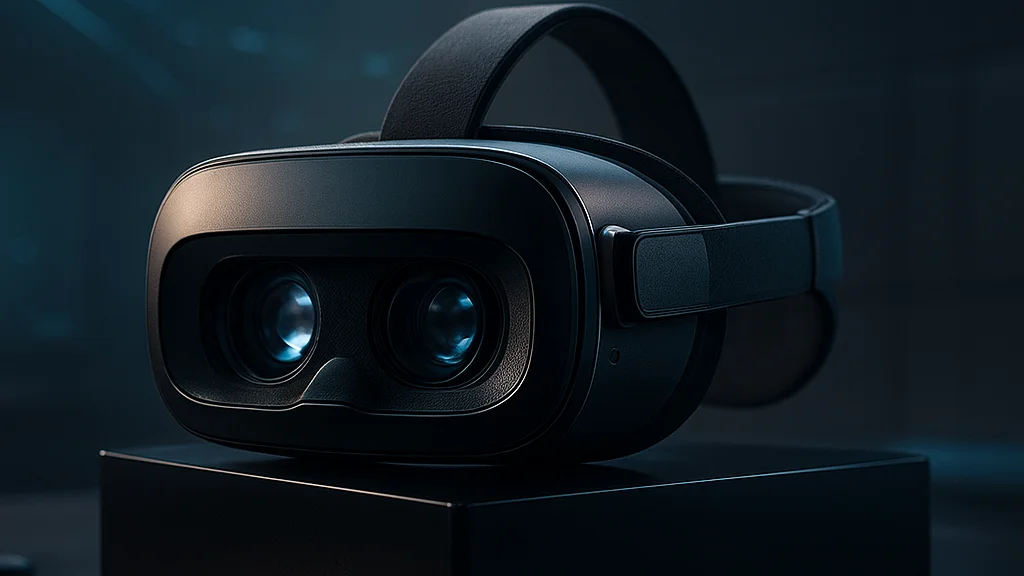

VR is finally past the awkward demo phase
Three things were wrong with virtual reality gaming for years: the hardware was too heavy, the software was too thin, and the pitch was too grand. Founders kept selling a sci-fi destiny while players kept asking a simpler question: what can I actually play for 200 hours without getting annoyed? That gap killed momentum more than any single technical flaw. Yet by mid-2026, the conversation has changed. Not because VR suddenly became universal, but because the best headsets now solve enough friction points to make long-form play realistic instead of aspirational.
The strongest evidence is not hype from keynote stages. It is the way the market has split into clearer lanes. Meta has stayed aggressive on mainstream standalone VR with the Quest line. Sony has pushed premium console VR with PlayStation VR2. Valve remains the benchmark many enthusiasts still use to judge PCVR immersion, even as its hardware ages. Apple, meanwhile, forced the entire industry to take mixed reality interfaces more seriously, even if its device sits in a different price universe from typical gaming buyers. That segmentation matters. A buyer in 2026 no longer has to pretend one headset fits every use case.
There is also a cultural shift. VR gaming is no longer discussed only as a novelty beside flat-screen gaming. It is increasingly treated as a separate design space with its own strengths: embodied action, spatial puzzle solving, social presence, and fitness-adjacent play. If you have spent time in niche Reddit subs or watched contrarian threads about why “VR failed,” you have seen the same mistake repeated: people judge VR only by raw unit sales against consoles. That is lazy analysis. A better lens is retention, software depth, comfort, and ecosystem stability.
For readers wanting a broader companion perspective, WriteUpCafe has already explored this angle in Virtual Reality Gaming: The Future and Best Headsets to Watch and Rethinking Virtual Reality Gaming and the Best Headsets. My argument is sharper: VR is not replacing traditional gaming. It is becoming a durable premium category inside gaming, and that is actually healthier.
VR does not need to beat consoles to matter. It needs to become indispensable for the players who care about presence, motion, and spatial interaction.
How the industry got here after a decade of overpromising
The modern VR cycle really began with Oculus reigniting consumer interest in the 2010s, followed by Facebook’s acquisition of Oculus in 2014. Then came the first big wave of consumer hardware: HTC Vive, Oculus Rift, and PlayStation VR. All three proved the medium could create moments no television ever could. They also exposed the tax users had to pay: cables, external sensors, setup headaches, motion discomfort, and software libraries that often felt like expensive prototypes.
What changed the trajectory was standalone design. Meta’s Quest strategy moved VR away from the desk and into the living room. The original Quest made room-scale VR easier. Quest 2 made it cheap enough to scale. Quest 3 improved visual clarity and mixed reality pass-through enough to feel like a modern consumer product rather than a dev kit with marketing. That progression matters more than flashy one-off announcements because mass adoption in gaming usually comes from convenience first, fidelity second.
Sony took a different route. PlayStation VR2 launched in 2023 with eye tracking, OLED panels, inside-out tracking, and haptics integrated into the PlayStation 5 ecosystem. Technically, it was one of the most coherent premium headsets on the market. Commercially, it ran into a harder truth: premium VR still depends on a steady software cadence. Hardware alone does not create category momentum. Reports from Reuters and analyst commentary over the last two years repeatedly underscored that software support and install base expansion remain the central challenge for premium VR platforms.
Meanwhile, the broader XR conversation widened. VR stopped being discussed only as a gaming tool. Coverage from ITWire on VR headsets and remote working and wdef.com on VR expanding beyond gaming reflects a reality gamers should not ignore: non-gaming investment helps subsidize display, optics, tracking, and interface improvements that eventually benefit games. Enterprise money is not romantic, but it is useful.
The result in 2026 is a more mature stack. Pancake lenses reduced bulk in newer designs. Better pass-through cameras made mixed reality less miserable. Eye tracking became more important for rendering efficiency and interface control. Developers learned where full-body immersion shines and where it simply creates bad UX. Actually, that last point may be the most important. VR’s future got brighter when the industry stopped pretending every interaction had to be physically simulated.
What makes a headset good in 2026 is not one spec sheet number
Buyers still get trapped by the wrong comparison. They obsess over resolution and forget the lived experience: comfort after 90 minutes, controller ergonomics, lens clarity at the edges, software library quality, setup friction, and whether the headset locks you into a weak ecosystem. A “best headset” ranking without those factors is just affiliate sludge with prettier formatting.
Here are the criteria that actually matter for gaming in 2026:
- Optics: Pancake lenses typically deliver slimmer designs and better clarity than older Fresnel approaches, though implementation still varies.
- Tracking: Inside-out tracking is now standard for convenience, but external lighthouse systems can still win on precision for certain PCVR enthusiasts.
- Display quality: Resolution matters, but so do contrast, persistence, refresh rate, and how readable text remains across the lens sweet spot.
- Comfort: Weight distribution is often more important than raw weight. Bad straps can ruin an otherwise strong headset.
- Software ecosystem: Exclusive games, backward compatibility, storefront reliability, and developer support all influence value.
- Mixed reality quality: Even for pure gamers, pass-through increasingly matters for setup, social play, and interface design.
- Price-to-usefulness ratio: The “best” headset for most people is rarely the most expensive one.
According to the MSN roundup of the best VR headsets in 2026 and the Yahoo Style UK tested guide to VR headsets, buyer advice has become notably more practical: match the headset to your platform and use case. That sounds obvious, but the market spent years pretending otherwise. A PS5 owner should not be pushed toward a PCVR-first device. A flight sim obsessive should not be told a standalone headset alone is enough if they want top-tier fidelity. A casual player who mainly wants rhythm games and social VR should not be upsold into a workstation-grade setup.
There is also a hidden variable: software stability. Headsets are now part hardware, part operating system, part storefront, part social platform. If firmware updates break tracking, if account systems become annoying, or if developers abandon a storefront, your expensive visor becomes a paperweight with straps. That is why ecosystem trust has become central to headset recommendations.
The smartest VR purchase is not the headset with the highest ceiling. It is the one with the fewest compromises for the games you will actually play every week.
The best VR headsets right now, with honest trade-offs
Three things I dislike about most “best headset” lists: they flatten categories, hide compromises, and pretend every buyer has the same budget. So here is the cleaner version. There is no universal champion. There are category leaders, each with a different logic.
Meta Quest 3 remains the safest recommendation for most people. It balances standalone convenience, a broad game library, competent mixed reality, and optional PCVR support through wired or wireless methods. Its biggest strength is low friction. Put it on, map your space, and play. That simplicity matters more than enthusiasts admit. The weaknesses are familiar too: battery life is merely decent, stock comfort is not ideal for everyone, and standalone graphics still trail a strong gaming PC by a wide margin.
PlayStation VR2 is still one of the most technically impressive consumer gaming headsets if you already own a PS5. OLED visuals, eye tracking, headset haptics, and polished first-party style design give it a premium feel. Games such as Gran Turismo 7 have shown exactly why VR can transform established franchises. The catch is ecosystem uncertainty. Sony’s software cadence has not always matched the hardware’s potential, and buyers remain sensitive to how aggressively the platform will be supported over the next few years.
Valve Index remains relevant mostly because PCVR enthusiasts still respect its tracking, audio, and controller design. But let’s be blunt: it is aging hardware. Resolution and optics no longer lead the field. Its status today is more about the strength of Valve’s ecosystem legacy and SteamVR compatibility than about raw modernity. It still makes sense for some users with lighthouse setups, but it is not the obvious first buy it once was.
Apple Vision Pro sits adjacent to gaming rather than at the center of it, yet it influences the future heavily. Its high-end pass-through, interface polish, and spatial computing framing pushed rivals to improve mixed reality quality. For mainstream gamers, the price and software orientation keep it out of contention as a pure gaming buy. But dismissing it entirely would be unserious. It changed expectations around what premium XR interfaces should feel like.
PCVR specialist options from brands such as Pimax or other niche manufacturers can offer wider fields of view or sharper displays, but they often demand more tolerance for setup complexity, software quirks, and premium pricing. These are enthusiast machines, not default recommendations.
- Best overall for most gamers: Meta Quest 3
- Best for PS5 owners: PlayStation VR2
- Best for existing lighthouse PCVR setups: Valve Index, with caveats
- Best signal of where mixed reality interfaces are heading: Apple Vision Pro
- Best for tinkerers chasing extremes: niche PCVR headsets with specialist trade-offs
If you want a companion read focused on buying discipline rather than pure hardware lust, WriteUpCafe’s Common Mistakes in Virtual Reality Gaming and Best Headsets in 2026 is useful because it addresses the bad purchasing habits that keep repeating.
What changed recently in 2026 and why it matters
The biggest 2026 shift is not one miraculous launch. It is that VR buying advice has become less ideological and more segmented. Editorial guides such as MSN’s 2026 headset roundup and Yahoo Style UK’s tested recommendations reflect a more mature market where the first question is no longer “Is VR the future of all gaming?” but “Which platform makes sense for your habits?” That sounds less sexy than founder-stage prophecy, but it is how real categories stabilize.
Mixed reality has also become impossible to ignore. Better color pass-through and room awareness are changing game design, especially for party experiences, fitness applications, and interface-heavy systems. Developers are experimenting with games that blend physical surroundings and digital overlays rather than sealing players into fully opaque worlds every time. Some of this is gimmicky, sure. Some of it is actually practical. When setup, menus, and social interactions feel less isolating, more people tolerate longer sessions.
Another notable development is the continued overlap between gaming and non-gaming XR investment. Enterprise, education, and remote collaboration remain active talking points, as seen in ITWire’s coverage of VR in work settings and wdef.com’s reporting on VR beyond gaming. Gamers sometimes roll their eyes at that material, and fair enough, because “future of work” decks can be unbearable. But the money flowing into optics, chips, hand tracking, and ergonomic design does not care whether your favorite use case is Beat Saber, sim racing, or virtual meetings. Shared infrastructure lowers costs and normalizes the form factor.
Audio is becoming a sharper differentiator too. While the approved source from TechTimes focuses on wireless gaming headsets rather than VR headsets specifically, it still points to a larger 2026 truth: players increasingly expect immersive audio, clear voice communication, and comfort as baseline features rather than bonuses. In VR, poor audio can collapse presence almost as fast as bad visuals.
Finally, software libraries are slowly maturing from showcase pieces into durable catalogs. The market still lacks the steady cadence of traditional console releases, but there are now enough strong genres to justify ownership for the right player: rhythm games, cockpit simulators, racing, social VR, horror, puzzle design, and physically expressive action titles. The future looks less like one killer app and more like a stack of reliable categories.
Where VR gaming is strongest, and where it still struggles
Here is the unpopular thing first: VR is not best when it imitates flat-screen gaming one-to-one. The medium wins when it uses embodiment, spatial awareness, and scale in ways a monitor simply cannot replicate. Sim racing in VR can feel transformative because depth perception changes braking, cornering, and cockpit awareness. Horror works because distance and sound become physical. Rhythm games work because your body is the controller. Tactical shooters can work because peeking, reloading, and positioning become lived actions rather than button abstractions.
Where VR struggles is equally clear. Long campaign games are expensive to build and hard to optimize. Locomotion remains a barrier for some users despite years of comfort settings. Social embarrassment is real; a headset on your face is still a harder sell than a controller in your hand. And there is the issue nobody in marketing likes to admit: many homes are cramped. Good room-scale design assumes a level of free space that plenty of players simply do not have.
These strengths and weaknesses shape what developers should prioritize:
- Strong fits: racing, flight, rhythm, social worlds, horror, puzzle interaction, fitness-adjacent games, cockpit simulations
- Conditional fits: shooters, action-adventure, co-op survival, sports titles, mixed reality sandbox experiences
- Weak fits unless redesigned carefully: menu-heavy strategy, long passive cutscene games, twitch platformers, genres dependent on constant seated multitasking
Actually, the industry has become smarter about this. Better developers no longer force every object to be manually grabbed or every action to be physically exact. They hybridize. They use gesture where presence matters and abstraction where fatigue would kill fun. That is a sign of design maturity, not compromise.
For another angle on this transition, Expert Tips for the Future of Virtual Reality Gaming and Best Headsets offers practical buying and usage advice, while April 2026: Exploring the Future of Virtual Reality Gaming and Top Headsets tracks the category’s recent momentum. My addition is simpler: the future belongs to developers who stop treating realism as a religion.
What to watch over the next few years
Three things could still derail VR gaming’s momentum: pricing pressure, weak software pipelines, and platform fragmentation. The hardware is better than skeptics admit, but economics still matter. If premium headsets remain expensive and accessory-heavy, many buyers will stay with whatever standalone option gives them the least friction. If software release schedules remain sporadic, even great hardware will collect dust. And if ecosystems become too siloed, developers will struggle to justify large budgets.
Still, the medium has credible growth paths. Eye tracking can improve performance through foveated rendering, making richer visuals easier to deliver. Mixed reality can widen the audience by reducing isolation and setup friction. Better hand tracking and lighter optics can make shorter, more frequent sessions normal. Cloud-connected social spaces may strengthen retention, though they also raise moderation and platform governance questions. None of this is guaranteed. But unlike the earlier era, the roadmap now looks incremental and believable rather than cartoonishly utopian.
What should consumers do right now? Buy based on platform, library, and comfort, not on abstract future-proofing. If you own a PS5 and want premium curated VR, PlayStation VR2 deserves serious attention. If you want the broadest low-friction entry point with room to experiment, Quest 3 remains the practical choice. If you are a dedicated PC sim player with patience for tinkering, specialist PCVR still offers the highest ceiling. If you mainly want to observe where spatial computing interfaces are heading, watch Apple’s moves closely even if you never buy in.
The future of VR gaming will be decided less by spectacle and more by whether people keep coming back after the first ten sessions.
That is the real test. Retention, not headlines. Comfort, not concept art. Libraries, not launch trailers. VR gaming in 2026 is not a revolution that swallowed the industry. It is something more credible: a maturing premium format with clear strengths, stubborn weaknesses, and enough momentum to matter for the long haul. Honestly, that is better than the old fantasy. The old fantasy was mostly bad UX wearing a TED Talk accent.



























Sign in to leave a comment.