

Immersive Beginnings: A Glimpse into Virtual Reality Gaming's Present Moment
Imagine slipping on a headset and suddenly being transported to an alien planet, a post-apocalyptic city, or a sprawling fantasy kingdom. The sensation goes beyond traditional gaming, offering a full embodiment in digital worlds. This is virtual reality (VR) gaming, a technology that, as of 2026, is no longer a niche curiosity but a burgeoning cornerstone of the gaming and esports industries. Recent market analyses reveal that VR gaming revenue has surged past $10 billion globally, with a projected annual growth rate of 20% for the next five years, underscoring its transition from experimental to mainstream.
One cannot ignore the evolution of VR hardware in this journey. The shift from bulky, tethered equipment with limited graphics to sleek, standalone headsets boasting high refresh rates and expansive fields of view has revolutionized user experience. According to MSN's comprehensive review, today's top VR headsets deliver resolutions exceeding 4K per eye, with frame rates reaching 120Hz, effectively minimizing motion sickness and enhancing immersion.
"VR gaming has crossed a critical threshold where technology meets user expectation, enabling deeper, more natural interactions within virtual worlds." — Industry Analyst, TechFrontier
These advancements have not only improved gameplay but also expanded VR's appeal across demographics. Competitive VR esports leagues now attract tens of thousands of viewers online, reflecting how the medium has matured into a serious entertainment platform. This introduction sets the stage for a deeper exploration into how VR gaming arrived here, the headsets leading the charge, and what the future promises.
Tracing the Trajectory: How Virtual Reality Gaming Evolved
The roots of VR gaming stretch back to the 1990s, when early attempts like Nintendo’s Virtual Boy and Sega VR failed to gain traction due to technological limitations and discomfort. The real renaissance began in the 2010s with Oculus Rift's Kickstarter success, reigniting interest and investment. Fast forward to the mid-2020s, the landscape transformed dramatically thanks to several converging factors:
- Technological breakthroughs: Enhanced display technologies, eye-tracking, and advanced motion sensors enabled more natural and responsive immersion.
- Affordability and accessibility: The cost of VR hardware dropped significantly, while standalone devices eliminated the need for expensive PCs.
- Software ecosystem expansion: A growing library of VR-optimized games and social platforms created compelling reasons for users to adopt VR.
Throughout this evolution, companies like Meta (formerly Facebook), Valve, and Sony have been pivotal. Meta’s Oculus Quest series popularized wireless VR, while Valve’s Index headset set new standards for tracking precision. Sony’s PlayStation VR platform bridged the console and VR worlds, broadening the user base. However, the journey was not without setbacks. The recent strategic pivot by Meta away from its metaverse ambitions, as detailed by The Conversation, illustrates how industry giants recalibrate their VR strategies based on market realities.
"The VR market’s growth is nonlinear; it requires balancing ambitious visions with practical user adoption and content availability." — VR Developer Conference Speaker
Understanding this history helps contextualize current trends and the hardware innovations that are shaping the gaming experiences of today.
Hardware in Focus: Top VR Headsets Defining 2026
Choosing the right VR headset is paramount for gamers seeking both performance and comfort. In 2026, the market offers a diverse range of options that cater to different needs, from hardcore gamers to casual users. Based on extensive reviews from Yahoo Style UK’s expert testing and MSN’s latest roundup, the leading headsets share several standout features:
- Resolution and Visual Fidelity: The HTC Vive Pro 3 and Varjo Aero 2 push boundaries with near-retina display quality, offering up to 4.5K resolution per eye.
- Tracking and Input: Valve Index remains the benchmark for finger-tracking controllers and precise room-scale tracking.
- Wireless Freedom: Meta Quest 3 and Pimax Crystal provide untethered experiences without sacrificing performance.
- Ergonomics and Comfort: Lightweight designs with adjustable straps and enhanced ventilation make long sessions viable.
- Software Compatibility: Headsets supporting SteamVR and Oculus Store access boast the widest game libraries.
Among these, the Meta Quest 3 stands out for its blend of affordability, portability, and strong content ecosystem, making it the best entry-level choice. Meanwhile, the Valve Index and HTC Vive Pro 3 cater to enthusiasts who demand top-tier visuals and precise controls.
Below is a comparative summary of the best headsets:
- Meta Quest 3: Standalone, 5K combined resolution, hand tracking, great battery life, price around $499.
- Valve Index: Requires PC, 1440 x 1600 per eye, 120Hz refresh rate, excellent controllers, approx. $999.
- HTC Vive Pro 3: High-end PC tethered, 5K total resolution, premium audio, priced near $1,200.
- Pimax Crystal: Ultra-wide field of view, standalone with optional PC tether, 4K per eye, $1,100.
- PlayStation VR2: Console exclusive, 4K HDR OLED, eye tracking, priced at $549.
These devices demonstrate how VR headset technology has matured, balancing performance with user-friendly features. For the gaming community, selecting a headset now means prioritizing ecosystem compatibility, comfort for extended play, and visual immersion.
Current Developments in 2026: The Shift Toward Holistic Immersion
The VR gaming landscape in 2026 is characterized by innovations beyond just hardware specifications. Developers and companies are focusing on holistic immersion, combining sensory feedback, AI-driven environments, and social connectivity. Key developments include:
- Haptic Feedback Advances: New gloves and suits provide tactile sensations, allowing players to "feel" virtual textures and impacts.
- Artificial Intelligence Integration: NPCs powered by AI adapt dynamically, enhancing realism and unpredictability in games.
- Cross-Platform Play: Players on different headsets and platforms can join shared multiplayer experiences seamlessly.
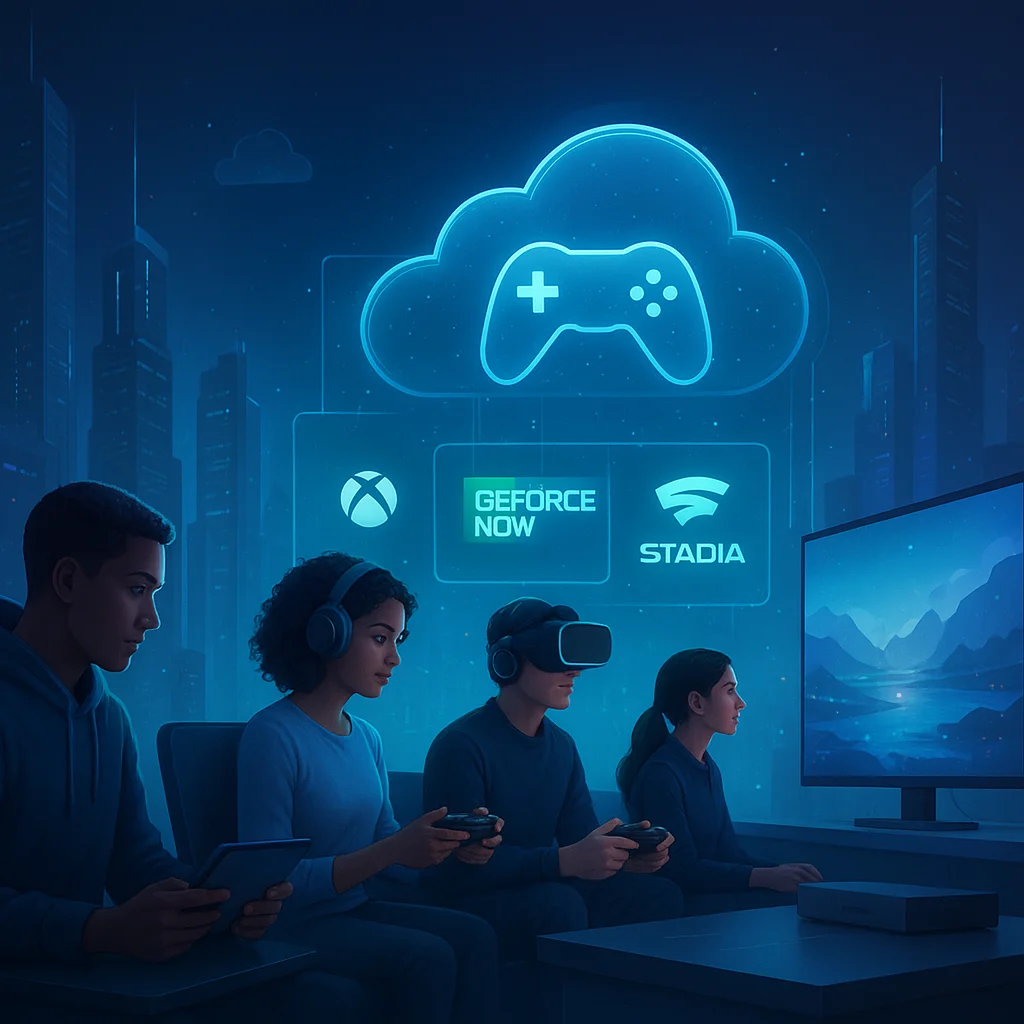
- Cloud VR Streaming: Services like NVIDIA’s GeForce Now VR enable high-fidelity VR gaming without powerful local hardware.
- Esports Expansion: VR esports tournaments with prize pools exceeding $5 million are now regular events, drawing sponsorship from major brands.
Additionally, content creators are exploring narrative-driven VR games that merge cinematic storytelling with player agency, a trend highlighted in the April 2026: Exploring the Future of Virtual Reality Gaming and Top Headsets article. These innovations are redefining how players engage with virtual worlds, making experiences more immersive and socially connected.
"The future of VR gaming lies in creating worlds that respond organically to player actions, supported by the latest sensory and AI technologies." — Lead VR Game Designer, Immersive Studios
These trends not only improve gameplay but also challenge developers to rethink game design principles, user interfaces, and hardware capabilities.
Expert Perspectives: Industry Impact and Challenges Ahead
VR gaming's rapid advancement has attracted diverse expert opinions regarding its sustainability and influence on the broader gaming ecosystem. Industry veterans stress the importance of content quality and user comfort over sheer hardware specs. According to a recent panel at the Global VR Summit, VR's growth relies heavily on overcoming barriers such as motion sickness, limited battery life, and lack of universally compelling titles.
Moreover, the U-turn by Meta on their metaverse focus, as discussed in The Conversation, has prompted a recalibration in how companies approach VR's market positioning. Experts argue this pivot encourages a more pragmatic approach prioritizing gaming and productivity use cases over speculative social metaverses.
Meanwhile, esports organizers highlight VR's potential to revolutionize competitive gaming. Enhanced immersion creates new spectator experiences, blending live gameplay with virtual broadcasting innovations. However, they caution that VR needs to address accessibility issues to avoid fragmenting the player base.
- Key expert insights include:
- Developers must prioritize intuitive controls to reduce learning curves.
- Investment in cross-platform compatibility is critical for ecosystem growth.
- User-generated content tools will empower communities and sustain engagement.
- Affordability and ergonomic design remain vital for mass adoption.
These perspectives underscore the complex interplay of technology, user experience, and market forces shaping VR gaming's trajectory.
Looking Ahead: What to Watch in Virtual Reality Gaming's Future
As VR gaming continues its ascent, several trends and technological breakthroughs warrant close attention. Foremost is the integration of AI-driven procedural content generation, which promises near-infinite game environments tailored to individual player preferences. This could dramatically increase replayability and personalization.
Another focal point is the convergence of VR with augmented reality (AR) to create mixed reality experiences. Devices capable of seamless switching between virtual and real-world overlays will expand gaming beyond isolated sessions, embedding it into daily life.
Battery technology improvements and lightweight materials will also enable more comfortable, longer play sessions, crucial for both casual users and competitive players. Additionally, developments in brain-computer interfaces (BCIs) may, in the longer term, allow players to control games with thought, opening new frontiers in interaction.
From a market perspective, the rise of decentralized gaming platforms built on blockchain could empower players with true ownership of in-game assets, fostering new economic models within VR worlds. This aligns with the growing interest in Web3 investments and immersive experiences, as reported by TechTimes.
"The intersection of AI, mixed reality, and blockchain will define the next era of virtual gaming, creating experiences we can barely imagine today." — Futurist and VR Innovator
For consumers and developers alike, staying attuned to these trends is essential. Informed decisions on headset purchases and content creation strategies will benefit from a nuanced understanding of these emerging technologies.
For further insights on hardware selection and common pitfalls, readers may find the Common Mistakes in Virtual Reality Gaming and Best Headsets in 2026 resource especially useful, as well as the detailed analysis in The Future of VR Gaming and Top Headsets in 2026.


























Sign in to leave a comment.