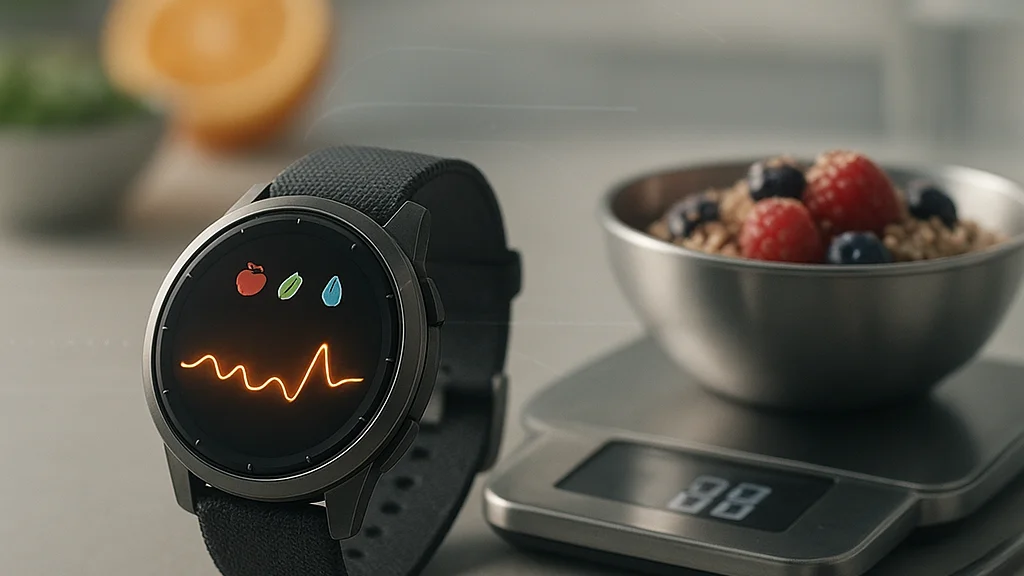

Garmin is moving from workout recorder to daily decision engine
The most important shift in Garmin’s newer training stack is not a shinier watch face or another race predictor. It is the quiet expansion of Garmin from a device that logs effort into a system that tries to explain why performance rises, stalls, or collapses. Nutrition tracking, lifestyle logging, and broader recovery context are central to that change. For runners, cyclists, and strength-focused users, that means food is no longer treated as a separate app problem. It is becoming part of the training file.
That matters because endurance tech has spent years measuring output with precision while handling input with guesswork. Watches could estimate calories burned, training load, sleep debt, and heart-rate variability trends, yet many athletes still recorded meals in disconnected apps or not at all. The result was a common postmortem: heavy load, poor recovery, mystery fatigue. Coaches already knew the missing variable was often basic fueling discipline, not motivation.
Recent industry moves support that reading. Fitbit has also pushed nutrition, mood, and cycle tracking deeper into its health ecosystem, as reported by Indiatimes on Fitbit’s AI Health Coach update. The direction is clear across wearables: platforms want a more complete model of the body, not just a cleaner graph of exercise minutes.
Garmin’s newer feature set lands right inside that trend, but with a more training-centric angle. The company’s ecosystem already had Body Battery, sleep score, acute load, training readiness, stress, and recovery time. Add nutrition logging and lifestyle inputs, and Garmin can start connecting meal timing, alcohol intake, hydration habits, travel, illness, and missed sleep to training outcomes. Actually, that is the meaningful product story here. Not “more features,” but tighter causality.
When a watch can relate poor intervals to low carbohydrate intake, short sleep, and elevated stress in the same week, it stops being a passive tracker and starts acting like a digital training journal with memory.
For readers who want a simpler walkthrough before the deeper analysis, WriteUpCafe’s Beginners Guide to New Garmin Training Features (2026): Nutrition Tracking, Lifestyle Logging, and More frames the basics well. But the bigger story, especially for food and cooking trends, is how these tools may change what athletes choose to eat, when they eat, and how they evaluate “healthy” meals against actual training demands.
Why food tracking is suddenly strategic, not cosmetic
Food logging has long had an image problem. Many users see it as tedious, moralizing, or too calorie-centric to be useful. Dietitians often make a distinction between rigid tracking and practical awareness. That distinction matters for Garmin’s move. If nutrition tools become nothing more than a calorie ledger on a wrist, adoption will be shallow. If they help users connect fueling patterns to sleep quality, workout quality, and recovery, behavior change becomes more plausible.
An AOL roundup featuring dietitian recommendations on food tracking apps underlines what professionals tend to value: usability, realistic databases, macro visibility, and tools that support patterns rather than obsession. See AOL’s report on dietitian-recommended food tracking apps. Garmin enters a space where specialized apps already do many things well, so its advantage is not likely database breadth alone. Its advantage is integration with training context.
That is a meaningful distinction for endurance and hybrid athletes. A 10K runner preparing for intervals, a cyclist building threshold volume, and a recreational lifter trying to improve body composition all have different nutritional needs. General food apps can capture intake, but they usually cannot tell whether a low-energy day followed a long run, a late dinner, a red-eye flight, or a period of high sympathetic stress reflected in overnight metrics. Garmin can, at least in theory, close that loop.
For the food and cooking category, this changes the editorial conversation. The interesting question is no longer “what is the healthiest meal?” It becomes “what meal best supports tomorrow’s training objective?” A vegetable-heavy dinner may be excellent generally, but if it is too low in carbohydrate before a long run, the athlete may underfuel. A protein-rich breakfast may support satiety, but a runner doing morning speedwork may need rapid digesting carbs first. Wearables are pushing food advice away from generic wellness and toward context-aware performance nutrition.
- Old model: log meals mainly to track calories or weight change.
- New model: log meals to explain workout quality, recovery, and readiness trends.
- Practical result: meal timing, hydration, and even alcohol become training variables, not side notes.
Garmin’s expansion into lifestyle logging also makes food more legible. If the system can record late meals, travel, stress, and perhaps subjective factors such as soreness or mood, a user gets a fuller postmortem after bad sessions. That is a very different value proposition from standard calorie counting.
What the new Garmin feature direction actually means in practice
Garmin has not built its reputation on social wellness features. It built it on training credibility: GPS accuracy, multisport depth, battery life, and performance analytics. That is why these newer nutrition and lifestyle tools deserve attention. They are not random add-ons. They sit on top of one of the most mature consumer training data stacks in the market.
Coverage around newer Garmin devices has emphasized smarter training guidance. An MSN piece on the Forerunner 170 described improved training intelligence versus its predecessor, highlighting how Garmin keeps sharpening the coaching layer rather than merely adding hardware polish. Read MSN’s take on the Garmin Forerunner 170. That direction aligns with the broader idea that nutrition and lifestyle data are useful only if they feed recommendations.
So what would a coherent Garmin experience look like? Not necessarily a perfect food diary. More likely, a layered system where users can log meals, hydration, caffeine, alcohol, and selected lifestyle events, then see those inputs reflected in recovery and training guidance. Imagine a watch detecting reduced sleep duration, elevated overnight stress, and a hard training block, while the app also notes low carbohydrate intake and missed hydration goals. The recommendation engine could then adjust suggested intensity, prompt fueling, or explain a drop in readiness.
Actually, this is where Garmin can avoid the trap that hurts many health platforms: collecting more data than users can act on. The best implementation would prioritize a few high-signal behaviors:
- Pre-workout carbohydrate adequacy for endurance sessions.
- Protein distribution across the day for recovery.
- Hydration consistency, especially in heat or high-volume blocks.
- Alcohol and late heavy meals as recovery disruptors.
- Travel, illness, and unusual stress as modifiers of training advice.
Those are not fringe concerns. They are the common reasons athletes feel “off” despite apparently solid training plans. Coaches often identify them quickly in manual training logs. Garmin’s opportunity is to automate some of that pattern recognition for self-coached users.
The strongest version of lifestyle logging is not surveillance. It is context: a short note that makes a confusing workout make sense three days later.
There is also a culinary angle. If Garmin pushes users toward practical fueling, recipe choices may shift from abstract clean eating to performance-ready cooking. Think more emphasis on digestibility, carbohydrate planning, sodium awareness, and recovery meals that are fast to prepare after training. WriteUpCafe’s Unlocking Garmin’s Latest: Nutrition Tracking and Lifestyle Logging Features touches on how those tools can be interpreted beyond raw logging, and that is where food content creators may find the richest editorial opportunity.
How this changes meal planning for athletes and active households
Once training software begins treating food as performance infrastructure, meal planning changes. The old household model was often one dinner for everyone and ad hoc snacks around workouts. That still works for many people, but Garmin-style integrated logging encourages a more intentional structure: base meals for health, plus targeted adjustments for training load. That can make cooking more efficient, not more restrictive, if done well.
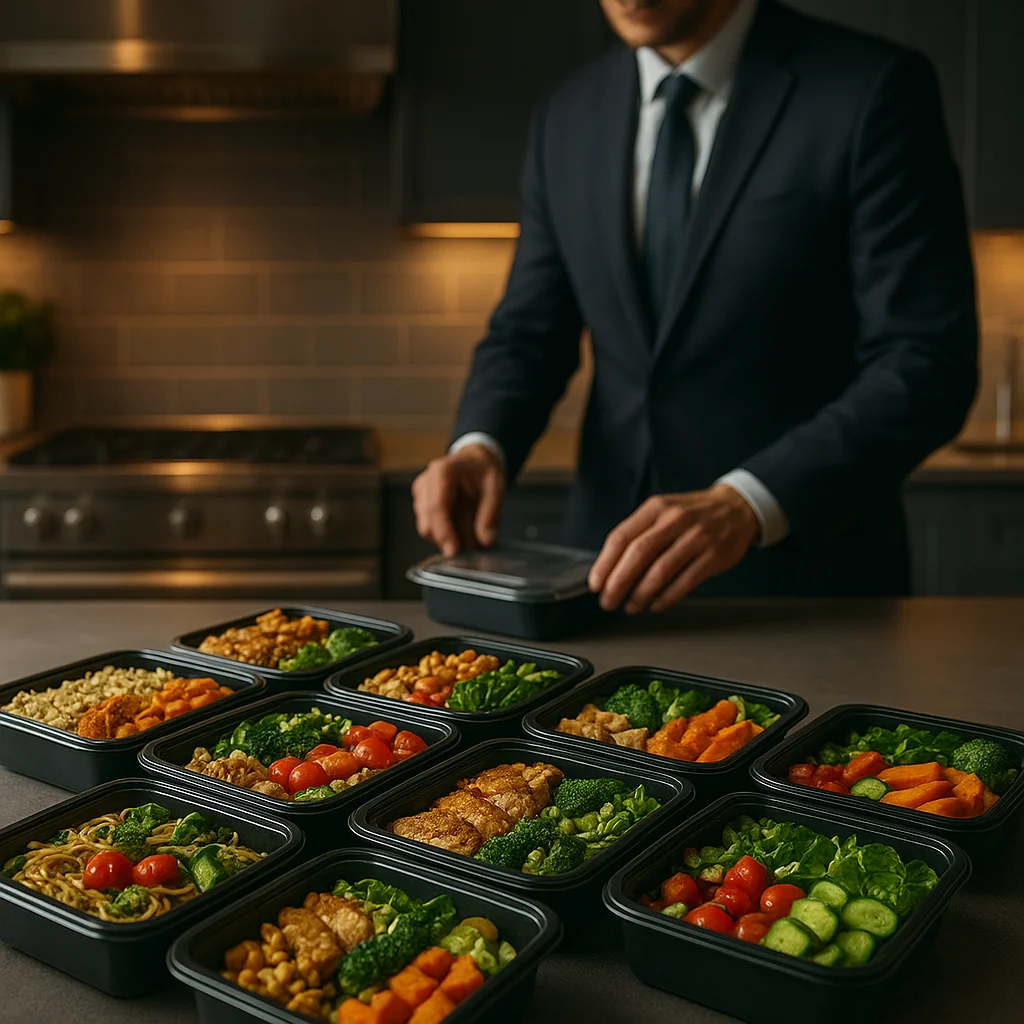
A practical example helps. Consider a runner with three key sessions a week: intervals Tuesday, tempo Thursday, long run Sunday. Under a traditional wellness mindset, dinner choices might revolve around calories, convenience, or broad notions of balance. Under a training-linked nutrition model, Monday and Wednesday dinners may quietly become higher-carbohydrate prep meals, while Thursday night might prioritize recovery protein and sodium, and Saturday may focus on digestibility before the long run. Same kitchen, different logic.
That logic extends to breakfast and snacks. Users who see repeated declines in morning workout quality after low-carb evenings may start batch-cooking rice, potatoes, oats, or pasta with the same seriousness they once reserved for protein prep. In food media terms, Garmin’s feature expansion supports a rise in “performance pantry” cooking: meals designed around session timing, gut comfort, and recovery speed.
- Before hard sessions: simple carbs, moderate fiber, familiar foods, easy digestion.
- After long or intense sessions: protein plus carbohydrate, fluids, and sodium.
- On lighter days: more flexibility, with emphasis on micronutrient density and satiety.
- During high-stress weeks: easier prep, consistent hydration, fewer skipped meals.
There is also a subtle cultural shift here. For years, mainstream diet discourse often rewarded under-eating in the name of discipline. Training wearables are increasingly exposing the cost of that habit. Low energy availability can show up indirectly: poor sleep, higher perceived effort, stagnant pace, and weak recovery trends. A nutrition tool inside Garmin does not diagnose complex clinical issues, but it can nudge users away from the false virtue of chronic underfueling.
For families or couples where one person trains seriously and another does not, this may produce smarter compromise meals. A base dish such as grilled salmon, rice, roasted vegetables, and yogurt sauce can be portioned differently depending on the next day’s demand. The athlete increases carbohydrates before key sessions; the rest of the table eats the same dinner without the performance-specific adjustment. That is a more realistic food trend than highly individualized meal plans for every person in the home.
Readers looking for more advanced implementation ideas can cross-reference WriteUpCafe’s Advanced Strategies for Garmin Nutrition and Lifestyle Tools, which is useful once the basics of logging are already in place.
What changed recently in 2026, and why the timing matters
The 2026 timing is not accidental. By now, the wearable market is mature enough that raw sensor counts no longer create much excitement on their own. Consumers expect sleep tracking, GPS, heart rate, training load estimates, and app ecosystems. The competitive frontier has shifted to interpretation. Which platform can turn fragmented signals into coherent guidance with the least friction? That is the context in which Garmin’s nutrition and lifestyle push should be read.
Competitors are clearly moving in parallel. Fitbit’s latest additions to its AI Health Coach, including mood logging and nutrition tools, show that consumer health platforms believe daily behavior data will be more valuable when tied to coaching logic. According to the Indiatimes report, Fitbit is trying to build a broader wellness assistant rather than just a passive tracker. Garmin’s version is likely to remain more sports-performance oriented, but the overlap is obvious: both are betting that users want synthesis, not isolated charts.
Meanwhile, hardware refreshes such as newer Forerunner models have kept attention on Garmin’s coaching intelligence. As the MSN coverage suggests, the market now evaluates these watches partly on how well they convert data into useful training decisions. That raises the stakes for any nutrition feature. If it feels bolted on, users will abandon it. If it helps explain why threshold sessions fail after poor fueling or why recovery scores dip after alcohol and late meals, it becomes sticky.
Another 2026 change is behavioral. More recreational athletes now train with semi-professional seriousness. Marathon participation, hybrid training, cycling events, and strength-endurance crossover programs have all expanded the audience for practical sports nutrition. These users may not hire a coach or dietitian, but they will respond to software that makes the basics obvious. Garmin appears to be designing for that middle market: motivated amateurs who want evidence-led guidance without building a spreadsheet.
Actually, that is why food and cooking coverage should pay attention. The next wave of recipe demand may come less from dieting trends and more from performance scheduling. Search behavior already hints at strong interest in high-protein breakfasts, pre-run snacks, recovery smoothies, and anti-inflammatory meal ideas. Garmin-style integrated logging can amplify that by giving users direct feedback loops between what they cook and how they train.
Limits, risks, and the questions Garmin still has to answer
No wearable platform should be treated as a nutrition authority by default. Garmin can surface patterns, but food tracking remains messy. Databases vary in quality. Portion estimates are often rough. Restaurant meals are difficult to log accurately. Homemade recipes can be nutrient-dense yet hard to standardize. If users expect laboratory precision, disappointment is guaranteed.
There is also the psychological risk. Any product that encourages frequent food logging can become unhelpful for people prone to obsessive tracking or disordered eating patterns. That is not a minor caveat. Responsible design matters. The most useful systems emphasize trends, adequacy, and timing rather than moral labels around “good” and “bad” foods. They should also let users keep logging lightweight when needed.
Privacy is another live issue. Lifestyle logging may include sensitive details: alcohol use, menstrual cycle information if integrated through broader health ecosystems, stress notes, illness, and sleep disruption. Users should ask basic questions before committing deeply:
- What data are stored on-device versus in the cloud?
- How transparent is the company about data use and retention?
- Can users export, delete, or limit sensitive lifestyle inputs?
- Are recommendations clearly separated from medical claims?
Then there is the coaching accuracy problem. Correlation is easy to overstate. A bad workout after low carbohydrate intake may indeed reflect underfueling, but it could also reflect heat, poor pacing, accumulated fatigue, or work stress. Garmin’s challenge is to present suggestions with humility. “Possible contributors” is a stronger product stance than false certainty.
Even so, imperfect context can still be valuable. Coaches have always worked with incomplete information. A simple note saying “two drinks, slept five hours, skipped dinner after travel” can explain more than a dozen polished metrics. Lifestyle logging does not need to be flawless to improve decision-making. It needs to be honest, fast, and connected to the right outcomes.
The danger is not that wearables know too much. It is that they can imply precision where only probability exists. Good coaching products keep that distinction visible.
For users deciding whether to adopt every new feature, restraint is sensible. Start with a few variables that actually matter to your training. If the data do not change decisions, the logging burden may not be worth it.
What athletes, cooks, and health-minded readers should watch next
The most likely next phase is not a giant leap into fully automated nutrition coaching. It is a series of small improvements that make logging lighter and recommendations sharper. Expect more emphasis on pattern detection: recurring low-energy mornings, under-fueled long runs, poor sleep after certain evening habits, or better interval performance when carbohydrate intake rises the day before. Those are actionable insights, and they fit Garmin’s training-first identity.
Recipe ecosystems may adapt too. Food publishers, creators, and sports dietitians are well positioned to build content around training context rather than generic labels. Instead of publishing yet another “healthy dinner” list, they can create modular plans: pre-tempo dinners, post-long-run lunches, travel-friendly recovery snacks, or high-carb breakfasts that are actually tolerable before early sessions. That is a more realistic service to readers using Garmin’s newer tools.
For consumers, the smart approach is practical:
- Log only the meals and habits most tied to training quality at first.
- Review trends weekly, not obsessively after every session.
- Use the data to support adequacy and consistency, not punishment.
- Keep favorite foods in rotation; adjust timing and portions before banning items.
- Treat watch insights as coaching prompts, not medical verdicts.
My thesis is simple. Garmin’s newer nutrition tracking and lifestyle logging features matter because they pull food out of the wellness sidebar and into the center of training analysis. For years, athletes had detailed output metrics and vague input records. That gap is finally closing. Not perfectly, and not for everyone. But enough to change habits.
If Garmin executes well, the lasting effect will be cultural as much as technical. Athletes may stop asking only how many calories a meal contains and start asking whether dinner supports tomorrow’s session. Home cooks may think more in terms of recovery, digestibility, and timing. Recreational users may learn that poor training weeks often begin in ordinary choices: skipped lunches, weak hydration, short sleep, late alcohol, and underpowered breakfasts.
That is why this story belongs in food and cooking trends, not just wearable tech. Garmin is helping turn performance nutrition from specialist knowledge into daily household behavior. Actually, that may be the company’s most consequential training feature yet.




























Sign in to leave a comment.