

The uncomfortable truth: esports is bigger than the stereotype, smaller than the hype
Three things are usually wrong in public talk about esports. First, people still reduce it to teenagers yelling into headsets. Second, investors keep mistaking audience excitement for guaranteed profit. Third, career advice around the sector is often laughably narrow, as if the only jobs are “pro player” and “streamer.” Actually, that lazy framing misses where the real story is: esports has matured into a layered global business with media rights, event production, software platforms, education pipelines, sponsorship operations, analytics, coaching, and community management all competing for talent.
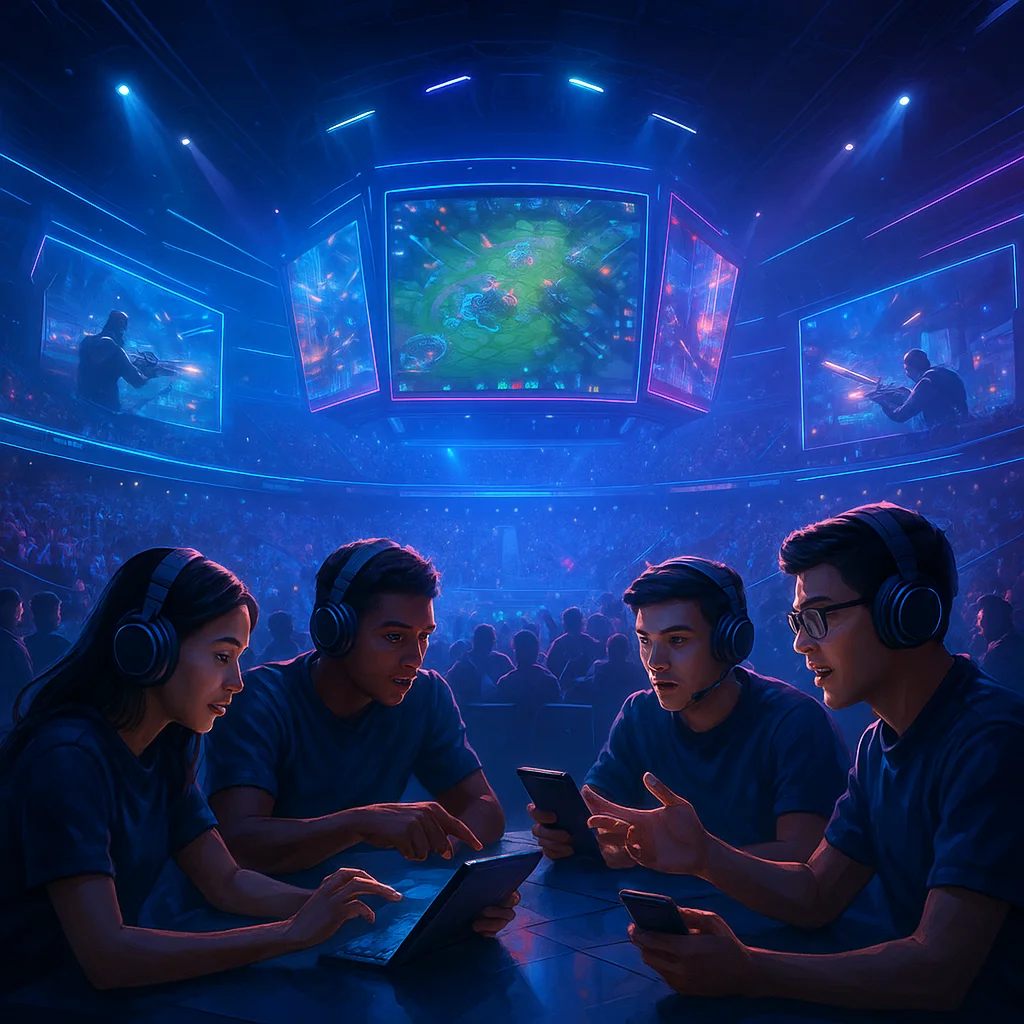
Arenas filling for a Counter-Strike final or a League of Legends international event are not the weird part anymore. The weird part is how many smart people still treat esports like a side quest instead of a labor market. According to a Yahoo Finance report on the global esports market, analysts are still projecting substantial long-term expansion, with billions in value tied to tournaments, advertising, sponsorship, media, and adjacent services. Another signal comes from infrastructure rather than spectacle: a separate Yahoo Finance report on esports management platforms points to large growth expectations for the software and operational layer that supports teams, events, and player ecosystems.
That matters because industries become durable not when they trend on social media, but when they generate specialized back-office demand. Esports is now at that stage. Tournament operators need logistics staff. Teams need performance analysts. Brands need partnership managers who understand Discord as well as deck-building. Universities and academies are building talent funnels. If you read Advanced Strategies for Esports Industry Growth and Career Opportunities in 2026 or 2026 Trends in Esports Industry Growth and Career Opportunities, you see the same pattern from different angles: this is not merely a fandom economy anymore. It is a professional services economy wrapped around competitive games.
Esports is not one job market. It is several overlapping job markets pretending to be one culture.
That distinction is where serious career planning begins. The winners in this space are rarely the loudest. They are the people who understand where the money actually moves.
How esports got here: from internet cafes to structured business
The history of esports is often told through iconic games and superstar players, but the more useful version is about infrastructure. South Korea professionalized competitive gaming early through broadcast support and team houses. North America pushed franchised league models, especially in the late 2010s. Europe built strong tournament circuits and event brands. China scaled aggressively with publisher-backed ecosystems and venue investment. The Middle East, particularly the Gulf, has become a major capital and events story in the 2020s. Each region built the sector differently, but all of them moved esports away from hobbyist chaos toward organized production.
Publishers were central to that shift. Unlike traditional sports, esports titles are owned intellectual property. Riot Games, Valve, Activision Blizzard, Electronic Arts, Epic Games, and others do not merely host a sport; they control the rules, monetization pathways, media access, and competitive roadmap. That creates an unusual labor environment. Careers rise or stall based not only on audience demand, but on publisher strategy. If a title gets a stronger league structure, a new anti-cheat push, or a regional expansion, hiring follows. If a publisher cuts support, entire sub-economies can shrink fast. That volatility is one reason broad skills beat title-specific identity.
Another change came from the collapse of easy money. In the late 2010s and early 2020s, parts of esports were flooded with venture optimism. Team valuations climbed. Franchise fees ballooned. Some executives sold a future that looked more like Silicon Valley pitch theater than operating reality. Then the market corrected. Layoffs hit gaming and media. Some esports organizations downsized. Investors started asking rude but healthy questions about margins, audience conversion, and sponsor retention. Good. The correction forced the sector to get more serious.
What survived that correction is more credible than what came before it. Event companies with real production expertise. Publishers with sustainable circuits. Agencies that can prove sponsor value. Data and platform firms that solve actual workflow problems. Educational initiatives, including summit-based programs such as the one highlighted by Mena FN’s coverage of the Dubai Esports & Gaming Festival education summit, also show how the sector is trying to formalize pathways into employment rather than relying on pure fandom and luck.
Actually, the industry is healthier when it stops pretending every team is a unicorn startup. Esports works best as a network of media, entertainment, software, and live-event businesses with different risk profiles, not as one giant hype machine.
Where the growth really is: revenue streams, platforms, and regional expansion
If you want to understand career opportunities, follow the revenue. Competitive gaming does not grow in a straight line, and not every segment grows equally. Prize pools create headlines, but they are not the main employment engine. The bigger drivers are sponsorship sales, media production, event operations, platform tooling, publisher ecosystem management, merchandising, creator-led content, and increasingly education and training.
Industry forecasts vary by methodology, which is normal in a fragmented sector. The Finanznachrichten summary of Allied Market Research projected the esports industry could reach USD 9.2 billion by 2033, while the Yahoo Finance market analysis cited a larger long-range figure under a broader market definition. Those differences are not proof that one source is fake and the other is holy scripture. They usually reflect different assumptions about what counts as esports: core tournament revenue only, or the wider ecosystem including services, platforms, and adjacent monetization.
That nuance matters because jobs often sit in the “adjacent” layer. Management software, player scheduling systems, tournament administration tools, anti-cheat support, community moderation, CRM, ad sales operations, and performance analytics can all expand even when a team’s win-loss record means nothing to casual fans.
- Sponsorship and brand partnerships: still the backbone for many organizations, especially where direct consumer revenue is weak.
- Live events and production: venue operations, stage design, broadcast crews, observers, replay technicians, and show callers remain essential.
- Platform and software services: tournament management, analytics dashboards, coaching tools, and business intelligence products are growing hiring categories.
- Publisher ecosystem roles: league operations, competitive integrity, player support, regional development, and event strategy.
- Education and training: schools, boot camps, university programs, and youth initiatives now need instructors, coordinators, and curriculum designers.
Regional growth is also uneven in ways that create opportunity. Saudi Arabia and the UAE continue investing in gaming and esports infrastructure. Japan, long constrained by regulation and market structure, has become more visible in select competitive scenes and talent mobility stories. Southeast Asia remains a mobile esports powerhouse. Brazil, my home turf, keeps proving that audience passion can outpace monetization sophistication, which is both inspiring and very annoying. Huge fan bases do not automatically produce healthy local salaries. They do, however, create openings in event work, content production, and community-led commerce.
The best esports jobs are often one step away from the stage: less glamorous, more stable, and far more scalable.
That is the bit newcomers resist. Everyone wants the trophy shot. Very few people ask who negotiated the sponsor package, built the player dashboard, localized the broadcast, or handled compliance. Those are the careers with staying power.
The job market is wider than pro play, and that changes everything
Say “career in esports” and most people imagine a player contract. That is like hearing “film industry” and assuming everyone is an actor. Actually, the majority of sustainable roles are operational, creative, commercial, or technical. Even inside teams, the labor mix has changed. A serious organization may need coaches, analysts, sports psychologists, social media editors, partnership executives, legal support, travel coordinators, finance staff, merch managers, and video producers before it needs another flashy content intern with a ring light and no calendar discipline.
For readers trying to map the field, it helps to break the labor market into clusters rather than employers. Teams are only one cluster. Publishers, tournament organizers, agencies, software vendors, betting and integrity firms where permitted, media companies, educational institutions, and creator networks all hire for esports-adjacent work. Some roles are explicitly labeled “esports.” Many are not. A sponsorship manager at a gaming event company may touch esports daily without the title saying so. Same for a data analyst in a tournament platform business.
- Competitive roles: player, coach, analyst, scout, team manager, performance specialist.
- Production roles: observer, broadcast producer, caster, graphics operator, replay tech, audio engineer.
- Business roles: sales executive, partnership manager, account strategist, merch lead, operations coordinator.
- Technical roles: software engineer, product manager, data analyst, anti-cheat support, QA specialist.
- Community and education roles: social lead, tournament admin, campus coordinator, curriculum designer, talent development manager.
Now the hard part. Entry-level access is still messy. The sector over-relies on passion as a wage substitute. Too many employers want “native gamer” instincts plus polished business execution for junior pay. That is not a talent pipeline; that is a burnout pipeline. The best candidates counter this by building proof of work early: running amateur brackets, editing VOD packages, managing a small community server, creating sponsor recaps, or analyzing team drafts in public portfolios. If you can show outcomes, you skip a lot of gatekeeping.
There is also a geographic reality. Remote work exists, but many of the strongest opportunities still cluster around event hubs, publisher offices, or regional circuits. The MSN report on Arslan Ash relocating to Japan illustrates a blunt truth: talent mobility remains part of esports career strategy. Players move for stronger practice environments, better competition, or ecosystem access. The same logic applies to non-players too.
If you want more tactical examples, Top 5 Esports Industry Growth and Career Opportunities in 2026 and Esports Industry Growth and Career Opportunities in 2026 both reinforce that specialization is beating generic enthusiasm. That trend is only getting stronger.
What changed in 2026: professionalization, consolidation, and education
The 2026 conversation is less about whether esports is “real” and more about which business models can survive. That sounds boring compared with transfer rumors and grand finals clips. Good. Boring is where mature industries are built. This year, three developments stand out: stronger institutional training, more scrutiny on sustainable operations, and a wider acceptance that esports careers can sit inside broader gaming and entertainment structures rather than pure-play teams.
The education angle is becoming especially visible. The Dubai Esports & Gaming Festival’s education summit, covered by Mena FN, framed the sector not just as entertainment but as a skills and employment arena. That matters because schools, universities, and public-private programs are increasingly acting as bridges between fandom and work. They are teaching event management, broadcasting, coding, marketing, and competitive discipline through gaming-focused programs. Some of this is branding, obviously. Some is genuinely useful. The difference comes down to whether students leave with portfolios, internships, and employer-facing skills rather than just a branded certificate and vibes.
At the same time, consolidation continues. Organizations are trimming unprofitable divisions, leaning harder into creator content, or partnering with agencies instead of maintaining oversized in-house teams. Software and management platforms are also getting more attention because they solve recurring problems rather than depending on one team’s competitive success. That aligns with the 2026 market reporting around esports management platforms, where infrastructure is treated as a growth category in its own right.
Another shift is reputational. Traditional employers no longer dismiss esports experience as unserious by default. Running a 5,000-player online tournament, managing sponsor deliverables across livestream assets, or coordinating multilingual production for a regional circuit is recognizable business work. Hiring managers outside gaming may still not understand the jargon, but they understand deadlines, revenue targets, retention metrics, and audience growth.
Actually, this is where many careers get smarter. People enter through esports, then branch into gaming, media, sports marketing, software, or live entertainment. The sector is no longer a cul-de-sac. It can be a launchpad if you build transferable skills instead of clinging to scene identity like it is a personality trait from a niche Reddit sub.
Case studies in opportunity: players, operators, creators, and support staff
One mistake in career advice is treating every success story as if it came from the same route. It did not. A player like Arslan Ash represents one path: elite competitive talent leveraging international mobility to access stronger ecosystems, brand visibility, and a broader career ceiling. The MSN report on his move to Japan is not just a player anecdote. It is a reminder that esports careers often depend on ecosystem geography, visa realities, and the density of local competition.
Then there is the operator path. Tournament administrators, event producers, and broadcast coordinators often begin in amateur scenes where chaos is constant and budgets are tiny. That experience is brutal but useful. If you can run a bracket when half the players are late, one moderator disappears, and the stream overlay breaks five minutes before match start, you have learned project management the hard way. Scaled up, those skills transfer into publisher-run circuits and major event companies.
Creator-adjacent roles form another lane. Many esports organizations now depend on content output that extends beyond match days. Editors, thumbnail designers, script writers, short-form producers, and social strategists can build long careers here, especially if they understand competitive narratives rather than just meme timing. Brands want measurable engagement, not random posting energy. The people who win these jobs can connect roster moves, tournament stakes, and sponsor messaging into coherent campaigns.
Support staff are still under-discussed, which is ridiculous because they increasingly determine performance. Sports psychology, nutrition guidance, physical therapy, and structured coaching have moved from luxury extras to competitive differentiators in many top-tier environments. Not every org can afford full departments, but the demand signal is clear. As schedules intensify and player careers remain fragile, performance support becomes more valuable.
- Player path: high upside, extreme volatility, short peak years, heavy dependence on title ecosystem.
- Operations path: lower public visibility, stronger transferability, often the best route into long-term leadership.
- Creator path: hybrid of media literacy, platform fluency, and brand storytelling.
- Support path: growing relevance as teams treat health and performance more scientifically.
The lesson from these case studies is simple: there is no single esports ladder. There are parallel ladders, and some of them lead out of esports into even larger industries.
What aspiring professionals should do now, not when the hype returns
Three bad strategies show up again and again. Waiting for a perfect opening. Chasing unpaid “exposure” forever. Building a personal brand with no actual skill underneath it. The better approach is brutally practical. Pick a lane, build evidence, and learn the business language around your craft. If you want to work in esports, your enthusiasm is assumed. Your usefulness is what gets tested.
Start with a narrow function. Choose production, analytics, partnerships, community, coaching, or operations. Then create visible work. Run a small online event. Publish a scouting report. Build a sponsor valuation template. Clip and package match highlights with clear metadata. Moderate and grow a community around a local scene. Employers trust demonstrated execution more than generic passion statements. This sector has heard enough “I love gaming” pitches to last a century.
Networking matters, but not in the fake conference way where everyone trades LinkedIn links and disappears. The useful version is repeated competence in public. Show up in community tournaments. Volunteer where the work is real and time-bounded. Join discords where organizers actually solve problems. Follow publisher job boards and event calendars. Learn basic contract and rights language if you want to work on the commercial side. Learn spreadsheet discipline if you want operations. Learn storytelling metrics if you want content.
For students and career switchers, one underrated move is to frame esports experience in mainstream terms. “Managed a Discord” sounds small. “Led community operations for a 3,000-member competitive gaming group with event scheduling, moderation policy, and engagement reporting” sounds like actual work because it is actual work. The same translation helps when moving between esports and adjacent sectors.
The smartest people entering esports are not asking, “How do I get famous?” They are asking, “Which problems keep recurring, and can I solve one better than most?”
That mindset will outlast any one title cycle. It also protects you from the industry’s worst habit: selling aspiration while underpricing labor. Be ambitious, sure. Just do not confuse access with progress.
The next phase: slower hype, stronger foundations
Esports is not heading toward one neat future. It is splitting into tiers. At the top, publisher-controlled global circuits and flagship events will keep attracting large audiences, premium sponsors, and institutional attention. In the middle, regional leagues, collegiate ecosystems, and specialized service firms will provide much of the real employment. At the bottom, community scenes will remain messy, underfunded, and culturally vital, continuing to produce talent the formal sector later absorbs.
That tiering is healthy. It means the industry no longer has to pretend every participant is chasing the same outcome. Some companies will optimize for spectacle. Others for software subscriptions, education, or B2B services. Some careers will stay inside esports for decades. Others will use it as a proving ground before moving into broader gaming, sports, media, or tech roles. If anything, the sector’s future looks less like a monolith and more like a cluster of interconnected specialties.
There are still risks. Publisher concentration remains enormous. Economic downturns can hit sponsorship budgets fast. Labor conditions at the lower end of the market are still inconsistent. Audience attention is fragmented across games, creators, and platforms. And yes, some executives will continue posting visionary thread nonsense while their basic user experience feels like a punishment from 2013. But the presence of risk does not erase the opportunity. It clarifies where discipline matters.
The strongest signal for the next few years is not a single prize pool or one celebrity roster move. It is the boring accumulation of systems: education pipelines, management platforms, regional event investment, and professional support roles. Those are the signs of an industry moving from adolescence into a stricter adulthood.
So here is the unpopular conclusion first, because someone has to say it plainly. Esports is not a magic career shortcut. It is a competitive, uneven, often underpaid, occasionally chaotic industry that still offers serious opportunity for people with specialized skills and realistic expectations. That is not a warning against entering. It is the best reason to enter with your eyes open. Actually, that is how durable careers are built in every field worth taking seriously.


























Sign in to leave a comment.