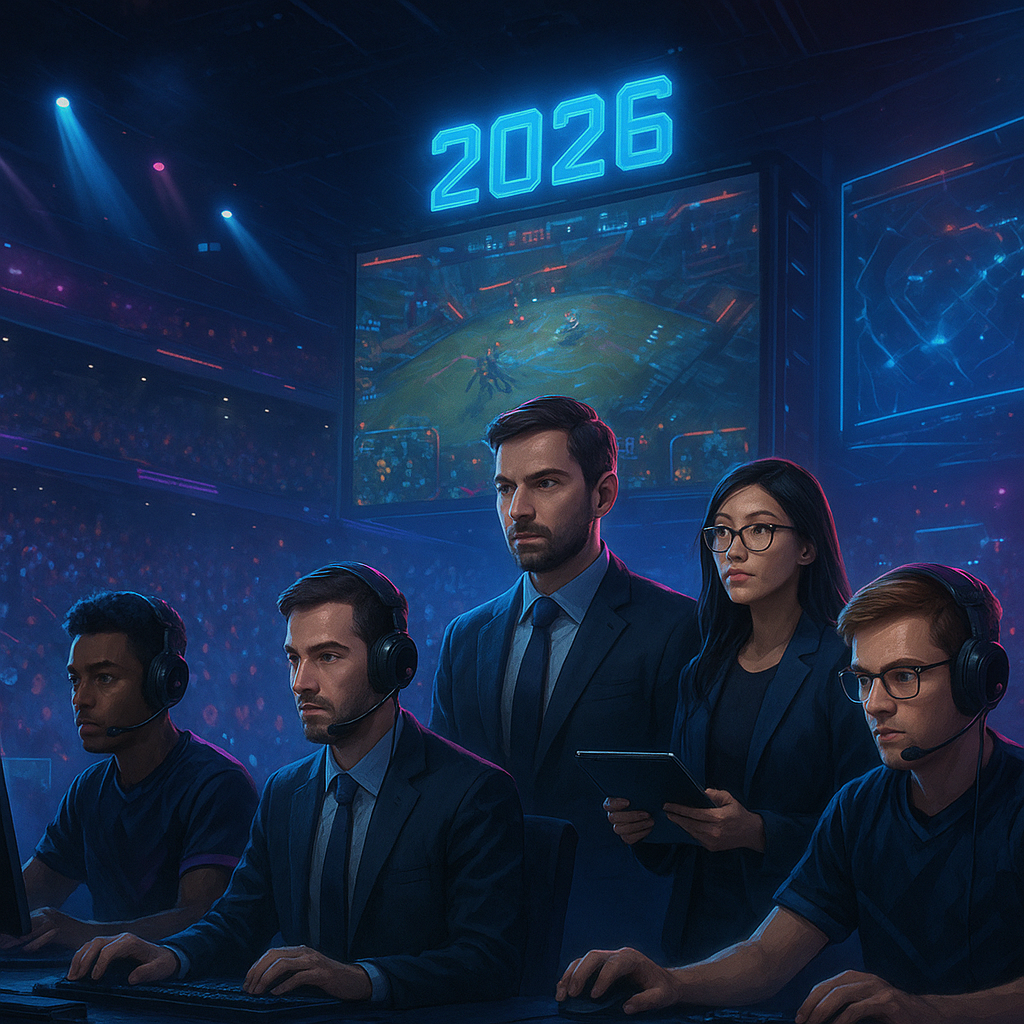

Esports Ascendance: A Vibrant Opening Scene in 2026
On a crisp evening in early 2026, the packed arena for the League of Legends World Championship Finals echoed with cheers as over 70,000 fans witnessed the climactic moments of the tournament. Behind the scenes, millions more tuned in globally via streaming platforms, pushing esports viewership numbers past traditional sports in some regions. This spectacle is emblematic of a larger trend: esports is no longer a niche pastime but a dominant force in global entertainment and career landscapes.
According to a recent Logitech G study, esports has entered a mature phase characterized by rising career aspirations and growing legitimacy worldwide. The study highlights that over 60% of surveyed Gen Z and Millennials now consider esports a viable professional avenue, reflecting a seismic shift in perception from hobbyist gaming to full-fledged careers.
“Esports today represents a convergence of entertainment, technology, and career opportunity unlike anything seen before,” notes industry analyst Maria Chen. “Its growth is accelerating as infrastructure and mainstream acceptance expand.”
This article explores the key drivers shaping the esports industry in 2026, the burgeoning career opportunities it offers, and what stakeholders—players, entrepreneurs, and investors—can expect in the near future.
From Humble Beginnings to Global Powerhouse: The Esports Journey
The roots of esports stretch back to the 1970s with arcade competitions, evolving through the 1990s explosion of LAN tournaments and the 2000s rise of streaming platforms like Twitch. By the mid-2010s, esports began attracting mainstream attention, with prize pools reaching millions and franchises securing major sponsorships.
Key milestones include the 2013 Dota 2 International, which introduced multi-million dollar prize pools and global broadcasts, and the 2018 inclusion of esports as a demonstration sport at the Asian Games. These moments paved the way for the industry's current stature.
Market research from Mena FN indicated that by 2023, the global esports market had surpassed $1.5 billion in revenue, driven by sponsorships, media rights, merchandise, and ticket sales. This financial foundation enabled a rapid proliferation of professional teams, leagues, and educational programs focused on esports.
Parallel advancements in technology, such as 5G connectivity, cloud gaming, and AI-powered analytics, have further enhanced the esports ecosystem. These innovations enable seamless global competition, real-time performance optimization, and immersive fan experiences.
The industry’s evolution is also marked by growing institutional support. Universities worldwide now offer esports scholarships, degree programs, and research initiatives, legitimizing esports as an academic and professional pursuit.
2026 Data-Driven Insights: Market Growth and Career Expansion
Data from Logitech G’s 2026 report paints a compelling picture. The global esports audience has exceeded 600 million monthly active viewers, up 15% from 2025. Revenue projections for 2026 estimate a market size of $3 billion, nearly doubling since 2023.
Several factors underpin this expansion:
- Diversification of Game Genres: Beyond MOBAs and FPS titles, genres like racing esports (e.g., F1 Esports), virtual reality competitions, and mobile esports have gained significant traction.
- Geographic Market Penetration: Emerging markets in Latin America, Southeast Asia, and Africa are rapidly adopting esports, fueled by increasing internet penetration and smartphone usage.
- Corporate Investment: Major brands across automotive, consumer electronics, and fashion sectors are investing heavily in sponsorships and media rights, viewing esports as a direct channel to younger consumers.
- Technological Innovations: AI-driven coaching tools, enhanced streaming interactivity, and metaverse integration are creating new revenue streams and fan engagement models.
Career opportunities have diversified substantially. Beyond professional players and coaches, roles now include esports marketing specialists, data analysts, broadcast production teams, event coordinators, and game developers focused on competitive design. The Logitech G study found that 72% of esports professionals and aspirants expect their roles to evolve with technology, emphasizing adaptability.
To contextualize, here is a breakdown of key esports career paths and growth rates in 2026:
- Professional Players: 10% annual growth, with increased specialization in niche game genres.
- Esports Coaching and Analysis: 25% growth, driven by AI-assisted player performance tools.
- Production and Broadcasting: 18% growth, as live event streaming and virtual events expand.
- Management and Marketing: 22% growth, reflecting increased brand partnerships and global fanbase monetization.
Current Developments Shaping Esports in 2026
The esports landscape in 2026 is marked by a series of transformative developments that both reflect and propel its maturation. Among the most notable is the integration of artificial intelligence in competitive training and fan engagement. Teams leverage AI to analyze meta-game shifts, optimize strategies, and scout emerging talent through predictive analytics.
Furthermore, the rise of the metaverse as a social and competitive platform is creating immersive esports arenas that transcend physical venues. Players and audiences interact in virtual spaces that blend gaming, social networking, and commerce, enhancing accessibility and global reach.
Esports organizations are also embracing sustainability, with many tournaments adopting carbon-neutral policies and promoting environmental responsibility. This aligns with broader consumer expectations and corporate social responsibility trends.
Another significant development is the increased regulatory oversight and standardization efforts. Global esports federations and national bodies are collaborating to establish uniform rules, player welfare protocols, and anti-cheating measures, ensuring competitive integrity and professional standards.
Moreover, the professional circuit has seen a surge in female and non-binary participation, supported by inclusive initiatives and dedicated leagues. This diversification enriches the talent pool and expands audience demographics.
“2026 is a pivotal year where technology, culture, and regulation converge to shape esports’ sustainable and inclusive future,” says esports strategist Daniel Kim.
To explore how specific esports sectors are evolving, consider the growth of F1 Esports, which blends traditional motorsport fandom with digital competition, attracting new sponsors and fans worldwide.
Expert Perspectives and Industry Impact
Leading voices in the esports ecosystem emphasize the importance of adaptability and innovation. According to Logitech G’s report, industry leaders identify talent development and technological integration as critical success factors.
Industry experts underscore the need for comprehensive education and career pathways. Universities and private academies are partnering with esports organizations to offer tailored programs that blend gaming skills with business, media, and technology expertise. These initiatives aim to professionalize esports careers and provide long-term growth for participants.
Moreover, the esports economy is influencing adjacent sectors such as advertising, entertainment, and hardware manufacturing. Brands are recalibrating their marketing strategies to leverage esports’ authentic engagement with younger audiences. Hardware companies are innovating peripherals specifically designed for esports performance, driving consumer demand.
Economically, esports is contributing significantly to job creation and economic activity in host cities. For example, the 2026 ESL One tournament in Berlin generated over $50 million in local economic impact, including hospitality, transport, and media services.
“Esports is a catalyst for economic diversification and technological innovation in urban centers,” states economist Laura Perez.
The increasing legitimacy of esports also challenges traditional sports institutions to innovate and collaborate, as seen in partnerships between major football clubs and esports teams.
For readers interested in strategic insights, the article Advanced Strategies for Esports Industry Growth and Career Opportunities in 2026 offers an in-depth exploration of best practices and emerging business models.
Looking Ahead: Future Outlook and Key Takeaways for Esports Careers
As esports continues its rapid ascent, the trajectory for 2027 and beyond suggests several critical trends. Firstly, the convergence of esports with emerging technologies like augmented reality and blockchain will unlock novel competitive formats and monetization opportunities. NFTs and decentralized ownership models may redefine fan engagement and player branding.
Secondly, career pathways will become more interdisciplinary. Successful esports professionals will combine gameplay expertise with skills in data science, content creation, digital marketing, and community management.
Education and training infrastructures will expand, offering diverse entry points from grassroots to elite levels. This institutional support is vital for sustainability.
Thirdly, the global esports market will continue to mature, with regulatory frameworks enhancing player protection and competitive fairness. This evolution will attract greater institutional investment and mainstream media partnerships.
Key takeaways for aspiring professionals and stakeholders include:
- Invest in continuous learning and adaptability to new technologies and game genres.
- Explore hybrid career roles that blend esports with digital media and technology.
- Engage with inclusive communities to harness the full potential of diverse talent pools.
- Monitor regulatory developments and industry standards to navigate compliance and ethical considerations.
For a holistic view on career possibilities and industry growth, readers can refer to Esports Industry Growth & Careers in 2026, which outlines emerging roles and sector-specific forecasts.
In conclusion, the esports industry in 2026 stands at an inflection point—rooted in rich history, powered by technology, and propelled by global enthusiasm. Its growth is not merely quantitative but qualitative, offering expansive career opportunities across multiple domains. Stakeholders who embrace innovation, inclusivity, and professionalism will shape a vibrant and sustainable esports ecosystem for years to come.





























Sign in to leave a comment.